
The war, which turned the Middle East into a fire with the attack launched by the USA and Israel against Iran, also brought Türkiye’s air defense architecture into question again. The air defense systems in Türkiye’s inventory are largely based on NATO infrastructure and US-origin platforms. However, since the mid-2000s, the development of domestic and national systems has been accelerated in order to both reduce technological dependency and create a stronger defense shield against increasing missile and air threats. Today, while Türkiye’s air defense capacity is evolving towards a multi-layered structure ranging from old generation systems to modern domestic platforms, the “Steel Dome” project is aimed to be put into operation at full capacity by 2030.
FIRST SYSTEM HERCULES
The only system in the Turkish Armed Forces’ inventory that served as high-altitude air defense for many years was the US-origin Nike Hercules missiles. These systems, developed in 1959, were widely used in NATO countries, especially against Soviet bombers. The main mission of Nike Hercules batteries in Türkiye was determined to provide air defense of Istanbul and the Straits region.
NOW THE SHELF WILL PROTECTK
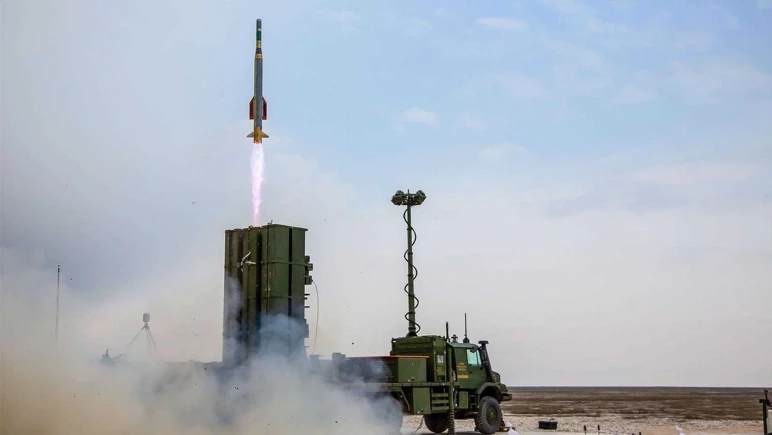
However, with the end of the Cold War, the maintenance and maintenance of these systems became increasingly difficult. The number of Nike Hercules batteries, which became technologically obsolete, was reduced over time. The last air defense positions around Istanbul were decommissioned in 2007. These systems are planned to replace The modern solution is the SİPER project, developed as Türkiye’s domestic long-range air defense system.
HAWK MODERNIZATION
The backbone of Türkiye’s medium altitude air defense capacity has been MIM-23 HAWK systems for many years. HAWK missiles, a mobile medium-altitude air defense system, are known to have a range of approximately 40 kilometers. HAWK systems, which were removed from the inventory by the USA in 2001, were supplied by Türkiye and underwent a comprehensive modernization program. In this context, Türkiye added 8 firing units, 24 missile batteries, 175 MIM-23B Hawk missiles and 8 MPQ-64 Sentinel 3D radars to its inventory.
HİSAR-A IN SHORT RANGE
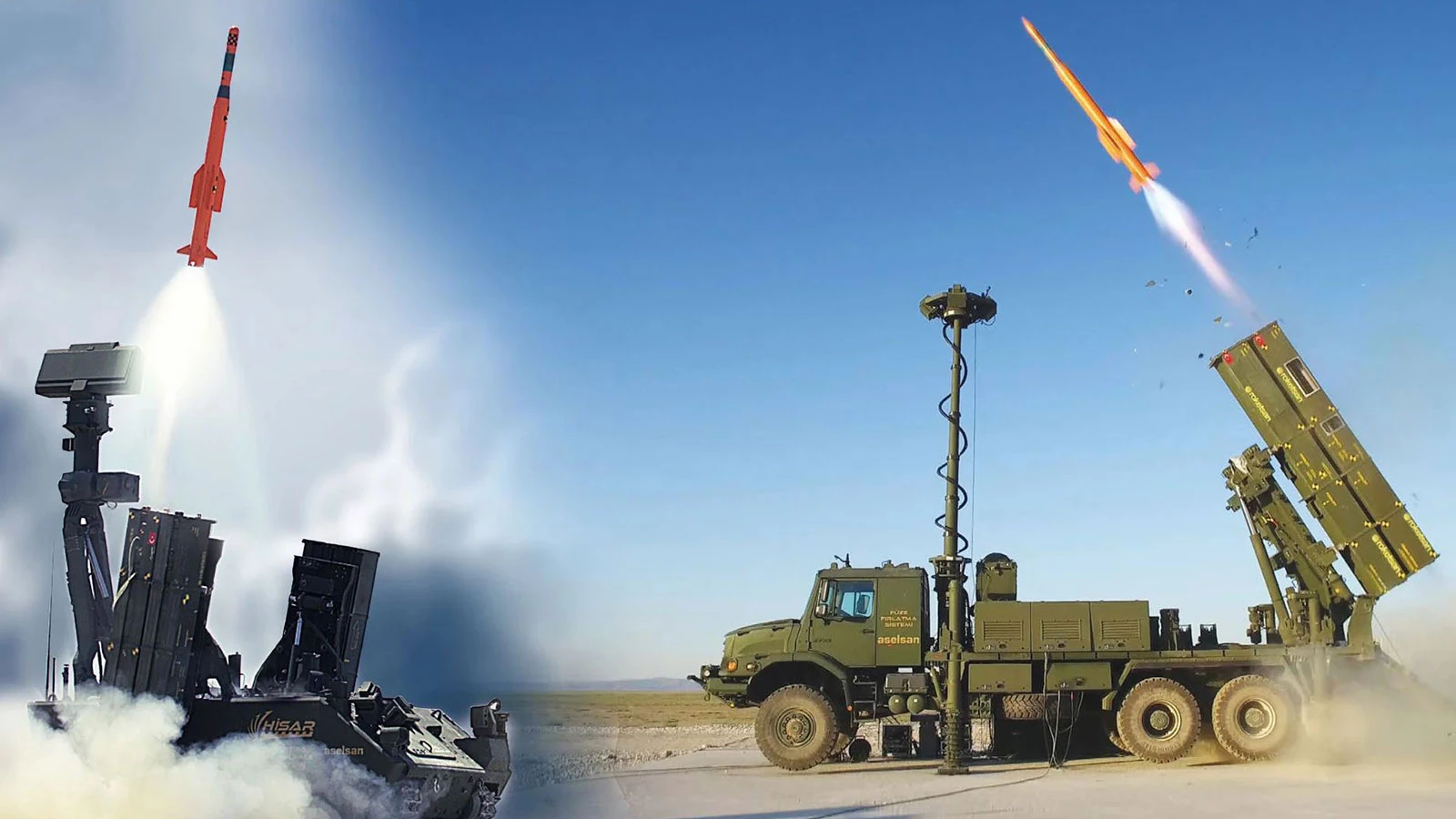
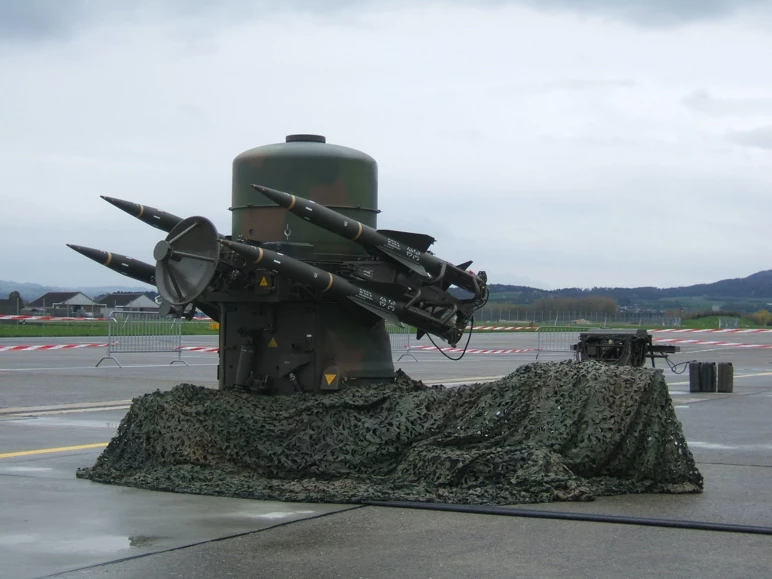
In the field of short-range air defense, the Rapier system developed by UK-based BAE Systems has been used for many years. Türkiye supplied a total of 86 launchers and 983 missiles from the Rapier systems, which have an altitude of approximately 5 kilometers and a range of 8 kilometers. However, these systems became technologically obsolete over time and began to be replaced by domestic HİSAR-A air defense systems developed by ASELSAN and ROKETSAN.
SUNGUR INSTEAD OF STINGER
One of Türkiye’s most widely used short-range air defense systems is Stinger missiles. Stinger is known as one of the most widely used platforms in the world, especially among the MANPADS class systems that can be launched from the shoulder. These systems, which have a range of approximately 8 kilometers, were used in the defense of ground troops and critical facilities in Türkiye. However, it was developed entirely locally to replace the Stinger systems. SUNGUR air defense missiles began to enter the Turkish army’s inventory.
S-400s IN THE HANGAR
One of the most controversial systems on Türkiye’s agenda was the S-400 air defense system purchased from Russia. Türkiye added the S-400 system to its inventory within the scope of the agreement it made with Russia in 2019. These systems, which include a total of four batteries and approximately 128 to 144 ready missiles along with 48 spare missiles, were delivered to Türkiye. However, on the grounds that it is not compatible with NATO infrastructure S-400 systems were not integrated into the NATO air defense network and were deployed as an independent system.
“NO WEAKNESS”
Retired Air Brigadier General Dr. While Hüseyin Çok said, “There is no major weakness in Türkiye’s air defense,” he added, “Turkey took a very correct step and launched the Steel Dome project in 2024 to establish its own unique air defense systems (HSS). The Turkish Steel Dome, which I estimate will be largely ready by 2030, will serve as a complete protection shield in the Turkish airspace with its layered and all-round unique air defense capabilities. This “The architecture includes İHTAR early warning systems, laser-based GÖKBERK platform, KORKUT close air defense system, HİSAR-A + and HİSAR-O + medium range systems, as well as SİPER air defense system that will undertake long range missions.” he said.
AESA WILL HELP YOU BREATH
Dr. also emphasized that Türkiye is making a great breakthrough in domestic radar technologies. “While ASELSAN is implementing the concept of developing a wide radar family, ranging from tactical air defense to multifunctional radars with long-range early warning and guided missile fire control, studies are continuing uninterruptedly. ALP series AESA radars stand out as advanced technology systems that can detect low-visibility targets and ballistic missiles from long range thanks to their digital beamforming architecture.”
(email protected)
