
Shaking world order
Five lessons from the Munich Security Conference
Updated on February 15, 2026 – 2:58 p.mReading time: 4 minutes

Friendly in tone, tough in substance. The transatlantic crisis may have been defused at the MSC, but not ended. There is even now talk about a European nuclear umbrella.
Is there still hope for the once close and friendly relations between Europe and the USA? Or is something irrevocably falling apart under US President Donald Trump? Questions like these dominated this year’s Munich Security Conference (MSC), which is considered the most important meeting of its kind in the world. After three days of speeches and debates, the outcome is bleak, but at least not catastrophic. Five lessons from a conference amid the greatest upheaval in the world order since the end of the Cold War.
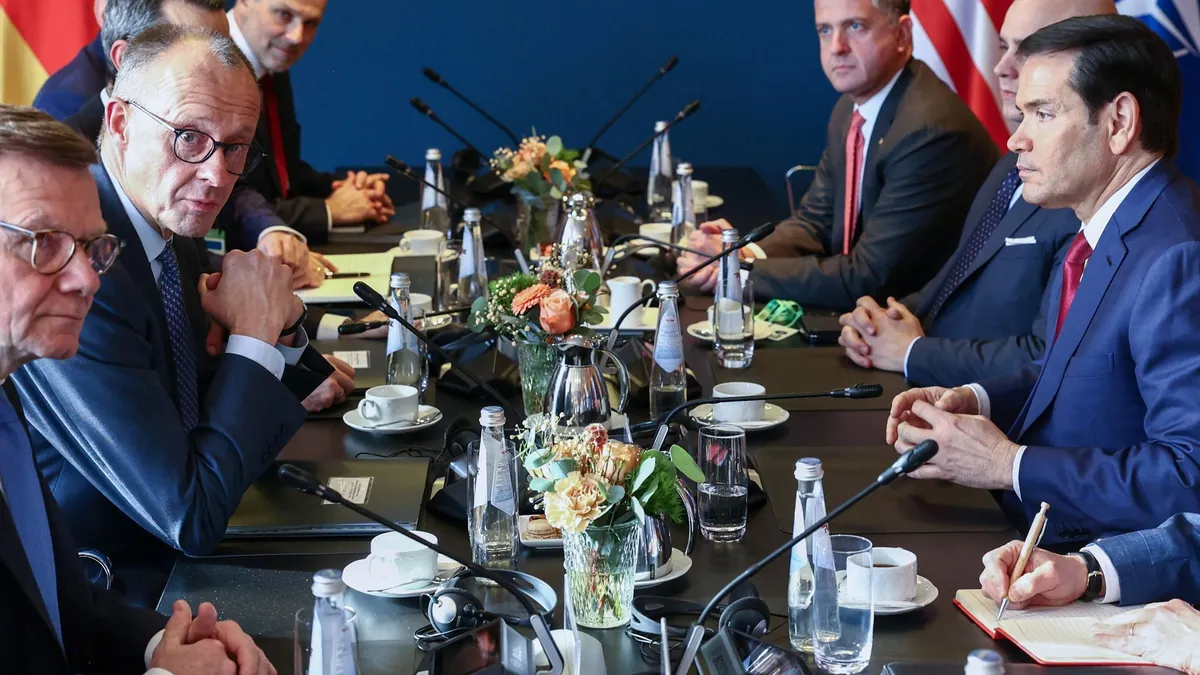
“We are not seeking a separation, but rather want to revive an old friendship” or “We will always be a child of Europe” – after US Vice President JD Vance’s shock speech at the security conference last year, Marco Rubio’s tone was significantly different. Anyone who wanted could hear that the USA was reaching out to the Europeans again.
US President Donald Trump’s envoy raved about Mozart, Beethoven, Shakespeare, the Beatles and Cologne Cathedral as an expression of Europe’s genius and culture and recalled the interwoven history. Of Germany, he said, “Our great Midwestern heartland was built by German farmers and artisans who transformed the empty plains into a global agricultural powerhouse – and dramatically improved the quality of American beer along the way.”
But was a hand really extended after the bitter conflict over the Danish island of Greenland? Is Donald Trump’s USA really ready to work together on equal terms? Anyone who listened closely found many reasons for doubt. On the issue of migration, for example, Rubio made it clear that there can only be cooperation if the Europeans follow Trump’s political course.
“In the search for a world without borders, we have opened our doors to an unprecedented wave of mass migration that threatens the cohesion of our societies, the continuity of our culture and the future of our people,” he said. The United States would like to work with its European friends to change this, but if necessary they would also be prepared to do this alone.
He also accused the Europeans of poor and timid policies in other areas. “The alliance we want must not remain incapable of action because of fear,” he demanded, accusing the Europeans of fear of climate change, war and technology. He also made it unmistakably clear that the USA no longer believes in the traditional rules-based international order and sees great power politics as an alternative.
