
Nuclear deterrence
EPP boss Weber is putting pressure on a European nuclear umbrella
Updated on January 31, 2026 – 3:01 p.mReading time: 4 minutes

The French president proposed a European nuclear shield as early as 2020. The response was very cautious for a long time. Now the project could gain momentum.
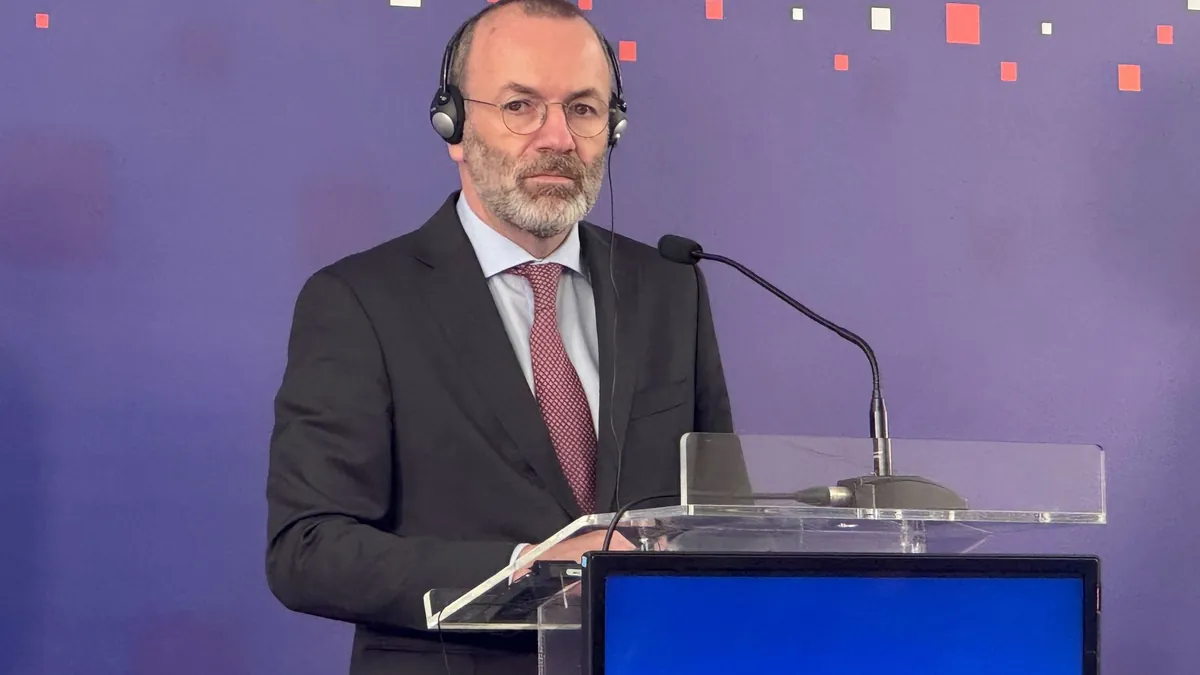
In view of the crisis in relations between the USA and Europe, EPP leader Manfred Weber has called on EU heads of state and government to push the idea of a European nuclear shield more strongly. French President Emmanuel Macron’s proposal to make the French nuclear arsenal available for this purpose is a “generous offer,” especially against the background of the “new developments in the USA,” he said in Zagreb after a top meeting of the European People’s Party, which brings together Europe’s conservative parties.
“That’s why I’m absolutely in favor of the heads of state and government really taking up this offer, sitting down together and then considering how this option of French nuclear weapons can be used for European security,” emphasized CSU deputy chairman Weber. “I therefore very much welcome Macron’s initiative and also all those who are now contributing to this discussion. This is necessary.”
Macron had already offered Germany and other EU partners talks about European cooperation on nuclear deterrence in 2020, during US President Donald Trump’s first term in office. However, it met with just as little response from then Chancellor Angela Merkel (CDU) as it did from her successor Olaf Scholz (SPD). Chancellor Friedrich Merz (CDU), on the other hand, had already declared his willingness to discuss this during the election campaign and confirmed this during his inaugural visit to Paris as Chancellor in May.
When Union parliamentary group leader Jens Spahn called for a German leadership role in the discussion last summer, he slowed down. Although he accepted an offer from France to talk, there have been “no further initiatives so far.” It is a task “that only arises in the very, very long term because there are a large number of questions that need to be answered.”
A main reason for the reluctance is probably that the USA, as a nuclear protective power, cannot be easily replaced in terms of the number and quality of weapons. There are fears that Trump could withdraw US nuclear weapons if Europe discusses too loudly about its own protective shield.
On the other hand, as a consequence of the current estrangement with the USA under Trump, the EU wants to try to stand on its own two feet as much as possible when it comes to defense issues. In his government statement on Thursday, Merz called for Europe to become an independent power as an alternative to autocracy and imperialism.
NATO’s nuclear deterrent is currently based on US nuclear weapons, of which it is estimated that around 100 are still stationed in Europe – some of them at the Büchel air base in the Eifel. In an emergency, the bombs stationed in Büchel are to be used by Bundeswehr fighter jets – this is what NATO’s so-called nuclear sharing provides for. US nuclear bombs are also said to be stored in Belgium, the Netherlands, Italy and Turkey. There is no official information about this.
