

Russian financial politician warns
Putin goes out the money
Updated on July 17th, 2025 – 06:29Reading time: 3 min.

The income in the Russian state budget decreases. A financial politician warns that the reserves will soon be empty.
The Russian state treasury apparently empties threatingly quickly. The chairman of the Russian Committee for Finance and Financial Markets, Anatoly Artamonov, has given a significant warning. There must be “urgent” changes, he said, according to a report by the independent Russian online newspaper “Moscow Times”.
According to this, the development of important economic indicators is rated as “increasingly pessimistic” and Putin’s economy is missing more and more raw materials, according to the Russian Senator. “We have to use all available resources to increase the income,” said Artamonov.
In particular, the abolition of some tax reliefs must be considered, the volume of which currently constitutes a third of the Russian budget. Artamonov also criticized that there are still many resistance to the privatization of companies.
Russian President Vladimir Putin has switched to war economy since the attack on Ukraine, which was contrary to international law. Every third ruble of the state budget is used for the war. At the same time, the income decreases. As the “Moscow Times” cited from data from the Russian Ministry of Finance, profits from gas and oil decreased by 17 percent in the first half of the year. The total income in the household rose by three percent, but this is equivalent to a decline in inflation. In contrast, expenses rose by 20 percent. The result: Since the beginning of the year, a deficit of 3.7 trillion rubles (38.95 billion euros) has formed in the household – six times higher than in the same period a year ago.
Apparently Putin can hardly fall back on saved. The reserves of the national welfare fund (NWF), which also covers Russian pension insurance, are drastically declining, according to the “Moscow Times”. Of the $ 120 billion available before the war, there are only $ 52 billion. The fund managers already warned at the end of June that the health insurers will be empty in the event of falling oil prices next year.
The Russian National Welfare Fund (National Welfare Fund) is a state asset fund of the Russian Federation, which was originally created to ensure long -term stability for the pension system and to compensate for budget deficits in economically difficult times. The fund feeds primarily from income from the oil and gas business- especially when the oil price increases via a defined threshold. The NWF is managed by the Russian Ministry of Finance and serves as a reserve to cushion economic crises or unexpected expenses.
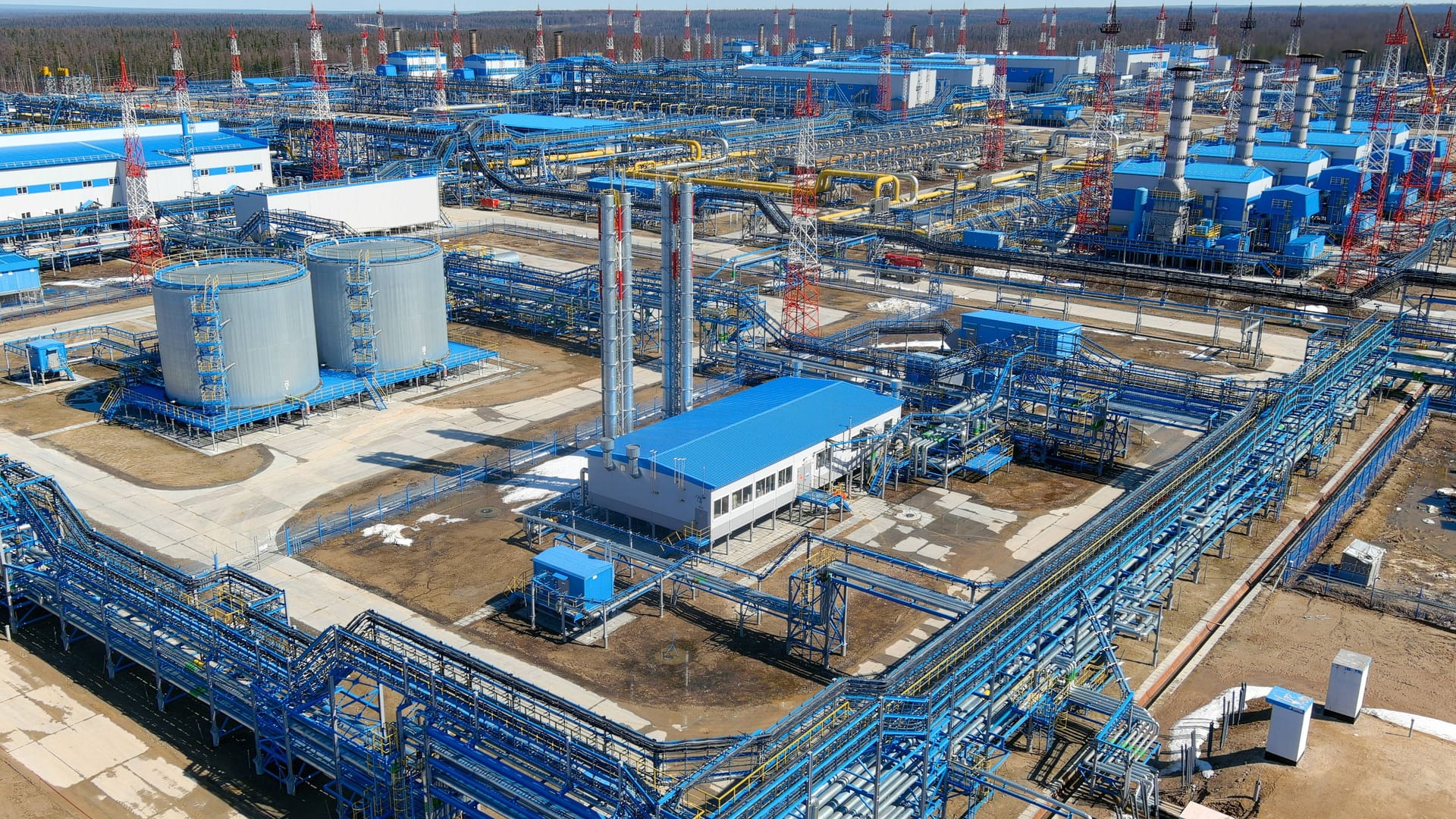
The pressure on Putin and his household grows, also because of the international sanctions. If the maximum price for oil set by the EU drops from $ 60 to $ 47, Russia could lose up to $ 15 billion (13.85 billion euros) per year, said Wladimir Chernow, analyst at the Kazakh financial institution Freedom Finance Global. The Russian budget amounts to $ 486 billion, around 105 billion come from the oil and gas business.
According to the “Moscow Times”, Russia now wants to try to compensate for the fluctuations in oil price with the welfare fund. If the price falls, the fund has to compensate for, the income increases, the pension fund is brought back to money. Because of the sanctions, Russia tries to deliver oil through a shadow fleet, the ships of which are registered in other countries. However, more and more of these ships are discovered and also occupied with sanctions.
According to the International Energy Agency, Russian exports of crude oil and oil products fell to 7.3 million barrels per day compared to the previous month by 230,000 barrels per day – this corresponds to a decline of 380,000 barrels per day. Because the oil prices fell at the same time, the income also dropped: compared to April, they decreased by $ 480 million to $ 12.6 billion, which corresponds to a decrease of $ 4 billion in the year. Lower production (or consumption in the war) should further deteriorate the prospects for higher income.
