
Location at a glance
Israel decides to expand the attacks in the Gaza Strip
Updated on 05.05.2025 – 04:01 a.m.Reading time: 4 min.

Tens of thousands of reservists are moved into the Israeli army for an expansion of the offensive in Gaza. There the humanitarian situation is catastrophic. Israel also threatens the Huthi and Iran.
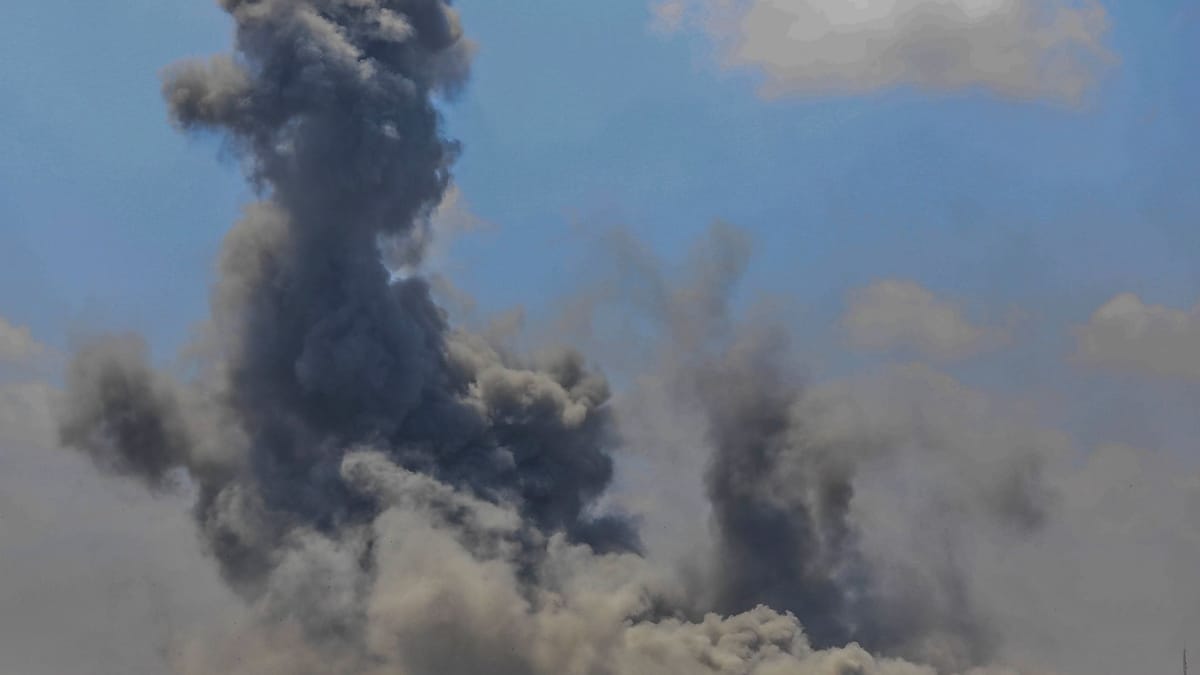
Israel wants to further tighten his offensive in the Gaza Strip against Islamist Hamas. This was unanimously decided at a meeting of the security cabinet by Prime Minister Benjamin Netanyahu, various Israeli media reported on civil servants during the night. The aim is to increase the pressure on Hamas in order to force the release of further hostages. In addition, the security cabinet approved a plan to resume aid deliveries in the sealed off coastal strips.
The “Times of Israel” reported that the plan to expand the offensive will only be implemented in the region after the visit of US President Donald Trump in the region next week. Until then, efforts would be made to achieve an agreement with Hamas via an ceasefire and a hostage agreement.
According to Israeli media reports, Netanyahu had previously given the green light for preparing an increased military offensive. The Israeli chief of staff Ejal Zamir confirmed the massive mobilization of reservists that have already been decided to expand the attacks in the Gaza War. “This week we send tens of thousands of convening commands to our reservists to strengthen and expand our operation in the Gaza Strip,” said the military director when visiting a naval base south of Haifa.
According to the news portal “Ynet”, some reservists are to replace regular troops that are currently stationed on the northern border or in the West Bank. These units are then to be laid in the Gaza Strip. For some reservists, it has been seventh use since the beginning of the war.
After an almost two -month ceasefire, the Israeli army resumed its attacks in the Gaza Strip on March 18. The indirect negotiations on renewed ceasefire – conveyed by the USA, Egypt and Qatar – have so far been no breakthrough.
For around two months, the military no longer has humanitarian aid deliveries in the sealed area in which around two million people live. An expansion of the attacks is likely to further exacerbate the already precarious humanitarian situation in the Gaza Strip. Aid organizations speak of catastrophic conditions. The army accuses the Hamas to sell the relief goods profitably to finance their fighters and weapons.
The mechanism had been revised in the plan that has now been granted by the security cabinet to minimize a junction of goods through Hamas. International organizations and private security companies should distribute food and relief supplies to families. The Israeli army is not directly involved, but should protect the distribution of the goods. The news portal “Axios” recently reported that the USA and Israel planned to bring relief goods past the Gaza Strip with the help of a private US company.
Even before the security cabinet was adopted, the United Nations made it clear not to support the plan of Israel for a relief goods delivery in the Gaza Strip due to great humanitarian concerns. “(The plan) violates fundamental humanitarian principles and seems to be designed to reinforce control over vital goods as a means of pressure – as part of a military strategy,” said the humanitarian UN team in the Gaza Strip.
Israel wants to give the UN’s approval to distribute relief supplies over Israeli outputs under conditions that the Israeli military defines. This strategy is dangerous because it drives the civilian population into militarized zones to maintain rations. This could be life -threatening for people and the helpers. Less mobile people could not be achieved in this way that forced displacement is being promoted.
