
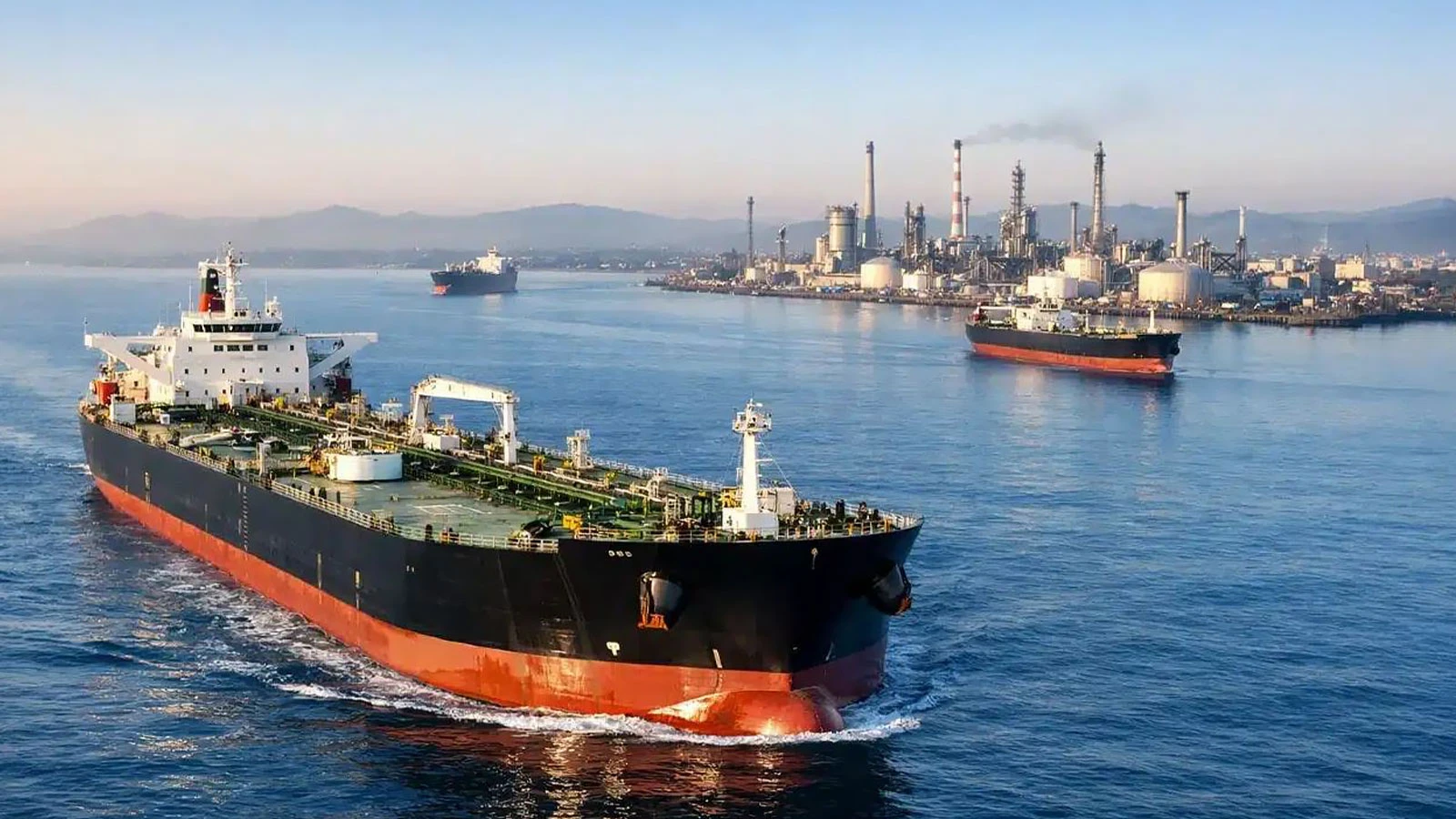
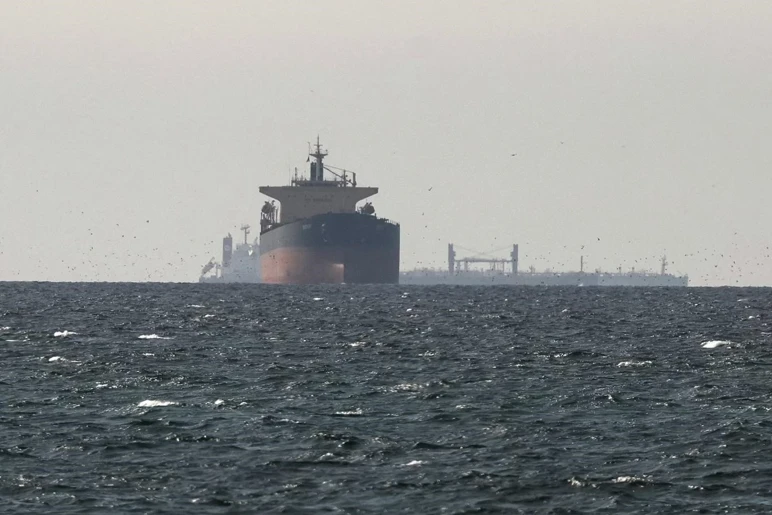
The crisis in the Strait of Hormuz has clearly revealed how dependent the world economy is on a narrow energy strait. The de facto closure after the war, and the interruption of the oil flow of approximately 21 million barrels per day, created a chain rupture not only in the energy markets but also in the entire global system. While the failure to compensate for the approximately 13 million barrel supply deficit in the oil market due to the war in the short term raises concerns, it remains unclear when the chaos affecting approximately 20 percent of the energy supply will end.
SAUDI’S GIANT RESERVE
The weight of the Gulf, which caused an earthquake in global markets, in the system is reflected in the figures. In the region, which has an economic size of approximately 3.08 trillion dollars, oil export revenue reaches 581.1 billion dollars and natural gas export revenue reaches 70.9 billion dollars. While Saudi Arabia is the largest actor in the region with a national income of 1.24 trillion dollars and oil export revenue of 223.4 billion dollars, Qatar leads with a per capita income of 76 thousand 690 dollars. While per capita income in the UAE is above 50 thousand dollars, the fact that these levels remain much lower in Iran and Iraq shows that energy wealth does not produce equal prosperity even within the region.
55 PERCENT OF THE MARKET
Gulf countries hold 55.3 percent of global oil reserves with reserves of approximately 866 billion barrels. The region’s daily crude oil production is 22.95 million barrels and exports are 21.07 million barrels. These figures correspond to 28.1 percent of global oil exports. The picture is no different for natural gas. While the Gulf region contains 39.3 percent of global natural gas reserves, its share in production remains at 16.6 percent. This difference shows that reserves alone are not sufficient; It shows that infrastructure, investment and liquefaction capacity have become decisive. Qatar and the UAE’s total LNG export of 100 billion cubic meters corresponds to approximately 20 percent of global LNG trade. The crisis in Hormuz hits LNG trade, one of the most sensitive and least flexible areas of the global system, rather than total energy production.
GLOBAL INCREASE WAVE
Price increases in the first six weeks of the war reveal the extent of the chaos. So much so that Jet fuel prices increased by 105 percent in the 6-week period, recording the sharpest increase. Heating oil rose by 68 percent, ammonia by 60 percent, crude oil by 60 percent, European natural gas by 58 percent, diesel by 50 percent, urea by 48 percent, gasoline by 43 percent, fertilizer by 35 percent and petrochemical products by 25 percent. The increase in aluminum remains at 15 percent, in vegetable oils 10 percent, and in the general food index it remains at 2.5 percent for now.
THE TABLE IS DARK
The macroeconomic picture is even darker. Global growth expectation was reduced from 4 percent to 3.65 percent for 2026. It is stated that if the war is prolonged, this rate may decrease to 2.6 percent.. An additional price pressure of 3-4 percent is expected on global inflation in the short term. The increase in annual inflation from 2.4 percent to 3.3 percent in the USA and from 1.9 percent to 2.5 percent in the Eurozone in March shows that the effect of the energy shock on the general level of prices is accelerating.
RISKS FOR Türkiye
One of the most critical data for Türkiye is natural gas dependency. Türkiye’s natural gas demand is 52,784 million standard cubic meters, and its import is 49,980 million standard cubic meters. This increases the dependency rate to 94.69 percent. The energy pressure in Hormuz directly shakes not only the Gulf but also a wide import industry belt, including Türkiye. This situation means multi-layered pressure for Türkiye through energy bills, current account deficit, production costs and inflation.. Similar fragility is noteworthy in oil. Türkiye’s oil demand is measured at 900 thousand barrels/day and production at 140 thousand barrels/day.
PRESSURE WILL INCREASE IN THE ECONOMY
Corporate Economics Expert Gülsev Duran, while commenting on the current data, says, “Due to the crisis in Hormuz, LNG is being squeezed, refineries are becoming incompatible, jet fuel is jumping, fertilizer is becoming more expensive, aluminum production is being suppressed, inflation is accelerating again and growth is being pulled down. In other words, what is shaking the world is not just the war; it is the fact that the war has coincided with the most sensitive vein of the global economy. The narrowing line in Hormuz is turning into an expanding economic pressure area for the rest of the world.”
(email protected)
