
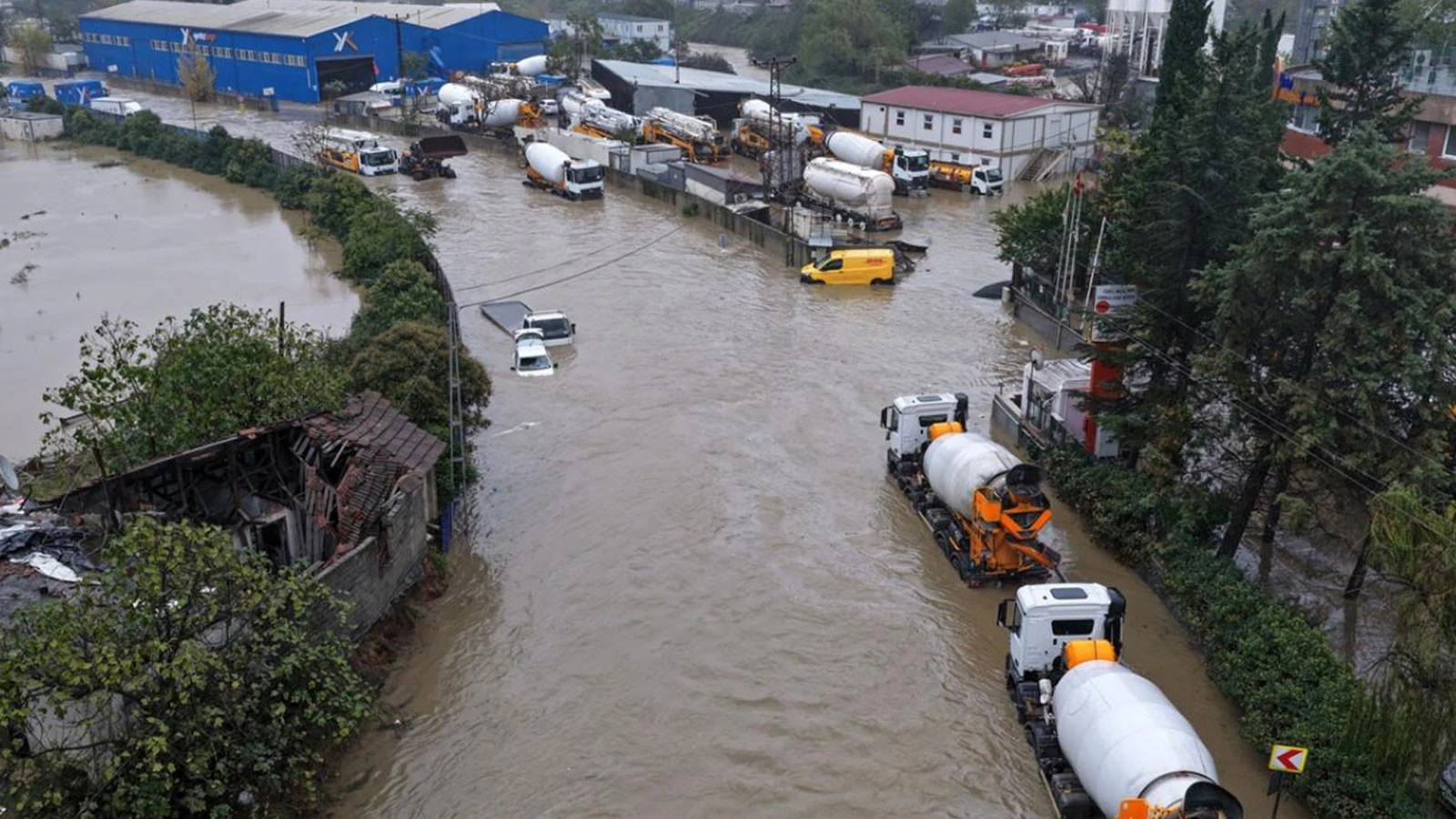
The scientific balance sheet of the heavy rain that brought life to a halt in Istanbul on October 14, turned the roads into lakes and caused the evacuation of hundreds of people has been revealed. ClimaMeter, which studies extreme weather events around the world, compared the meteorological conditions that led to the disaster with similar events in the past. According to the research, weather systems exacerbated by the combined effect of human-induced climate change and natural climate movements cause stronger precipitation in the west and northwest of Türkiye.
HEAVY BALANCE SHEET
In the research, the dimensions of the disaster in Istanbul were also revealed. At least 9 people died During the disaster, 1,277 floods and 15 landslides were recorded throughout the city, and 595 people were evacuated by the teams.. Due to heavy rain, roads were flooded, transportation was disrupted and daily life came to a halt in many regions.
RAINFALL AND WIND INCREASED
When scientists compared similar weather conditions between the period 1950-1987 and today, they encountered a remarkable picture. In the large region where heavy rains were observed, the amount of precipitation increased by approximately 7 percent and wind speed by 9 percent. It was determined that temperatures in similar weather systems increased by up to 1.5 degrees in some regions. It was determined that the increase in precipitation became especially evident in Western and Northwest Anatolia and the Black Sea coast north of Istanbul, while the winds became stronger in the Marmara and Aegean regions.
AT RISK
One of the most striking results of the research was the size of economic risk. It was calculated that approximately 14.6 million people and 558 billion dollars of economic activity were at risk in regions exposed to the danger of excessive rainfall. It was stated that approximately 3 percent of rainfall-related damage can be attributed to human-induced climate change.
THE DANGER IS IN THE INFRASTRUCTURE
Dr. from the French National Center for Scientific Research. Davide Faranda pointed out that similar weather systems produce heavier rainfall and wind than in the past. Faranda stated that the drainage systems and urban planning of cities should be adapted to the excessive rainfall that the warming Mediterranean will bring. From the University of Sheffield, Dr. Haosu Tang emphasized that it was observed that the rains were getting more intense around Istanbul, but no statistically significant increase was detected in the city center. According to Tang, while climate change cannot be shown as the sole cause of every flood, the lack of a significant change at the local scale does not mean that future risks have disappeared.
EVACUATION SYSTEMS ARE A MUST
The research pointed out that with the intensification of extreme rainfall, the infrastructure capacity and urban planning of cities have become more important. It was stated that especially dense construction, inadequate drainage systems and settlements in stream beds may increase the risk of floods. While scientists emphasized that rising temperatures in the Mediterranean basin may pave the way for more severe rainfall in the future, they stated that the existing infrastructure should be adapted to changing climate conditions. IIt was noted that in cities with high population and construction density, such as Istanbul, rainwater drainage systems should be strengthened, flood risk areas should be determined and extreme weather events should be taken into account in urban planning.
