
Chernobyl has almost become synonymous with the concept of “dead zone”. A place known for ruins, radiation and eerie silence. This is not an exaggeration: for decades, many scientists assumed that the land around the plant would remain biologically devastated for generations. But the truth that emerged almost forty years after the explosion was much more complex and surprising than anyone expected.
When the reactor exploded on April 26, 1986, Soviet authorities evacuated more than 100,000 people and established a 30-kilometer exclusion zone around the plant. Over time, this area reached approximately 2,600 square kilometers in Ukrainian territory. This means an area approximately 1.7 times the size of Mexico City. Settlement, economic activity and public access are prohibited in the area.
Since then, the region has remained one of the most radioactively contaminated places on the planet. But what almost no one predicted was that human withdrawal from this area would have an unexpected result: Chernobyl became a haven for wildlife.
An unintentional haven for wildlife
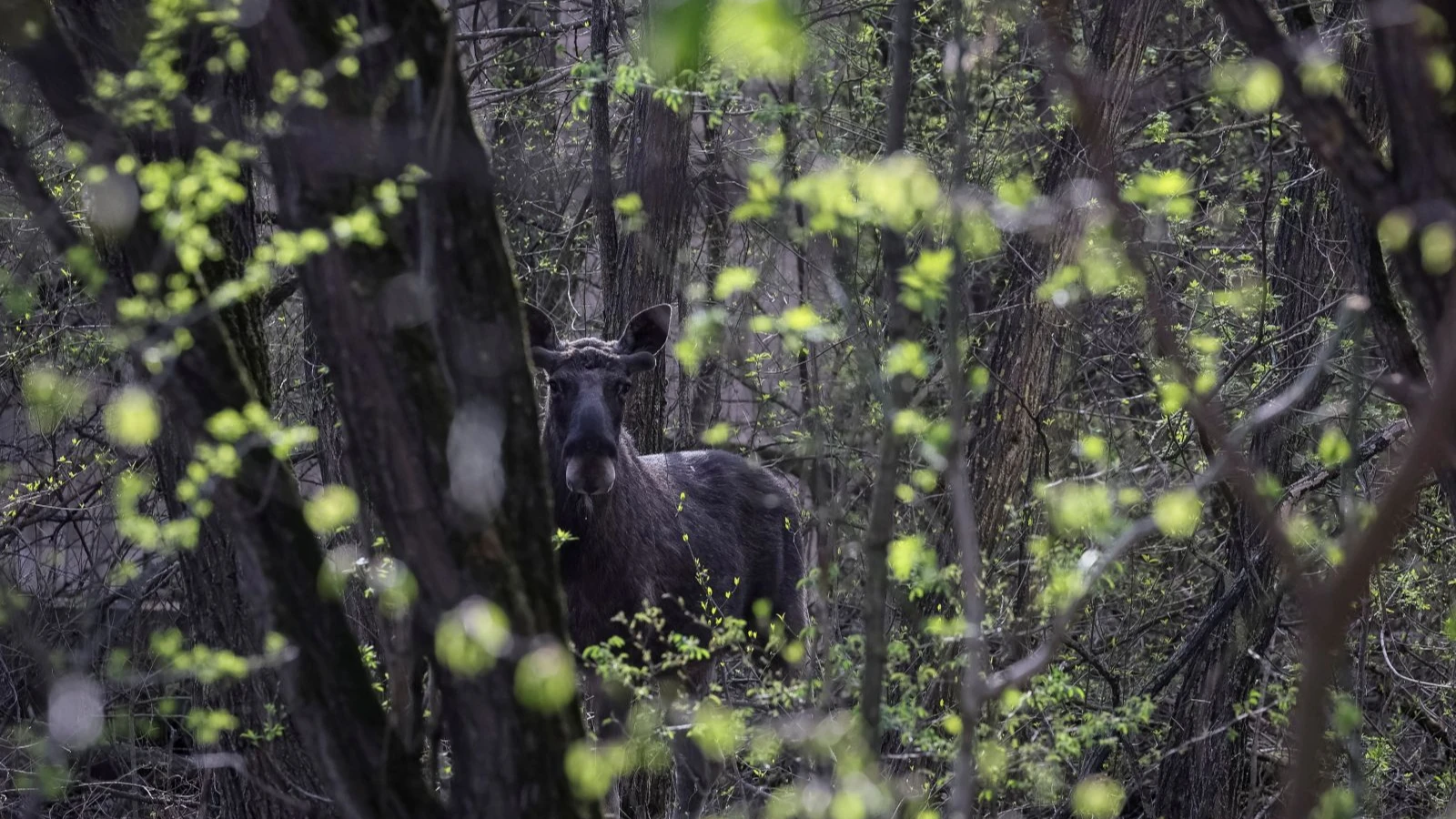
Today the Chernobyl Exclusion Zone; It is home to significant populations of species such as gray wolves, brown bears, Eurasian lynx, moose, wild boars, red deer and European bison. In fact, Przewalski horses, which were once considered extinct in nature and were reintroduced to the region in the late 1990s, also roam freely in the region.
More than 150 Przewalski horses live in one particular area on the Ukrainian side alone, Nick Dunn, professor of urban design at Lancaster University, reported in The Conversation.
Now a new study led by Ukrainian ecologist Svitlana Kudrenko of the Albert Ludwig University of Freiburg in Germany, published in the journal Proceedings of the Royal Society B, provides the most detailed picture to date of this unexpected wildlife revival.
There is more life than protected natural reserves
The research team placed camera traps in an area of 60 thousand square kilometers in northern Ukraine between 2020-2021. This area included the Chernobyl Exclusion Zone, four nearby nature reserves, and some areas without official protected status.
In the study, 31 thousand 200 records of 13 different wild species were obtained. Of these, 19,832, or more than half, were recorded directly within the Chernobyl reserve.
These figures do not show the number of individual animals; because the same animal may have triggered the camera more than once. Despite this, the statistical models created from the data surprised scientists. Because species diversity, density and frequency of animal detection by cameras were significantly higher in the Chernobyl Exclusion Zone than in nature reserves actively managed for conservation.
Kudrenko said in a statement to IFLScience:
“I was surprised that despite their strict management, species diversity in nature reserves was lower than in the exclusion zone.”
The biggest reason for recovery: The absence of people
The inevitable question is: Does all this happen despite or with radiation?
The short answer seems to be that the impact of radiation may be less than expected, at least for some large mammal species.
A study published in 2016 showed that there was no clear relationship between the distribution of mammals in the Chernobyl Exclusion Zone and radioactive pollution levels. Kudrenko’s new study did not focus directly on this issue. The aim of the research was to understand what happens when people almost completely withdraw from a geography.
Evolutionary biologist Germán Orizaola, who has been researching in the region for years but did not participate in this study, told BBC Science Focus:
“If you focus on species that are doing poorly, you can blame radiation. But often it’s the environment itself that changes. Ecology and the absence of humans are huge factors.”
Because after the accident, human activity in the region largely disappeared. Hunting is over. The roads are broken. Agricultural areas were abandoned. Human presence, one of the greatest threats to large wildlife, has almost completely disappeared. What remains is an almost forgotten region.
According to IFLScience, the Przewalski horses provide a particularly striking example. Camera traps recorded these horses inside the exclusion zone more than a thousand times; Outside of the zone, he didn’t record a single time.
A similar situation occurred for brown bears and red deer. While these species were spotted thousands of times within the Chernobyl Exclusion Zone, they were almost never seen in surrounding areas.
On the other hand, the red fox did not show a similar increase because it is a highly adaptable species that is accustomed to living with humans. According to the researchers, this shows that this “ecological paradox” provides great benefits, especially for species that are more sensitive to human presence.
Perhaps the most striking example was seen in deer. According to Science Alert, scientists observed that the presence of these animals decreased when researchers entered the area and began studying the deer.
Traces of adaptation in Chernobyl animals
However, radiation is not a completely neutral element in this story. While many species appear to thrive in the absence of humans, some may be showing signs of adapting to Chernobyl’s extreme conditions.
For example, eastern tree frogs in the Chernobyl Exclusion Zone are on average 43 percent darker in color than frogs in the rest of Ukraine. The most likely explanation for this lies in melanin. Melanin is the pigment responsible for dark coloration and also helps protect cells from damage caused by radiation.
Scientists think that natural selection quickly favors darker-colored individuals. It is stated that this occurred not because a new mutation emerged, but because this feature already existed in the population and provided an advantage in the new radioactive environment.
An even stranger situation is seen directly inside the destroyed reactor. Melanin-rich black fungi grow on the reactor walls, which can colonize areas where ionizing radiation is intense. Laboratory experiments even suggest that these organisms appear to grow stronger when exposed to radiation.
Whether these fungi use some of the radiation energy as a metabolic source is still an open hypothesis. However, this possibility is remarkable enough to attract the attention of many researchers.
Chernobyl’s gray wolves are also the focus of scientific studies. A study published in 2024 found immune system changes in these worms similar to those observed in human patients undergoing radiotherapy. Additionally, some mutations that may be linked to protection mechanisms against cellular damage were pointed out.
The message of Chernobyl
Beyond the nuclear paradox, Kudrenko’s work sends a direct message to protected area managers around the world: Area size matters, associated ecosystems matter, and actual control—not just paper conservation status—matters.
The best-functioning reserves are not the ones that are most tightly regulated on paper; the biggest ones, the ones that are interconnected and the ones that can really keep people out. At this scale, the habitat mosaic becomes large enough for large animals to establish viable populations over the long term.
Kudrenko said in a statement to IFLScience:
“Large protected areas are vital to the long-term survival of rare species. It can be tempting to lower research standards in challenging areas, but this should be avoided.”
Since the Russian invasion in 2022, access to the region has become more difficult. This makes it difficult to conduct new research in the field. Yet, almost forty years after the disaster, Chernobyl has become a place that cannot be easily compared to any other ecosystem. This ecosystem has been shaped by both radiation and decades of human absence and unexpected ecological changes.
In conclusion, Chernobyl does not show that radiation is harmless. But it points to something more troubling: the near-total absence of human activity for many species; It may be more convenient than living with roads, agriculture, hunting, and continued urbanization.
