
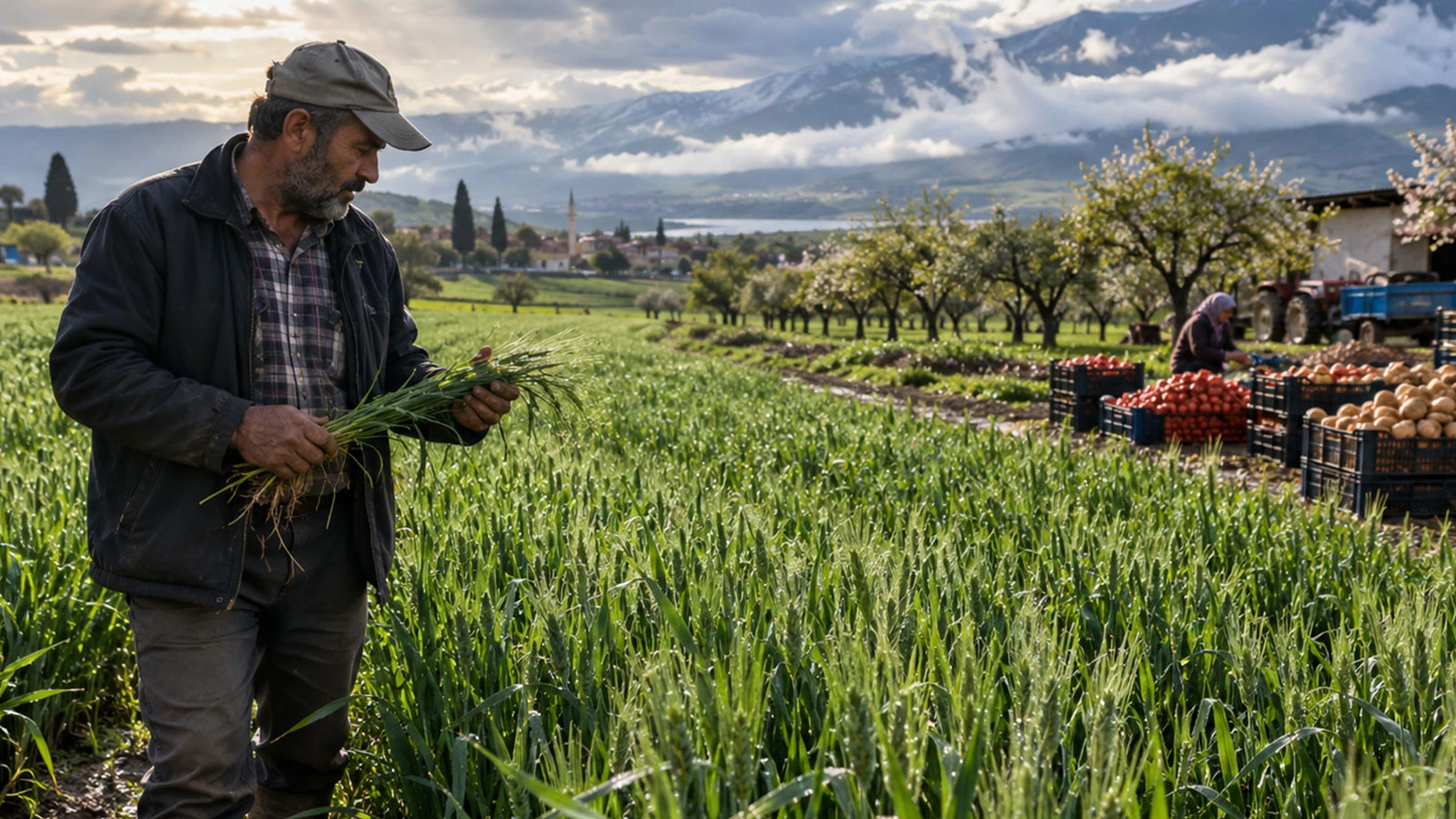
Türkiye is experiencing one of the most remarkable changes in agricultural production in recent years. According to the data of the Ministry of Agriculture and Forestry and the General Directorate of Meteorology, an average of 741.6 kilograms of precipitation per square meter fell in the water year between October 1, 2025 and September 30, 2026. This amount was 422.5 kilograms in 2025. Thus, 319.1 kilograms more rainfall per square meter was recorded in one year. The long-term average of 573.4 kilograms was exceeded by 29 percent. While Türkiye reached the highest rainfall level of the last 66 years, a significant recovery began in agricultural production. However The latest production estimates announced by TÜİK on October 23 revealed that the rainfall record was not reflected equally on every product.
VEGETABLE PRODUCTION HAS DECREASED
According to TURKSTAT’s second crop production forecast for 2026, an increase of 17.3 percent in the production of grains and other plant products and a 60.8 percent increase in the fruit group is expected. On the other hand, vegetable production is predicted to decrease by 0.8 percent to 33 million tons. It is estimated that grain production will increase by 30.9 percent and reach 44.8 million tons.
INCREASE IN WHEAT
One of the most remarkable recoveries is happening in wheat. Production, which was 18 million tons last year, is expected to increase to 24.8 million tons in 2026. This means an increase of approximately 6.8 million tons. While a 66.7 percent increase is expected in barley production, a decrease is expected in corn and potatoes.
97 PERCENT INCREASE IN TWO PRODUCTS
A much more striking picture emerges in fruit production. According to TUIK, cherry production is expected to increase by 289.7 percent, apples by 97.4 percent, peaches by 109.2 percent, oranges by 76.4 percent, lemons by 65 percent and hazelnuts by 62.6 percent. However, not all of these increases are due to abundant rain. The agricultural frost experienced in 2025 caused heavy production losses in many orchards. Therefore, a significant part of this year’s high growth rates reflects the recovery from last year’s low production level.
27.6 PERCENT INCREASE IN FOOD!
The real striking contradiction is between production and prices. According to the latest consumer inflation data announced by TUIK on October 5, food and non-alcoholic beverage prices increased by 27.62 percent annually. While the general producer prices of agricultural products increased by 12.93 percent, the producer price increase in the group including vegetables, melon-watermelon, root and tuber products reached 61.07 percent. Moreover, it is estimated that onion production will decrease by 30.8 percent this year. While Türkiye is receiving record rainfall, production is decreasing in some products, and prices continue to rise rapidly in some product groups.
IT DID NOT BRING THE SAME BLESSING
Increasing rainfall can provide an advantage to farmers by reducing the need for irrigation in some regions. However, electricity, diesel, fertilizer, labor, harvest and transportation expenses continue. Moreover, after the product leaves the field, new costs are added until it reaches the warehouse, market and market. Therefore, the latest data reveal two different pictures in Turkish agriculture. On the one hand, there is a 76 percent increase in rainfall, wheat production expected to grow by 37.9 percent, and a 60.8 percent increase in fruit production. On the other hand, there are food prices rising by 27.62 percent, producer price increases in the vegetable group exceeding 61 percent, and basic products whose production is decreasing.
