
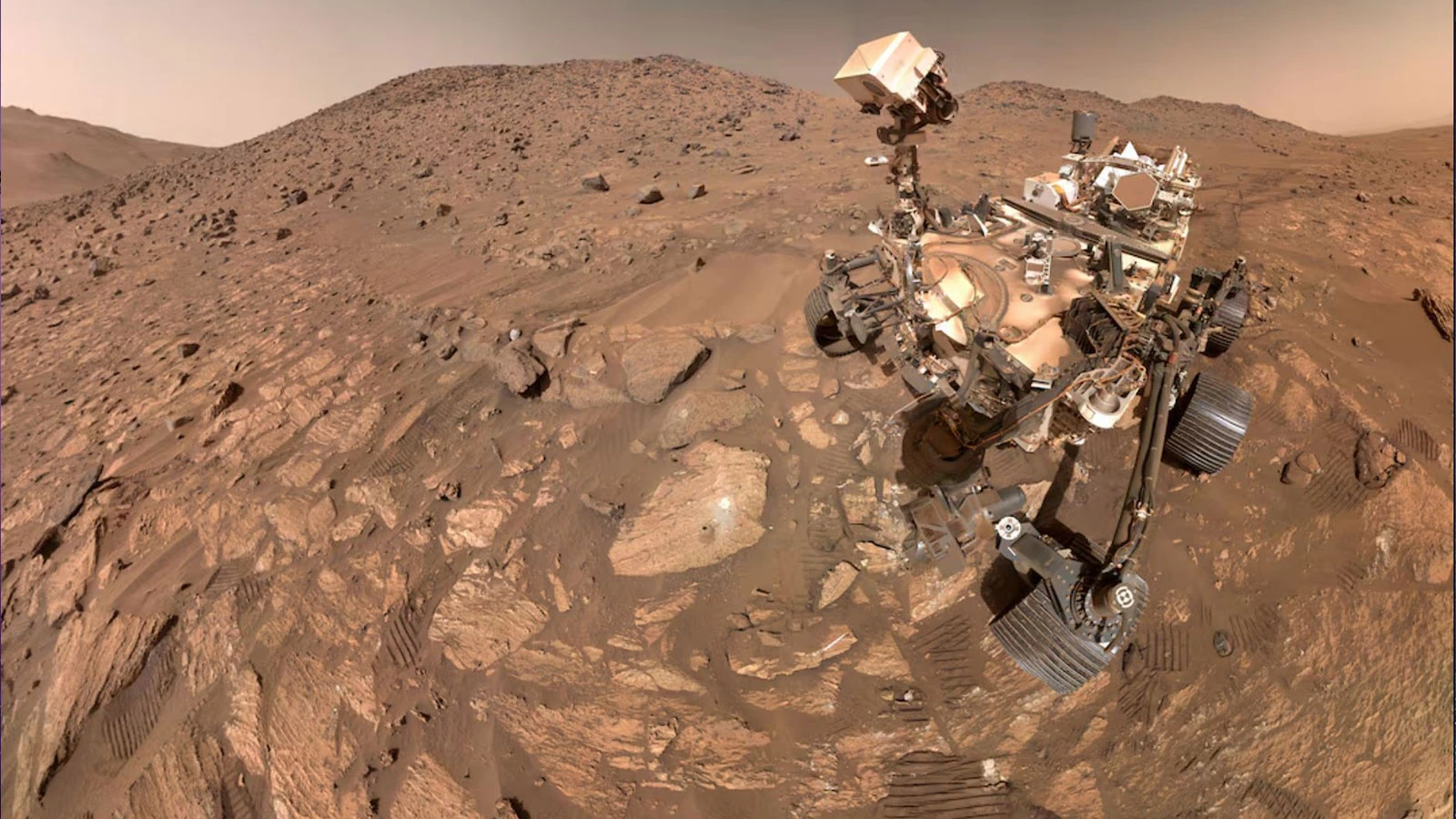
US Aeronautics and Space Administration NASA announced that Perseverance reached 45.22 kilometers on the surface of Mars on October 11, 2026. The vehicle, which landed on Mars in February 2021, surpassed the 45.16 kilometers that Opportunity covered in approximately 15 years in just five and a half years. Perseverance, which investigated traces of past microbial life in Jezero Crater, completed more than 90 percent of its route with its own navigation, thanks to its advanced autonomous driving system. NASA also evaluates the vehicle’s technical capacity to reach 100 kilometers.
FROM THE MOON TO MARS, HOW MANY MILES DID WHICH VEHICLE TRAVEL?
The journey of space exploration vehicles on the surface began in 1970 with the Soviet Union’s Lunohod 1 vehicle. Lunohod 1 advanced approximately 10.5 kilometers, and Lunohod 2, sent in 1973, advanced approximately 39 kilometers. The Apollo 15 Moon vehicle used by US astronauts traveled 27.8 kilometers in 1971, the Apollo 16 vehicle traveled 26.7 kilometers in 1972, and the Apollo 17 vehicle traveled 35.9 kilometers in the same year. On Mars, Sojourner in 1997 advanced approximately 100 meters, Spirit in 2004 advanced 7.73 kilometers, and Opportunity advanced 45.16 kilometers. Yutu-2, which China launched on the far side of the Moon in 2019, also made an exploration of approximately 1.6 kilometers. Perseverance’s new record also revealed the progress in the mobility of robotic exploration vehicles.
JUPITER AND SATURN NEXT
The year 2028 draws particular attention in the future targets of space research. The European Space Agency, with the support of NASA, plans to send the Rosalind Franklin vehicle to Mars at the end of 2028. The vehicle, which is expected to reach the planet in approximately 2030, will be able to take samples two meters below the surface to search for traces of life. Dragonfly, which NASA plans to launch in 2028, will reach Saturn’s Titan moon in 2034 and explore dozens of different points with propellers instead of wheels. Europa Clipper, which NASA launched in 2024, is planned to reach Jupiter in 2030 and examine the underground ocean of the ice-covered Europa moon. In these missions, the vehicles are expected to travel more than 45 kilometers on surfaces.
VOYAGER 1 BEYOND 25 BILLION KILOMETERS
Humanity’s distance journey in space reached new stages with the Soviet Luna 1 passing near the Moon in 1959, the US Mariner 4 reaching Mars in 1965, the launch of Voyager 1 and Voyager 2 in 1977, Voyager 2 visiting Neptune in 1989, and New Horizons passing near Pluto in 2015. Today, the farthest human-made object from Earth is Voyager 1, launched by NASA in 1977. As of October 2026, the vehicle is traveling in interstellar space beyond approximately 25 billion kilometers. Voyager 2 continues its journey in the same region. The farthest telescope in space is the James Webb Space Telescope. The telescope operates around the second Lagrange point, about 1.5 million kilometers from Earth. Thus, humanity’s space exploration has expanded from journeys of a few kilometers on the Moon’s surface to missions of billions of kilometers extending beyond the Solar System.
