
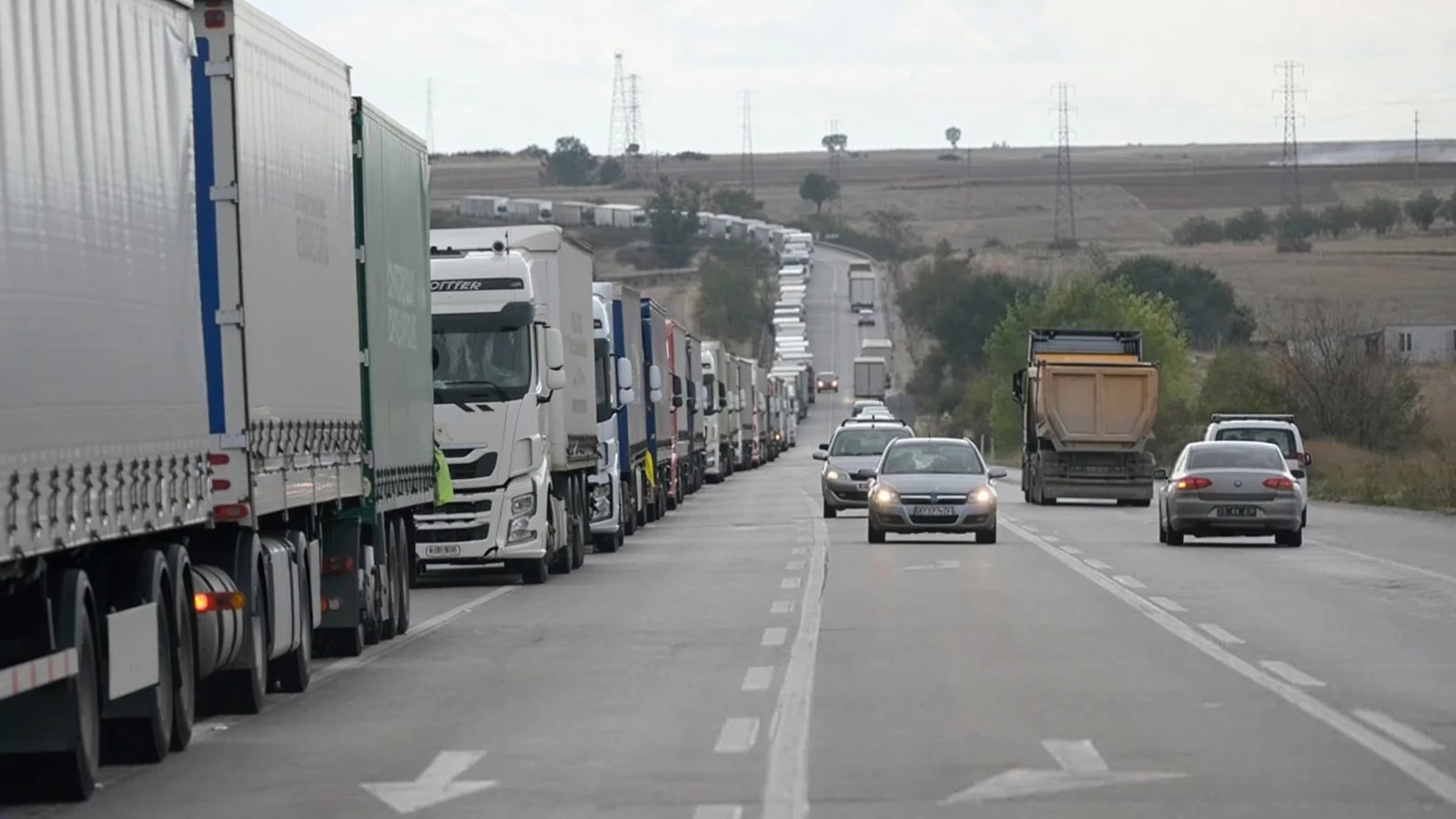
In search of a solution to the visa problem faced by the Turkish logistics industry in transportation to Europe, a new option has come to the fore through Bulgaria. International Forwarders Association (UND) President Şerafettin Aras was quoted as saying that they had received information that negotiations had begun regarding Bulgaria granting D-type visas to Turkish drivers upon the instruction of the European Union. According to Ekonomim, Aras, in his statement at the International Logitrans Transport Logistics Fair, stated that transporters in Serbia and the Balkan countries are experiencing similar problems, and that the European Union had previously promised to issue D visas through Croatia, but this promise has not been fully fulfilled yet. He also said that they would take initiatives in Brussels together with non-governmental organizations of countries experiencing problems.
UND’S REQUEST IS NOT A D VISA
However, according to UND’s previous statements, there is a difference between the D visa option and the actual demand of the sector. In the news of UND’s board of directors meeting published on September 27, Şerafettin Aras clearly stated that the association does not want a D-type visa. Aras, “We do not want a D visa. We want a multiple-entry, long-stay visa and we want ease of access to the visa.” he said. In the same statement, Aras argued that with the expansion of the Schengen area, the visa durations given to professional drivers should also be increased. UND reported that approximately 15 thousand 500 visas were received in a year, but this capacity did not meet the real need of the sector.
THE EUROPEAN COMMISSION ALSO PUT IT ON THE AGENDA
The visa issue is not only on Türkiye’s agenda. In the EU Visa Strategy published by the European Commission in January 2026, it was stated that the 90-day stay limit within 180 days may be insufficient for some professional groups working in more than one member country. Truck drivers were also included among these groups in the strategy document.. It was pointed out that the complexity of the existing rules should be reduced so that professionals who support Europe’s own industrial and service sectors and have to move between different countries can be in more than one member country for more than 90 days.
D VISA DOES NOT GIVE THE RIGHT TO UNLIMITED STAY
Type D visa is a national long-term visa issued for staying in a Schengen country for more than 90 days. A D visa issued by Bulgaria may allow its holder to stay in Bulgaria for a long time. However, this document does not grant the right to unlimited stay in other Schengen countries. According to the European Commission’s statement, a long-term visa obtained from a Schengen country can stay in other Schengen countries for a maximum of 90 days within 180 days.. Therefore, for a TIR driver who constantly carries loads to different countries in Europe, issuing only a Bulgarian D visa may not completely solve the problem.
EES CONTROLS STARTED AGAIN
One of the reasons why the problem has become more important is the European Union’s Entry/Exit System (EES). According to UND’s announcement dated October 19, some Turkish truck drivers who completed their 90-day stay were not allowed to enter the Schengen area due to electronic records. The association also announced that EES checks resumed in Bulgaria on the night of November 4. Thus, tracking the time drivers spend in the Schengen area through electronic records has become operational again.. In its statement published on October 29, the International Road Transport Union (IRU) stated that Turkish professional drivers were turned away at the border due to the 90/180 day rule, and this situation disrupted international supply chains. Problems experienced in visa and border crossings do not only limit the mobility of drivers. Vehicles waiting at the border, delivery times extending and drivers’ working patterns being disrupted also increase transportation costs.
