
Türkiye Artificial Intelligence Action Plan, prepared under the coordination of the Ministry of Industry and Technology, will determine the next four years of Türkiye. The plan, covering the period 2026-2030, was based on the headings “Recognize, Use, Produce and Manage”. Within the scope of the plan, which envisages public institutions, private sector, universities and non-governmental organizations working together, 16 priority actions were determined in four main axes. The goal is not only to be a country that uses artificial intelligence; To create an ecosystem that can develop its own models, produce this technology and offer it to international markets. For this reason, education, data security, computing infrastructure, investment, public applications and domestic technology production are addressed together in the action plan.
ARTIFICIAL INTELLIGENCE TRAINING FOR 5 MILLION PEOPLE
One of the striking targets under the human resources heading of the plan is to provide artificial intelligence literacy training to 5 million citizens within 24 months. In addition, it is envisaged that 1 million employees will undergo professional transformation evaluation by the end of the plan period and 500 international experts will participate in research, initiative and training activities in Türkiye.. These goals aim to ensure that artificial intelligence is not only the subject of software engineers or technology companies. It is planned that employees in different fields, from industry to health, from education to public services, will adapt to new technologies.
10 BILLION DOLLAR INVESTMENT TARGET
Developing artificial intelligence models requires large amounts of data and high computing power. For this reason, one of the important pillars of the action plan is data centers and computer infrastructure. The plan aims to mobilize at least 10 billion dollars of investment, mainly from the private sector, by 2030. In the same period, it is envisaged that the installed capacity of data centers will be increased to at least 1 gigawatt and a low-carbon electricity purchase agreement volume of 10 terawatt hours will be reached.. The “GPU for All” program will also be implemented so that startups, small and medium-sized businesses and university researchers can access high processing power. Thus, it is aimed to reduce the need for companies and researchers who want to develop artificial intelligence models to establish expensive computing infrastructure on their own.
DEFENSE INDUSTRY EXPERIENCE WILL BE MOVED TO THE CIVIL FIELD
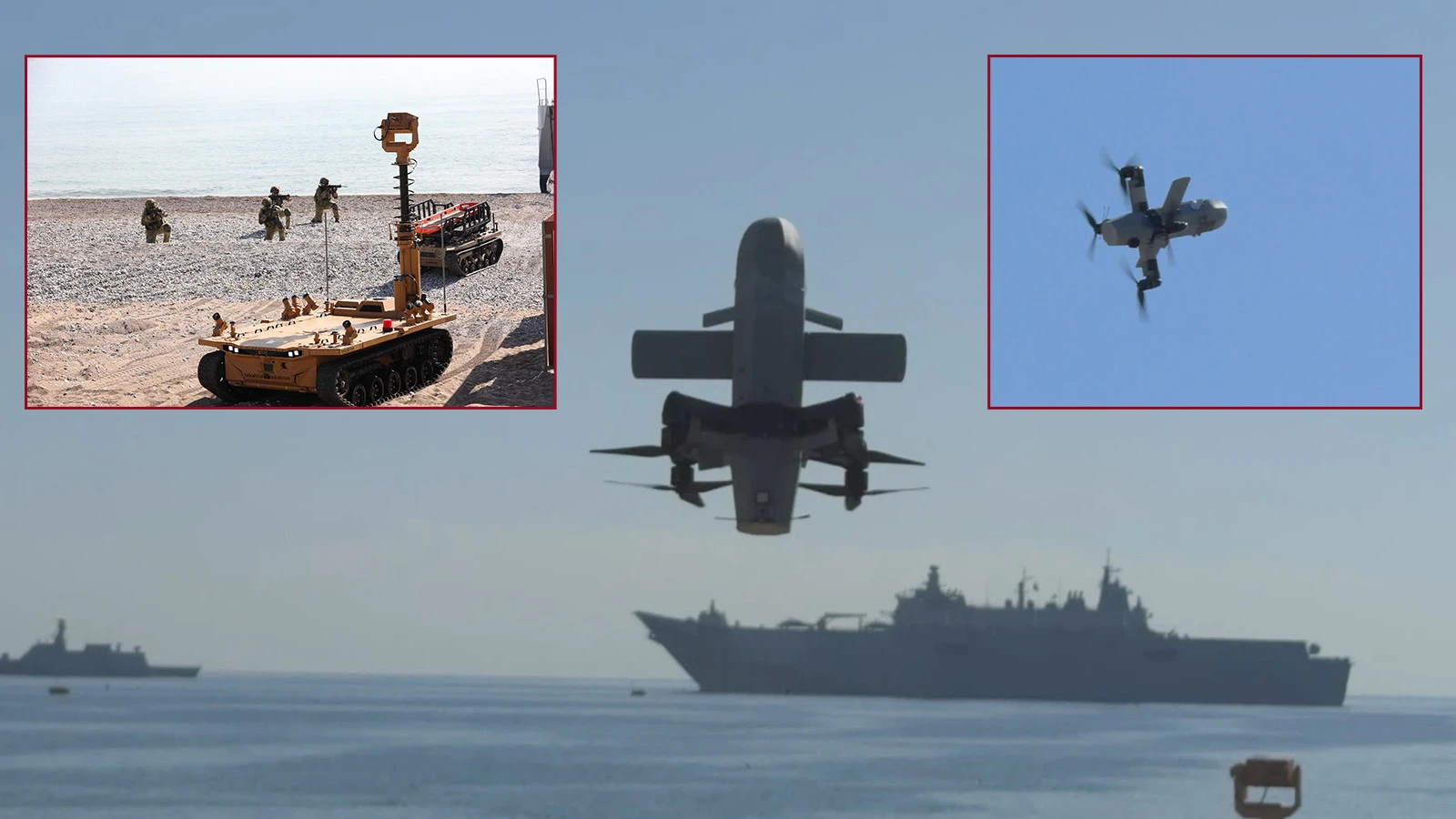
The most striking part of the action plan for the defense industry is devoted to physical artificial intelligence and robotic systems. The document includes a clear goal to transfer the robotic and autonomous system capabilities gained in the defense industry to civilian applications. This approach envisages the use of detection, motion control, sensor use and autonomous decision support technologies developed in the field of defense in areas such as industry, health and transportation.. For this purpose, dual-use technology incentives, inter-sectoral programs and acceleration programs where the defense and civil sectors will work together are planned. The action plan aims to launch three priority pilot applications, two university-industry robotics centers, three test sites and three projects for technology transfer from defense to the civilian field by the end of 2027. It is anticipated that five export or joint development agreements will be signed by 2030.
QUANTUM AND AUTONOMOUS SYSTEMS
The ALFA study announced by the Presidency of Defense Industries for 2026 is one of the examples of this transformation on the military technology side. Six scenarios were determined within the scope of the exercise, which aims to bring together artificial intelligence, quantum and autonomous systems. These include different unmanned systems working together at a common ground control station, systems that can operate in residential areas and closed areas, unmanned vehicle swarms, protection of critical underwater structures, and UAV swarms communicating via quantum key distribution.. The aim of the study is to see how the systems developed by different companies work together in real field conditions, to identify deficiencies and to update the road maps of unmanned systems. In this respect, ALFA is not just a demonstration of technology in a laboratory environment; It aims to test the performance and interoperability of the systems in the field.
