
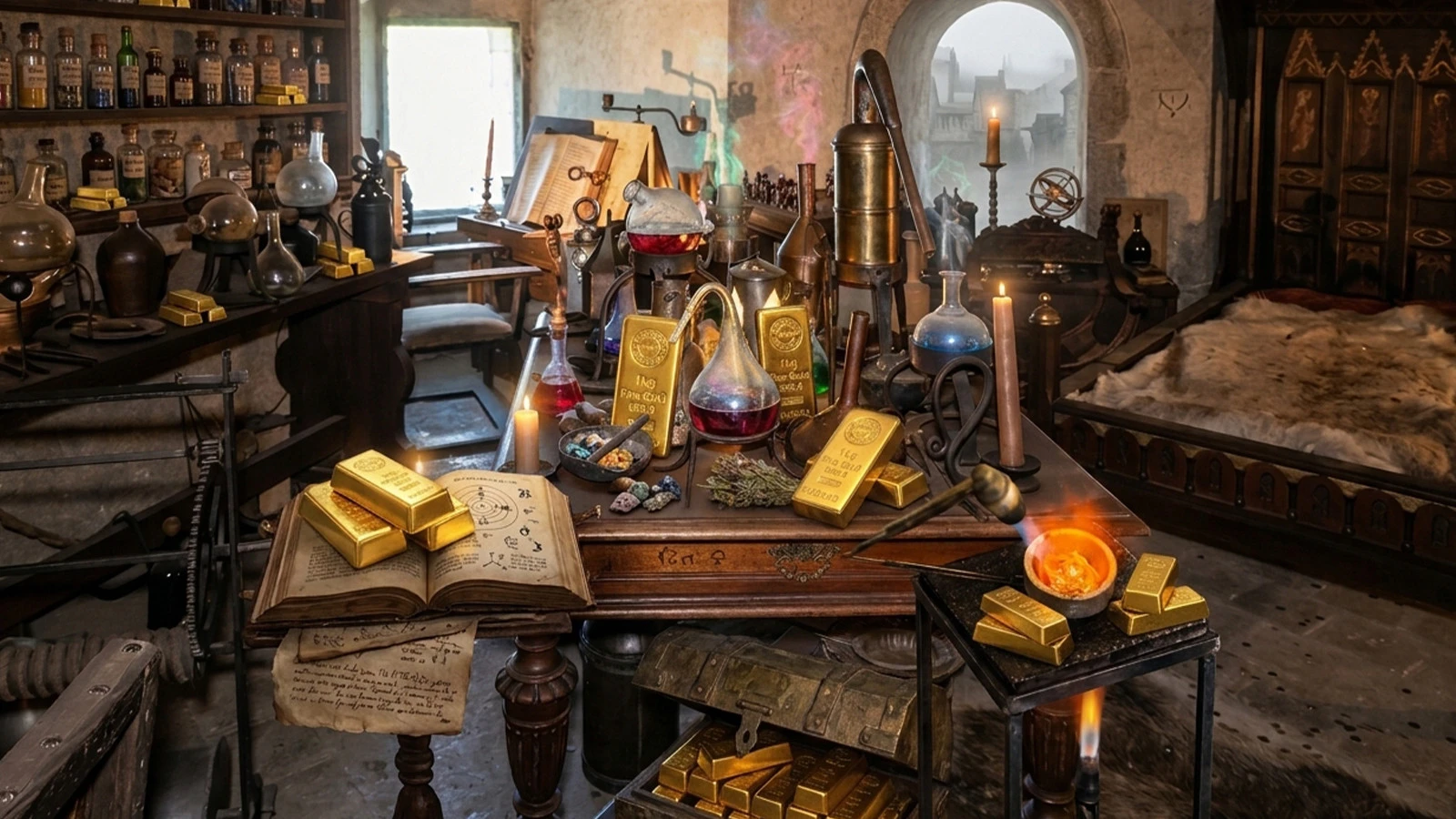
The Jewelry Wire, one of the news and analysis publications of the jewelry industry, covered the alchemy debates that have been on the agenda of the jewelry industry for a while with the title “Is laboratory-produced gold coming?” in its bulletin dated October 30. Diamond and gold market analyst Paul Zimnisky, whose views were included in the bulletin, said that it may not be possible to distinguish laboratory-produced gold from mined gold. According to Zimnisky, there are differences that experts can detect between laboratory-produced diamonds and natural stones. Gold is an element. It may not be possible to determine the method by which gold with the same chemical and physical properties was produced. The analyst evaluated, “Gold is gold. There is no distinguishable difference between naturally mined and man-made.” This situation could create a significant debate in the jewelry and investment markets if gold production in the laboratory becomes commercial.
WHAT IS MARATHON FUSION’S CLAIM?
At the center of the debate is San Francisco-based fusion energy company Marathon Fusion. The company announced in a statement on October 21 that it converted mercury into gold with neutrons obtained from nuclear fusion reactions in September. Marathon Fusion claimed that its result reached 10 times the gold production record previously announced by CERN. The company’s method relies on neutrons released during fusion interacting with the nuclei of mercury atoms.. The aim is to obtain stable gold by decomposing the unstable isotope formed as a result of this process. However, the company’s statement has not yet been independently verified.
CAN WHAT HAPPENED IN DIAMOND BE AN EXAMPLE?
Laboratory-grown diamonds have led to one of the most important changes in the jewelry industry in recent years. These stones, which have the same chemical properties as natural diamonds, can be produced in factories at lower costs and in higher quantities. With the expansion of production, wholesale prices of laboratory diamonds decreased by 90-95 percent compared to their 2015 levels. This development also created price pressure in the natural diamond market.. De Beers, one of the world’s leading diamond companies, launched its laboratory diamond brand Lightbox in 2018, but decided to close this brand in 2025 and focus on natural diamonds. Zimnisky, whose views were featured in The Jewelry Wire, thinks that gold production technology may also improve over time.
YOU MAY NEED TO WAIT 18 YEARS DUE TO RADIOACTIVITY
However, it does not seem possible to immediately use gold produced in the laboratory as jewelry. According to Marathon Fusion’s statements, the gold produced during the production process may contain radioactive isotopes. Therefore, in order for the material to be used safely, radioactivity must be expected to decrease. The company states that in some scenarios this period may approach 18 years.. Zimnisky also states that gold can be offered to the market after this process is completed, and those who buy gold for investment purposes can look at the price rather than the production method. However, this assessment does not mean that commercial production will begin or that laboratory gold will be cheaper than natural gold.
THERE IS NO SUPPLY THREAT IN THE GOLD MARKET FOR NOW
One of the most important differences between the gold and diamond markets is the size of the market. According to World Gold Council data, approximately 3,672 tons of gold were extracted from mines in 2025. The total amount of gold mined throughout history is approximately 222 thousand 600 tons. Marathon Fusion’s theoretical calculations suggest that a 1 gigawatt fusion power plant that can be established in the future can produce approximately 5 tons of gold per year.
