
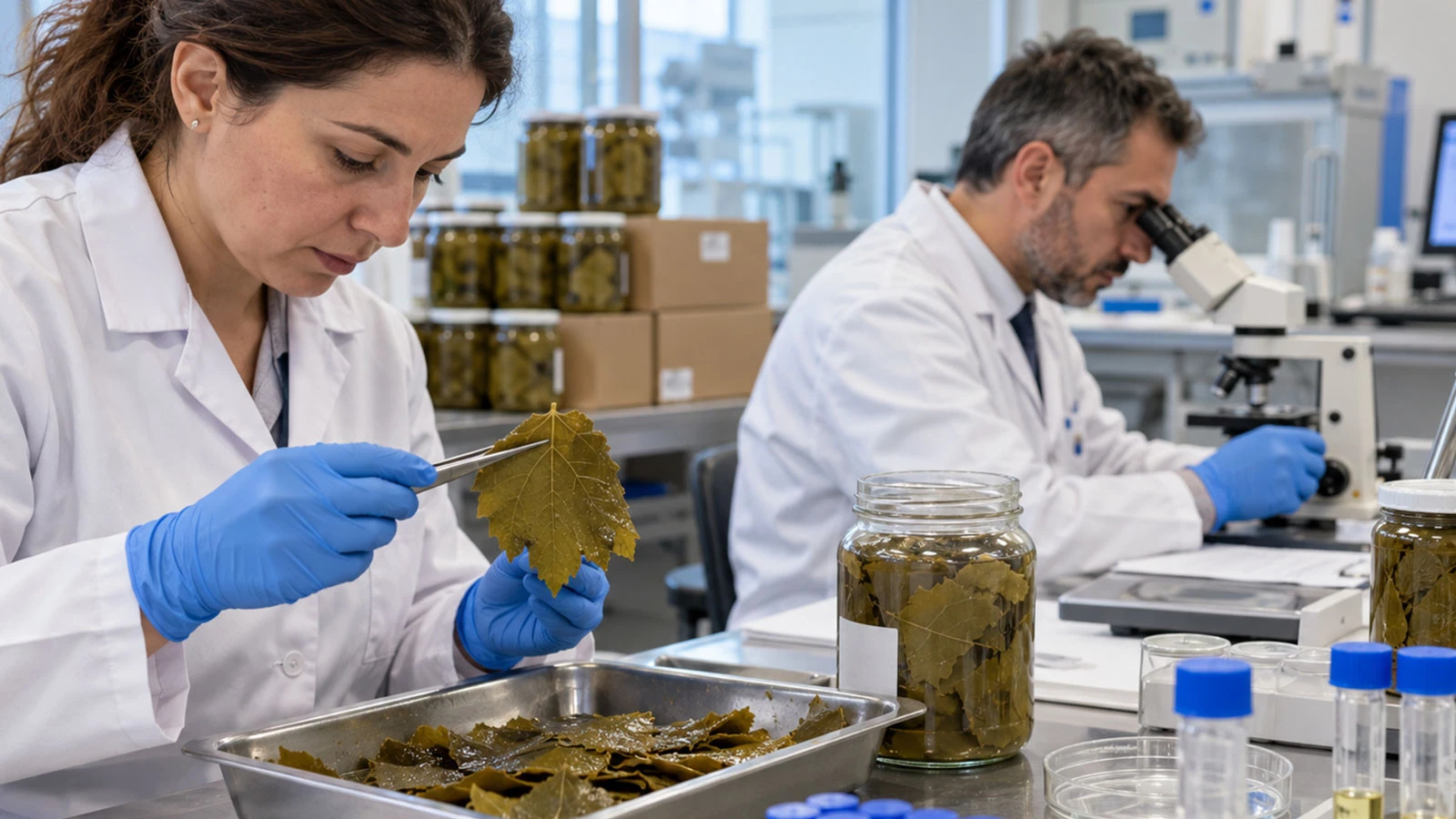
Notification number 2026.9111 recorded in the European Union’s Rapid Alert System for Food and Feed (RASFF) revealed the pesticide balance of pickled vine leaves sent from Türkiye to Germany via the Netherlands. It was revealed that 7 different chemical residues were found in the samples taken by German authorities on September 15. The residue of the fungicide called Metrafenon reached 130 times the legal limit, azoxystrobin 110 times, folpetin 31.3 times and difenoconazole 22 times. Boskalid, pyrimethanil and nicotine were among the other substances exceeding the limit. While it was reported that the products determined to have reached the market were destroyed, in another notification in September, azoxystrobin residue in Turkish grape leaves had increased to 94 times the limit.
WE ARE IN THE FIRST PLACE WITH 108 NOTIFICATIONS
The extent of the problem is not limited to vine leaves. Compiled from RASFF records According to data for the period between September 1, 2025 and August 31, 2026, 622 pesticide notifications were made in Europe due to limit exceedance in fruits and vegetables.. Türkiye ranked first in the said period with 108 notifications. 53 of the notifications originating from Türkiye were about pepper and 14 were about tomatoes. In Greenpeace Türkiye’s evaluation based on 2025 calendar year data, Türkiye ranked second after India with 105 notifications. 51 of these notifications resulted in products being rejected at the border. Among those turned away were notices of 27 peppers, nine tomatoes, five pomegranates and two vine leaves.
PROHIBITED DRUGS ARE ALSO AVAILABLE
Inspection records in Europe show that not only high pesticide residues but also banned chemicals were detected in Turkish agricultural products. In 2026, active substances banned in Türkiye such as carbendazim, imidacloprid, propiconazole and cyfluthrin were found in grape leaves sent from Türkiye. Different notifications made by Austria, Italy and the Netherlands, as well as Germany, revealed that the problem with the vine leaves was not limited to a single shipment.
LIVER AND CANCER SUSPICION
The toxicological properties of the chemicals found in high amounts in the leaves destroyed in Germany also attract attention. In scientific evaluations of metrafenone, liver tumors were observed in experimental animals, while negative effects on the liver and bile ducts were determined at high doses of azoxystrobin. Folpet is considered among the substances suspected to be carcinogenic. However, expert organizations emphasize that exceeding the legal residue limit does not directly mean that cancer or organ damage will occur, and that the health risk should be calculated separately according to the amount consumed and the level of exposure.
INSPECTIONS ARE IMPORTANT
The picture emerging from the inspections in Europe raises questions that need answers for consumers in Türkiye. How often are samples taken from products offered to the domestic market in the regions where exported vine leaves are produced? Are pesticide analyzes performed during the production and packaging stages of pickled leaves? Are other products of manufacturers whose limits are detected to be exceeded also inspected? Greenpeace Türkiye has been demanding for a long time that the pesticide analyzes carried out by the Ministry of Agriculture and Forestry be shared with the public. Although there is no data showing that the leaves sold in Türkiye contain the same level of residues, successive notifications in Europe increase the importance of transparent disclosure of domestic market analyses.
