
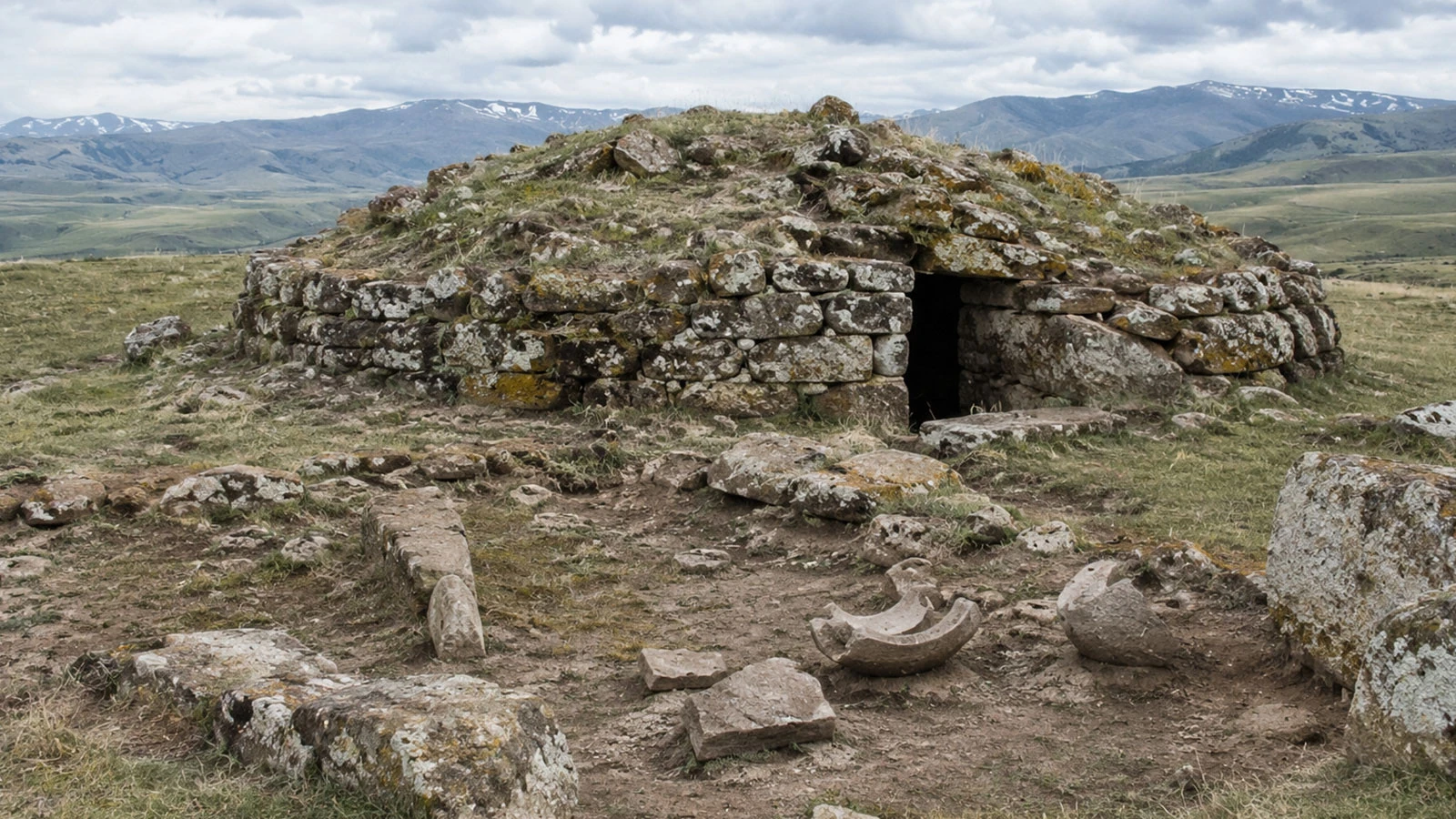
When it comes to the arrival of the Turks in Anatolia, the first thing that comes to mind is the 1071 Manzikert Victory, while historical records and archaeological findings in the Caucasus point to a much older past. Excavations carried out in the geography between the Black Sea and the Caspian Sea are of great importance in understanding the relations of the communities heading west from Central Asia with Anatolia. Ondokuz Mayıs University History Department Lecturer Prof. Dr. İbrahim Tellioğlu’s 24-page research has brought the archaeological findings obtained so far regarding the Turkish history in the Caucasus back to the agenda.
IF ARCHAEOLOGISTS WROTE THE HISTORY…
One of the most striking evaluations in Tellioğlu’s research is about the writing of the early history of the Caucasus. Pointing out the inadequacy of written sources about the region Tellioğlu says, “Even if archaeologists wrote the history of the region, especially the Ancient Age,” he states that some of the debates that have been going on among historians for years could be largely resolved. He emphasizes that the artifacts found during excavations should not only remain in archaeological research reports but should also be reflected in history books.
THEY WERE AFTER THE TURKS
In the research, the information conveyed from the records of the Byzantine historian Procopius also attracts attention. It is stated that the Romans and Persians tried to gain the military support of the Turkish communities in the Caucasus during the Lazica Wars. Tellioğlu points out that until these wars, the same historians did not mention the presence of Turks in the region. In the records of Armenian historian Elishe, it is stated that between 438 and 457, Armenians tried to get support from the Huns in their fight against the Sassanids.
TRACES FOUND BY THE RUSSIANS
A significant part of the studies shedding light on the past of the Caucasus was carried out by Russian archaeologists. Excavations started by the Moscow Archaeological Society between 1888 and 1916 were continued during the Soviet Union period.. In particular, the finds in Derbent and its surroundings revealed the cultural similarities between the Scythians and the Huns, and also contributed new data to the ongoing debates regarding the origin of the Scythians. On the other hand D.Kurgans belonging to the Huns were identified in 10 different centers, including Erbent, Makhachkale, Tarki and Sandıktepe. Thanks to these graves created by piling up soil, the living spaces of the Huns in the Caucasus became more evident. The finds, dating from the late fourth century to the early sixth century, also enabled the cultural changes in the region to be followed.
ARMY OF 100 THOUSAND PEOPLE
Another remarkable part of Tellioğlu’s research is about the Sabir Turks, whose names are not even known to most of the society today. The details of the capital, cities and economic life of the Sabirs, who were influential in the Caucasus at the beginning of the sixth century and whose army was reported to have reached 100 thousand people, are not yet sufficiently known. However, archaeological findings associated with the Sabir-Sassanid wars between 503 and 508 concretize the presence of this community in the region. Tellioğlu is of the opinion that the history of Sabir can be elucidated in much more detail with new excavations.
TURKISH WRITINGS ON THE WALLS
One of the communities from which the richest finds were obtained during the excavations in the Caucasus and its surroundings are the Khazars. Traces of Gokturk art, old Turkish writings and depictions on the walls were found in historical cities such as Sarkel, Semender and Itil. Finds from tombs dating back to the late eighth century helped understand how far the Khazars had spread westward.
THEY CAME OVER THE CAUCASUS
Other findings and historical records reflected in the research show that the Turks made contact with Anatolia long before the Victory of Manzikert. According to the findings, the Huns entered Anatolia via the Caucasus under the leadership of two commanders named Basık and Kursık in 395 and reached Erzurum, Malatya and Çukurova. Centuries later, Georgian King IV. Upon the invitation of David, approximately 40 thousand Kipchak families migrated to Georgia in 1118. On the other hand, according to Tellioğlu’s research titled Eastern Black Sea Kipchaks, published in 2015, Christian Kipchaks, who settled on the Artvin-Trabzon line from Georgia, cooperated with the Trabzon Greek State from the late 13th century. While most of the Kipchaks, who took control of the strategic passages reaching Trabzon from the south, embraced Islam during the Ottoman period, the traces they left in the language and culture of the region have survived to this day.
