
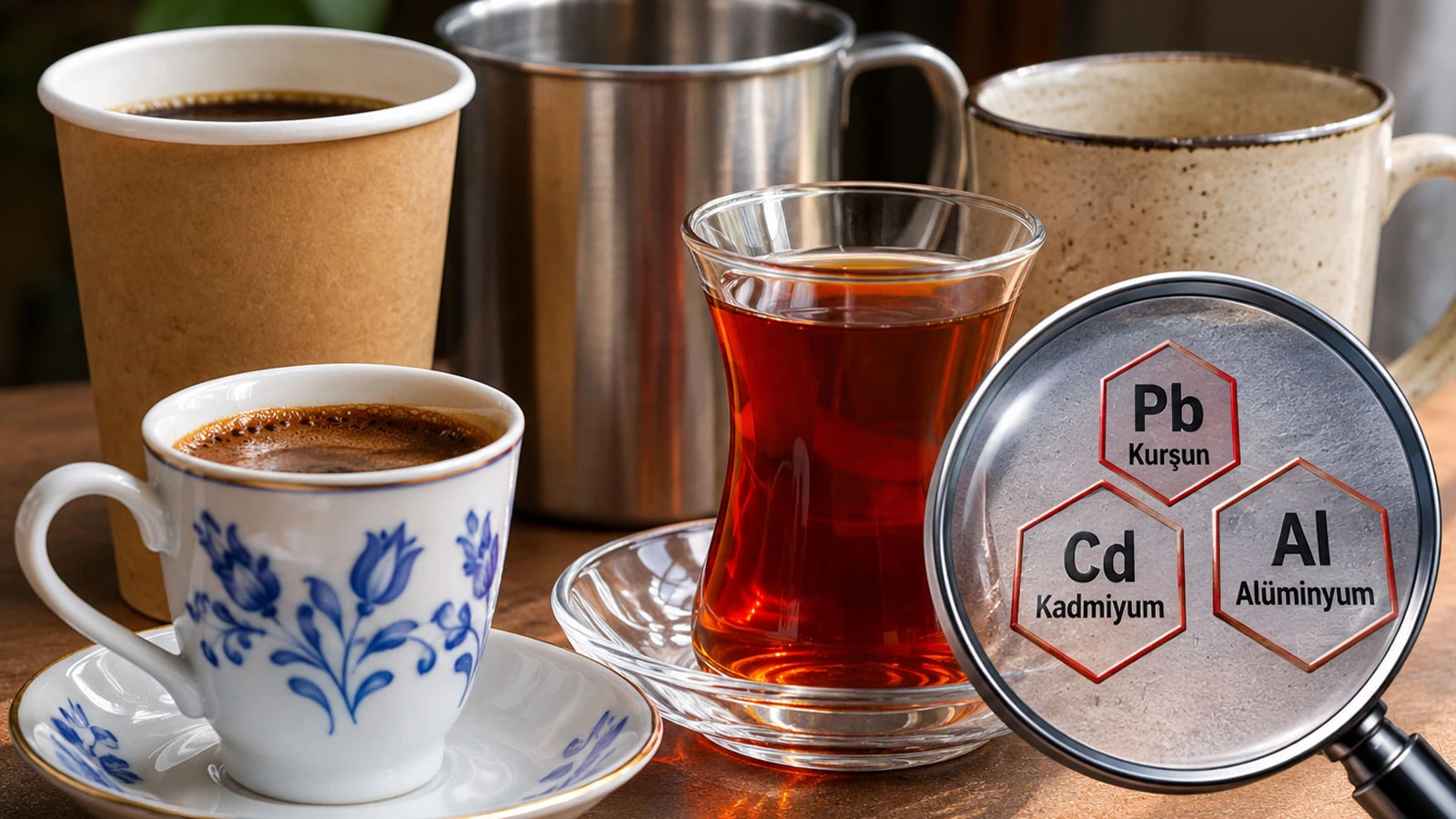
Containers used for tea, coffee and food are on the agenda again in terms of food safety. Scientific research conducted on different materials used in daily life, from glasses to pots, from storage containers to ceramic plates, has revealed that metal can pass from some products to foods. Moreover, in the research results, the highest limit exceedance was recorded in the paper and cardboard products group, not metal.
43 PERCENT EXCESS IN PAPER
In the comprehensive scientific review published in the journal Food and Chemical Toxicology, the results of 69 studies conducted in different countries were brought together. It was determined that the limits specified in the legislation were exceeded in 19.3 percent of a total of 2 thousand 53 measurements. While this rate reached 43 percent for paper and cardboard products, it was calculated as 36.1 percent for metal kitchenware. For plastic products evaluated in the research, the limit exceedance remained at 12.5 percent.
THE RATIO IS LOWER IN GLASS
One of the remarkable findings of the research was the difference between glass and ceramic products. In measurements made from glass materials, the limit exceedance was 5.6 percent, the lowest of the examined groups. The limit exceedance was determined to be 10 percent for ceramics and 11 percent for stainless steel products. However, the researchers emphasized that the results vary depending on the production properties of the material and the experimental conditions.
LEAD AND CADMIUM WARNING
In the evaluation of scientists, lead and cadmium, which can pass through ceramics, and aluminum, which can pass through paper-cardboard products, came to the fore. Health-based thresholds were calculated to be exceeded in high exposure scenarios in 18 of 38 health-evaluable material-element pairings. Attention was drawn to the lack of control, especially in metal kitchenware and decorative ceramics produced by traditional methods.
EVERY GLASS DOES NOT CARRY THE SAME RISK
Research does not show that one in five products on the market are harmful to health. The results are based on measurements carried out in different countries and experimental conditions. Scientists recommend tighter control of metal migration in food contact materials, and increased controls, especially in regions where production standards are inadequate.
