
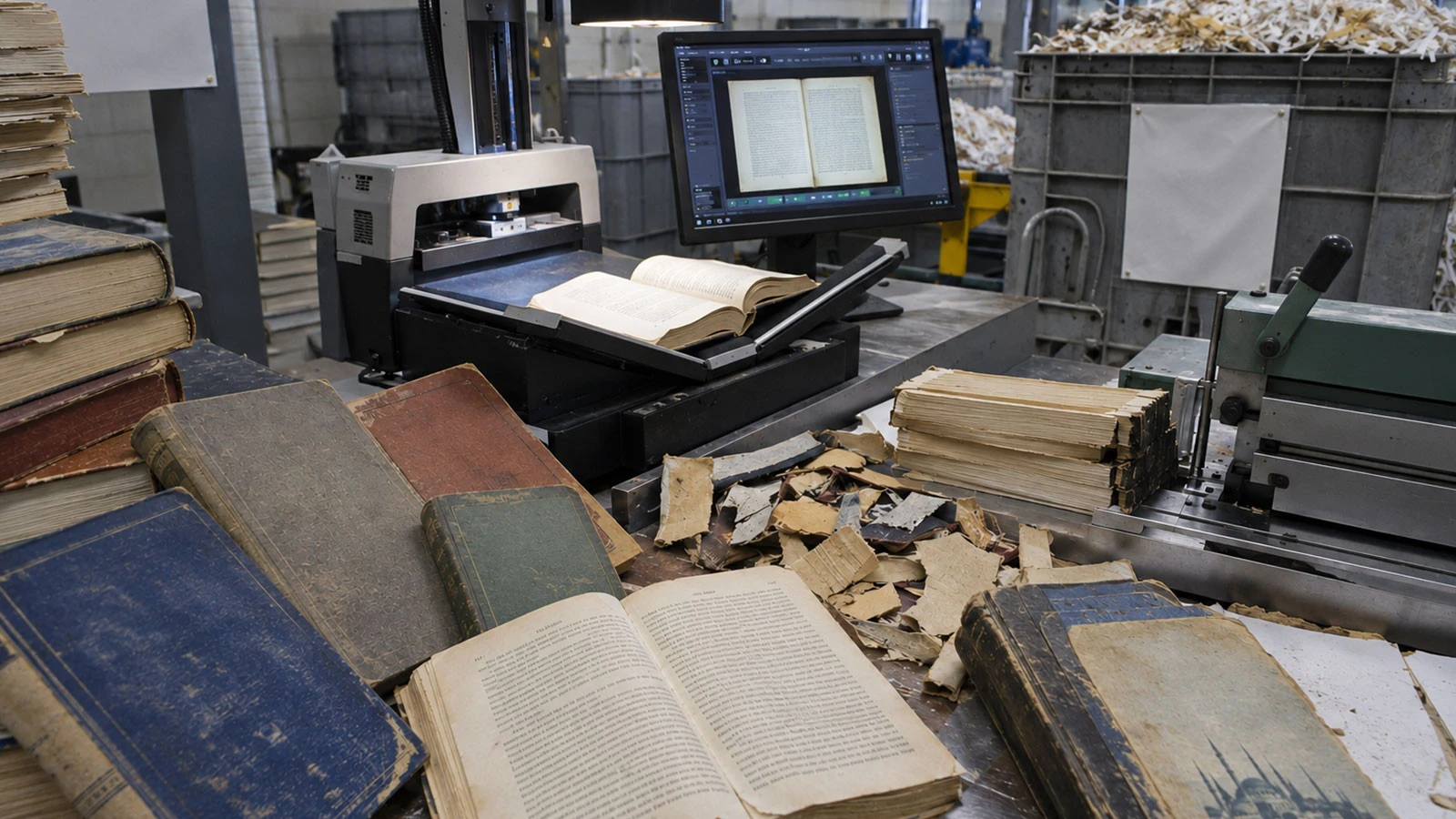
The revelation that artificial intelligence companies turned to printed works that are not available on the internet in order to develop large language models caused reactions. It has been documented that some companies purchase millions of books, then separate them from their bindings, digitize them with industrial scanners, and send the physical copies for recycling. The destructive scanning method, called “destructive scanning” in English, has gained a new dimension, especially with the increase in demand for old editions and academic works.
MILLIONS OF BOOKS WERE CUT
At the center of the debate is Anthropic, the developer of the artificial intelligence system called Claude. According to the decision of the federal court in the US state of California dated June 23, 2025, the company purchased millions of printed books in 2024. The books, most of which were second-hand, were separated from their bindings, their pages were cut and converted into digital files. The physical books were disposed of after the transaction was completed. In internal company documents disclosed in January 2026, it was revealed that the operation was carried out under the name “Project Panama”. According to documents obtained by the Washington Post, the company was looking for a service provider that could digitize between 500 thousand and 2 million books in six months. The main reason why the method was preferred was speed and cost advantage.
ORDER FOR 3 THOUSAND BOOKS
It was also determined that the book collecting activity also extended to Europe. A list containing the ISBN numbers of approximately 3 thousand different books was sent to a second-hand bookseller in Haarlem, the Netherlands, from a Singapore-based company called 2077AI. Some second-hand booksellers in England reported that they received orders for hundreds of books in a few months.
COPYRIGHT AGREEMENT
In the copyright lawsuit filed against Anthropic, it was determined that the company obtained more than 7 million copies of digital books from pirated sources. The company reached a settlement of $1.5 billion to resolve copyright claims covering approximately 500 thousand works. The agreement, which was finalized in July 2026, envisaged a gross payment of approximately 3 thousand dollars per work. However, this settlement addressed copyright claims over pirated digital copies, not the shredding of physical books.
ARCHIVE CLAIM IN Türkiye
It is claimed that academic publishing houses in Türkiye were offered high amounts in return for transferring their archives of 17 thousand to 20 thousand books to artificial intelligence companies. While Law No. 5846 on Intellectual and Artistic Works in force in Türkiye protects the rights of authors, legal debates continue regarding the data used in artificial intelligence education. The bill numbered 2/3634, submitted to the Turkish Grand National Assembly on April 8, 2026, aims to update copyright law in the age of artificial intelligence.
IT COMES INTO THE HANDS OF COMPANIES
One of the most important risks that experts point out is that books are not just texts. The binding of an old work, its paper, handwritten notes on it, printing differences and signs of previous owners can also have historical value. Shredding books can cause permanent loss of this inadequately documented information. Geostrategist-Researcher Dr. Ahmet Uslu said; “The reason why artificial intelligence companies especially turn to old books is to access original information that is not available on the internet. “Academic studies, local history research and limited edition works are seen as valuable resources in training artificial intelligence models.” he says.
PRECAUTIONS SHOULD BE TAKEN
Literary writer Sema Soykan raises her reaction to the destruction of printed books for the purpose of artificial intelligence training with the following words: “Not being able to access old books is a great problem for writers and researchers, but it is much more worrying for our history and culture. Therefore, we must write more, read more, leave our mark on history, and protect the old ones. In short, urgent precautions must be taken before our minds become artificial.”
