
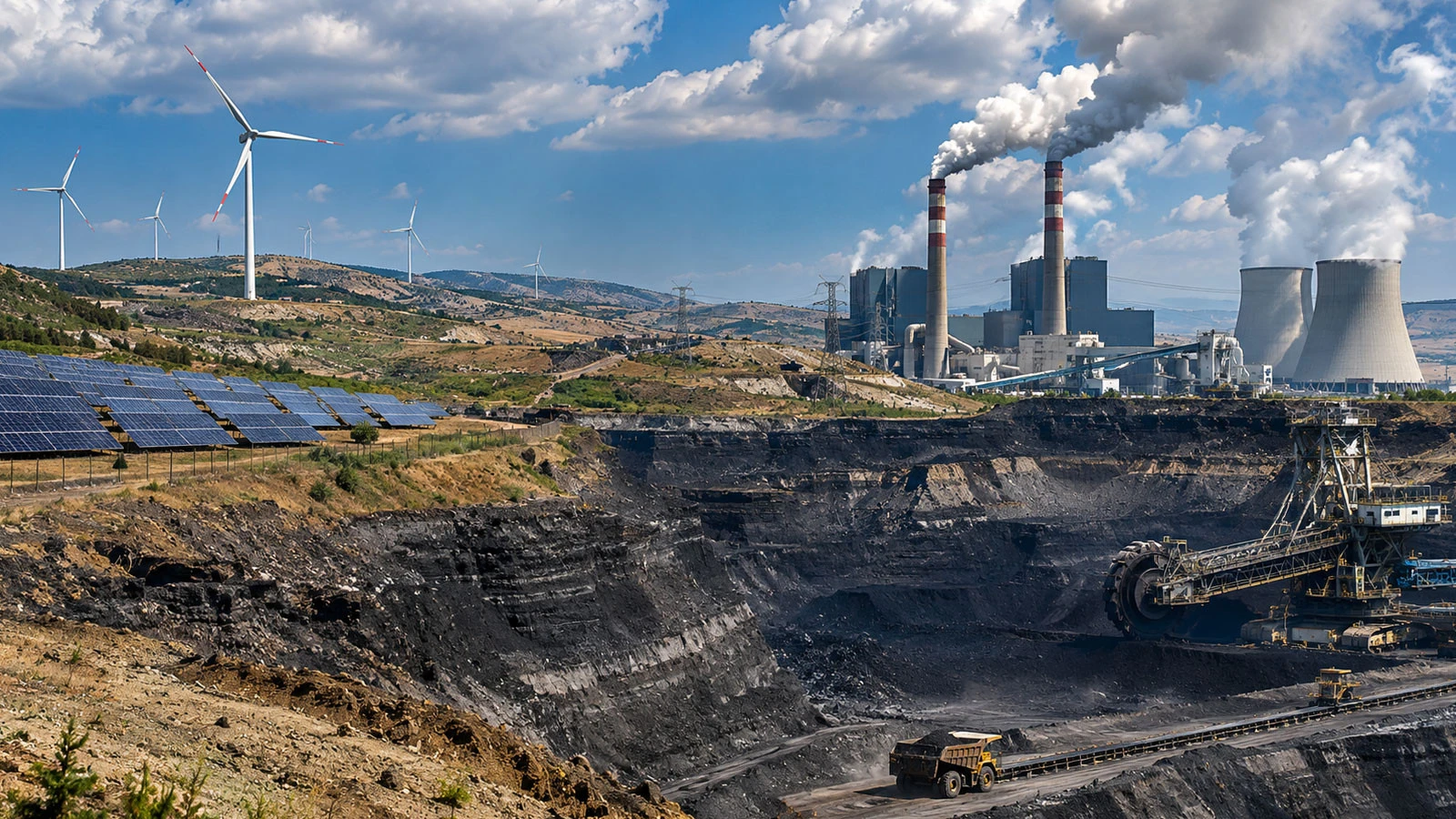
The 2027 Climate Change Performance Index, published by Germany-based Germanwatch and NewClimate Institute, revealed the steps taken by countries in the fight against global warming. In the research, 64 countries and the European Union were evaluated. In the study covering more than 90 percent of global greenhouse gas emissions, Türkiye fell from 52nd place last year to 53rd place. The overall performance of Türkiye, which hosted the COP31 Climate Summit held in Antalya, was evaluated as very low.
LOW GRADE
Within the scope of the index, the performance of countries was examined under four basic headings. Greenhouse gas emissions accounted for 40 percent of the total score, while renewable energy, energy use and climate policies each had a weight of 20 percent. In the research to which approximately 500 experts contributed Türkiye’s greenhouse gas emissions and energy use were found to be low, its climate policies very low, and its renewable energy performance moderate.
INCREASE IN FOSSIL FUEL
Türkiye’s investments in solar and wind energy were also included in the report. It was stated that Türkiye’s solar energy installed power was 9.5 gigawatts in 2022 and reached 28 gigawatts in September 2026. However, during the same period, there was also an increase in electricity production from fossil fuels. The amount of electricity obtained from fossil fuels increased from 186 terawatt hours in 2022 to 201 terawatt hours in 2025. The share of coal in electricity production in 2025 was recorded as 34 percent.
NO CALENDAR
In the research, it was stated that there is no binding road map that will enable Türkiye to reach the net zero emission target set for 2053. While the Climate Law and the Emission Trading System, which came into force in July 2025, were cited as positive developments, the continuation of coal, oil and natural gas exploration activities were criticized. Experts demanded that new coal power plants should not be allowed, support for fossil fuels should be removed and concrete targets should be set to reduce emissions.
THERE MUST BE COMMITMENTS
While evaluating the reflections of the index, Özlem Katısöz, Climate and Energy Policies Coordinator of the European Climate Action Network, stated that Türkiye has assumed responsibility in the global climate struggle with its COP31 presidency and said that climate leadership cannot be talked about when planning new coal power plants. Katısöz stated that they expect clear commitments from Türkiye regarding phasing out coal and reducing emissions.
THREE ROWS REMAIN EMPTY
In the global results of the index, the first three places were left empty because no country could achieve sufficient performance. Denmark topped the list for the sixth consecutive year, followed by Lithuania, Luxembourg, the United Kingdom, Morocco and Chile. The European Union ranked 19th, Germany ranked 25th, and China ranked 56th. While Australia, which shared the presidency with Türkiye at the Climate Summit, ranked 54th, the countries with the lowest performance were Iran, the USA, Russia and Saudi Arabia. Iran ranked 68th, the USA ranked 67th, Russia ranked 66th, and Saudi Arabia ranked 65th.
A HOLISTIC APPROACH IS NEEDED
Ekosfer Association Board Member Özgür Gürbüz stated that although Türkiye increased its renewable energy targets and made changes in the legislation, it needed a comprehensive policy that would reduce fossil fuel use. Gürbüz stated that emission reduction should be reflected in the entire energy policies.
