
2027 Budget Marathon begins in the Turkish Grand National Assembly!
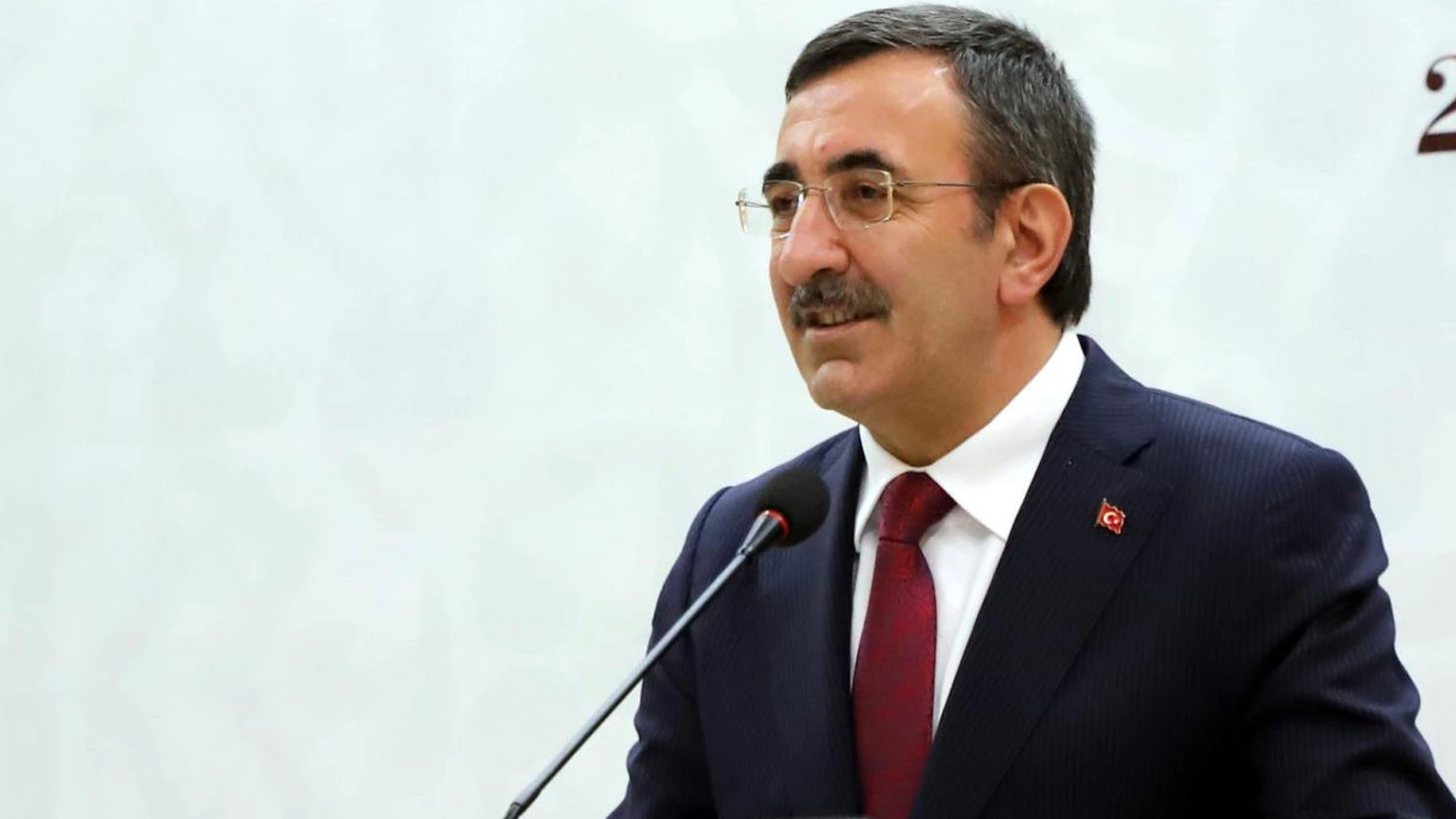
Speaking at the Budget Closing Ceremony, Vice President Cevdet Yılmaz announced that they increased the urban transformation allowances to 276 billion lira in the 2027 Central Government Budget.
Yılmaz said, “The 2027 budget is a budget of resilience, prosperity and transformation.”
Cevdet Yılmaz announced that they expect 2027 budget revenues to be 23.4 trillion TL and budget expenses to be 27.2 trillion TL.
Cevdet Yılmaz said that Türkiye maintained its growth even in a period when foreign demand weakened and cost pressures increased.
Cevdet Yılmaz stated that they foresee the growth of the Turkish economy to rise to 4.2 percent in 2027 with the effect of the expected improvement in the global outlook.
The inflation forecast at the end of 2027 was 21 percent. Yılmaz announced the 2026 year-end inflation expectation as 28.4 percent.
The highlights of Cevdet Yılmaz’s statements are as follows:
“Our 2027 Budget is a resilience and welfare budget that reinforces the security and resilience of our economy. Our 2027 Budget proposal has now started to be submitted to the Turkish Grand National Assembly. We prepared the 2027 budget by taking social welfare into consideration. The 2027 Central Government Budget Law takes into account investment, production and employment.
We will continue to focus on social housing and rental issues with sensitivity and will spread them throughout the country. Our macroeconomic fundamentals are solid, global and energy-related impacts have remained limited. The resilient structure of our labor markets remains, and we expect unemployment to decline to 8.1 percent in 2026.
Annualized exports have reached their historical level of 283.7 billion dollars, and when service exports are added, we expect total exports in 2026 to reach 410 billion dollars.
Although the current account deficit temporarily increased due to the war, we expect it to be at a very manageable level at 2.6 percent in 2026.
We expect the current account deficit to fall below 2 percent again in 2027. Energy will continue to be one of our top priorities. Despite periodic fluctuations, the underlying trend of inflation continues to improve. We expect to return to single-digit inflation in the medium term. In our 2026 budget, the deficit is estimated to be 3.5 percent, and due to the proportional increase in our revenues, it is expected to close the year with a deficit of 3.1 percent.
Despite all the negative developments, we did not compromise on budget discipline. We reached lower budget deficit figures than predicted in 2024-2025- and 2026. 104 billion dollars were spent within the scope of earthquake expenditures. Interest expenses are expected to be 14.4 percent in 2026.
We expect 2027 budget revenues to be 23.4 trillion TL and budget expenditures to be 27.2 trillion TL. We expect the budget deficit to GDP ratio to be 3.5 percent in 2027.
We allocated 2 trillion 459 billion TL to the Ministry of Education in the budget. When higher education is added, the resource allocated to education becomes 3 trillion 747 billion TL, the highest resource from the budget is allocated to education with 13.7 percent.
The resources allocated to the field of health are 4 trillion 532 billion TL. In 2027, 0.5 percent of the budget deficit will result from energy subsidies. We contribute 1 trillion 460 billion TL to all our employees from tax exemption up to the minimum wage. We contribute 1 trillion 305 billion TL to agriculture from the 2027 budget. We cover 50 percent of the farmers’ diesel fuel costs and 25 percent of their fertilizer costs. “We continue our strategy of investment, employment and balanced growth.”
