
TURKISH TRACE ON THE STONES OF EUROPE
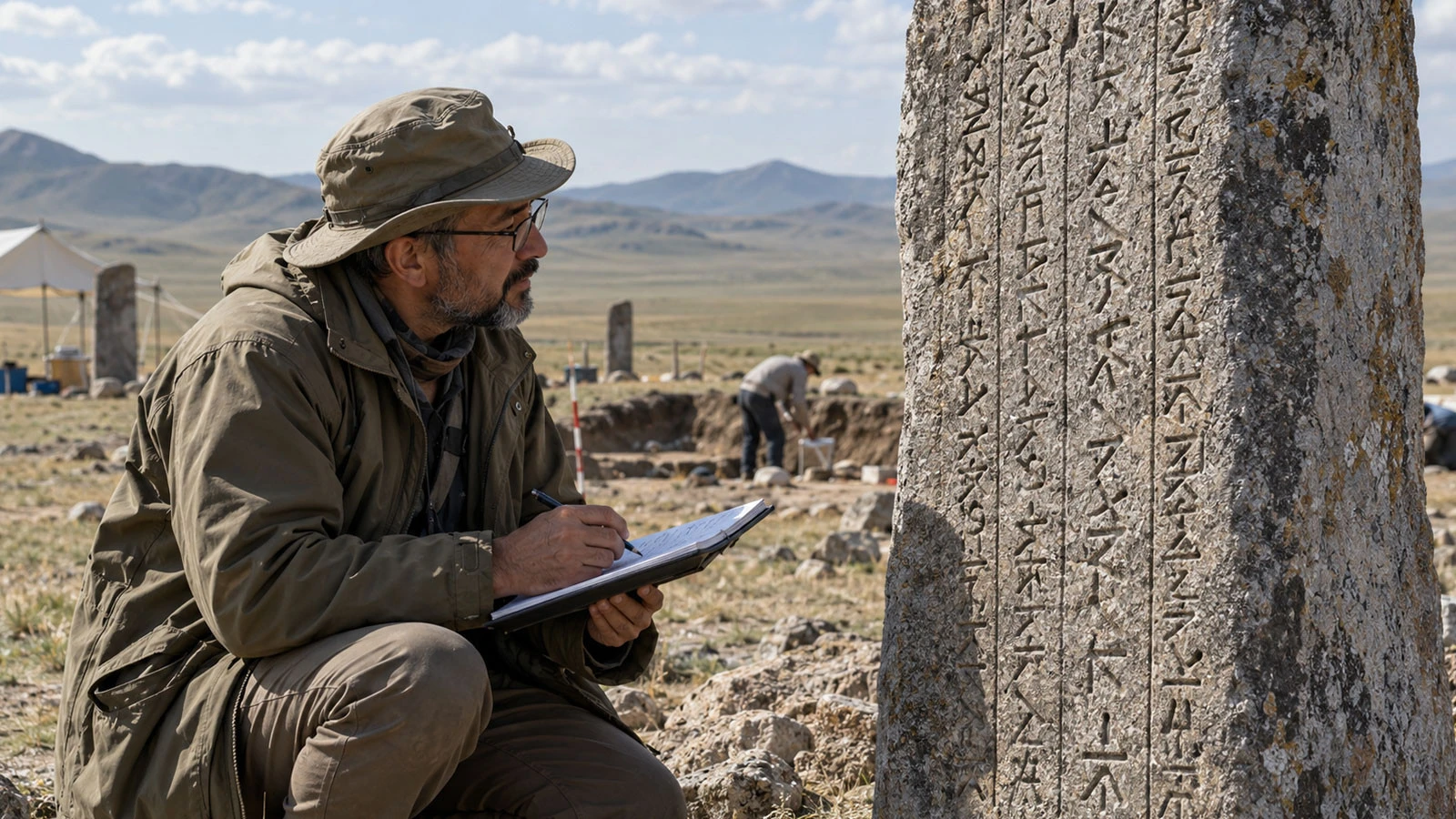
One of the most remarkable riddles of European history lies in the origin of the angular letters engraved on stones, weapons, jewelry and everyday items. The runic alphabet, which began to be used in Northern Europe about 2 thousand years ago, is today largely associated with Germanic culture. However, some of these letters bear formal similarities with the ancient Turkish script in Central Asia. With the work of Turkish researcher Çağıl Çayır, Prof. Dr. Necati Demir’s evaluations regarding the distribution of inscriptions in Europe bring up an old question once again: Could there be a connection between the writing history of Europe and the Turkish world that has not been sufficiently elucidated until now?
THE BIG QUESTION IN THE 24 LETTER ALPHABET
The oldest runic alphabet in Europe is called Elder Futhark, based on its first six signs. This alphabet, consisting of 24 signs, was used especially in Scandinavia and regions where Germanic communities lived. According to the information provided by the Swedish History Museum, the beginning of runic writing dates back to the first centuries of Christ. In the Viking Age, the old form of the alphabet with 24 signs was replaced by a new system with 16 signs. The real debate begins with the fact that these angular signs in Europe resemble some letters in the ancient Turkish script used in Central Asia.
SURPRISING SIMILARITY WITH THE GÖKTÜRK Script
The formal similarities between the Orkhon Inscriptions in Central Asia and the runic inscriptions in Europe are one of the notable debates in historical research. While the ancient Turkish script deciphered by the Danish linguist Vilhelm Thomsen in 1893 contains approximately 38 signs, Europe’s old Germanic runic alphabet consists of 24 signs. The use of angular lines and similar geometric shapes in both texts draws attention.
MAP OF INSCRIPTIONS IN EUROPE
Runic inscriptions spread across Scandinavia, Germany, England and Central Europe shed light on the ancient cultural geography of the continent. Estimates that there are approximately 6,500 runic inscriptions in Europe reveal the magnitude of this heritage. Some of the inscriptions are on tombstones, some on weapons, jewelry and everyday items. These signs, used in different periods and over a wide geography, contain important clues about the historical relations of European societies and the spread of writing.
