
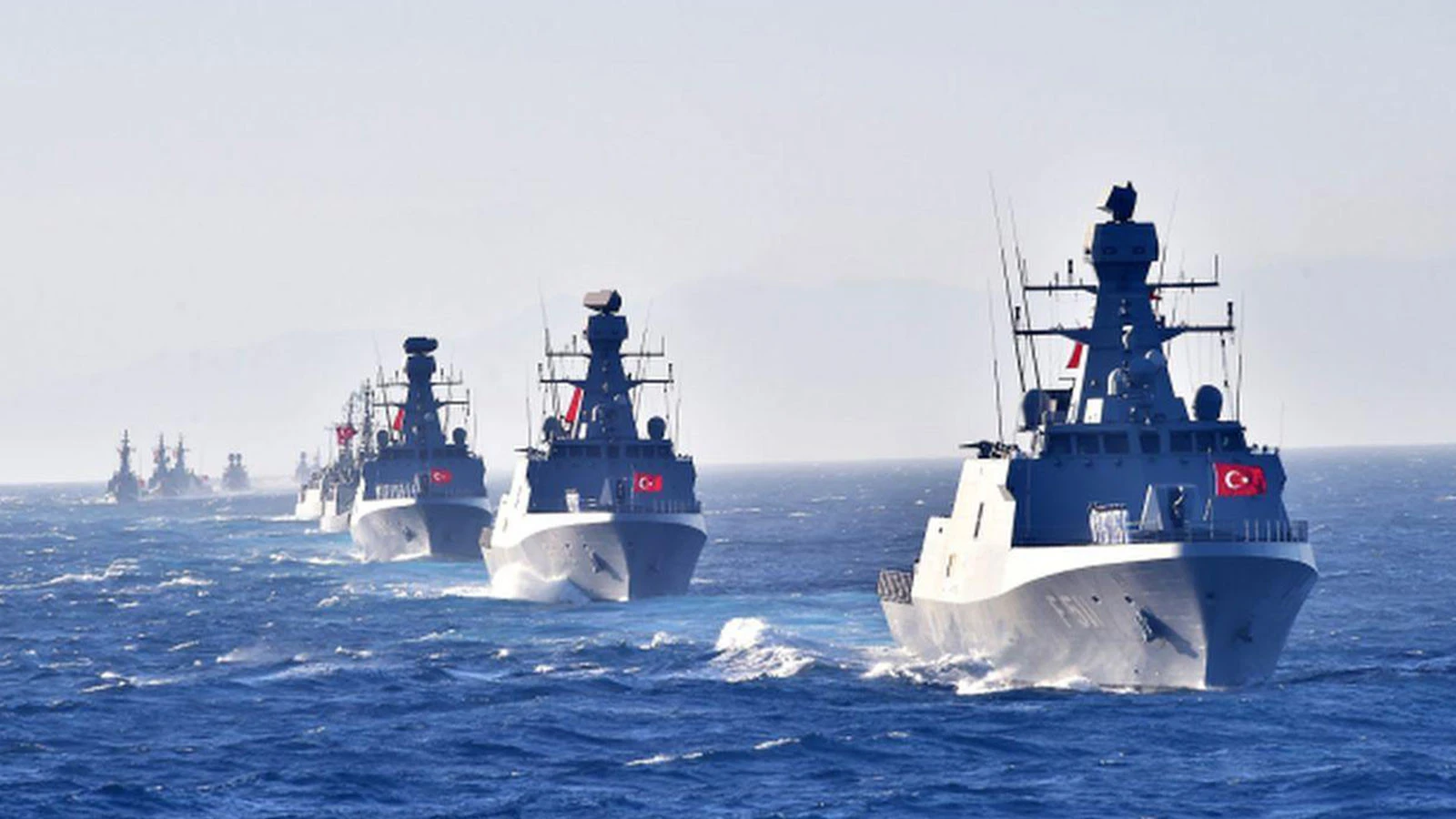
The developments in the Black Sea after Russia invaded Ukraine in February 2022 had consequences that could radically change naval warfare doctrines. Ukraine, which did not have a strong navy at the beginning of the war, inflicted heavy losses on Russia’s Black Sea Fleet with its remote-controlled speedboats carrying explosives. According to the New York Times, approximately one-third of the Russian fleet was neutralized in this process. Analysis by the UK-based Royal United Services Institute (RUSI) also reveals that the Russian Black Sea Fleet lost approximately one-third of its combat power and had to withdraw its important elements in Sevastopol to other ports.
THREAT FLOATING DRONES
Unmanned marine vehicles such as MAGURA and Sea Baby developed by Ukraine are no longer just boats that explode upon hitting the target. New generation systems can perform reconnaissance, carry different weapons, take on missions against air targets, and can be used as a mobile platform for other drones. According to January 2026 data from the National Security and Defense Council of Ukraine, the operational range of naval drones reached 1,500 kilometers, while more than 25 Russian military ships were reportedly destroyed or severely damaged.
ACCOUNTS MAY CHANGE
One of the regions where the lessons learned from the Black Sea should be examined most closely is the Aegean Sea. In the Aegean, which is sensitive due to continental shelf, territorial waters and airspace disputes between Turkey and Greece, the maritime dimension of a possible military tension was evaluated mostly through frigates, assault boats, submarines and warplanes in the past. However, the technology achieved by marine drones adds a new element to this equation. The Aegean’s structure, surrounded by hundreds of islands and islets, narrow passages and intense maritime traffic, have features that can increase the importance of small and fast unmanned systems.
FAST ABOVE WATER SYSTEMS
One of the most important results of the Ukrainian experience for Türkiye is that it is not enough to invest only in large and high-cost platforms at sea. While frigates, corvettes and submarines continue to be the basic elements of naval power, the need for many fast, low-cost unmanned surface vehicles that can undertake different tasks to complement them is increasing. Especially in regions such as the Aegean, where distances are short and maritime traffic is intense, speed, mobility and instant information sharing are critical.
WHAT SYSTEMS ARE THERE?
In recent years, Türkiye has undertaken projects that stand out among the countries developing unmanned marine vehicles. Platforms such as ULAQ, MARLIN, SANCAR and SALVO were developed for different missions, from reconnaissance and surveillance to surface warfare, from electronic warfare activities to mine countermeasures.
SUBMARINES ARE DETERMINANT
According to analysts, the rise of unmanned marine vehicles does not mean that the importance of submarines has decreased. On the contrary, submarines that can operate underwater in the Aegean and Eastern Mediterranean and operate undetected for long periods of time continue to be one of the basic elements of deterrence. Greece has four Type 214 class submarines with air-independent propulsion systems in its inventory. Türkiye, on the other hand, continues its program of six Reis-class submarines. While the first ship, TCG PİRİREİS, will be put into service in 2024, other submarines are aimed to gradually join the navy.
TONEED AT GE
International Relations and Security Policies Expert Prof. Dr. While evaluating the changing military balances in the Aegean and Eastern Mediterranean, Hasan Köni states that Türkiye’s real need is unmanned marine vehicles and submarines rather than aircraft carriers. According to Köni, the war in the Black Sea showed how fragile multibillion-dollar large warships can become in the face of much lower-cost unmanned systems. He points out that for Türkiye, deterrence at sea should be supported not only by large platforms, but also by submarine power, unmanned systems and advanced defense technologies.
