
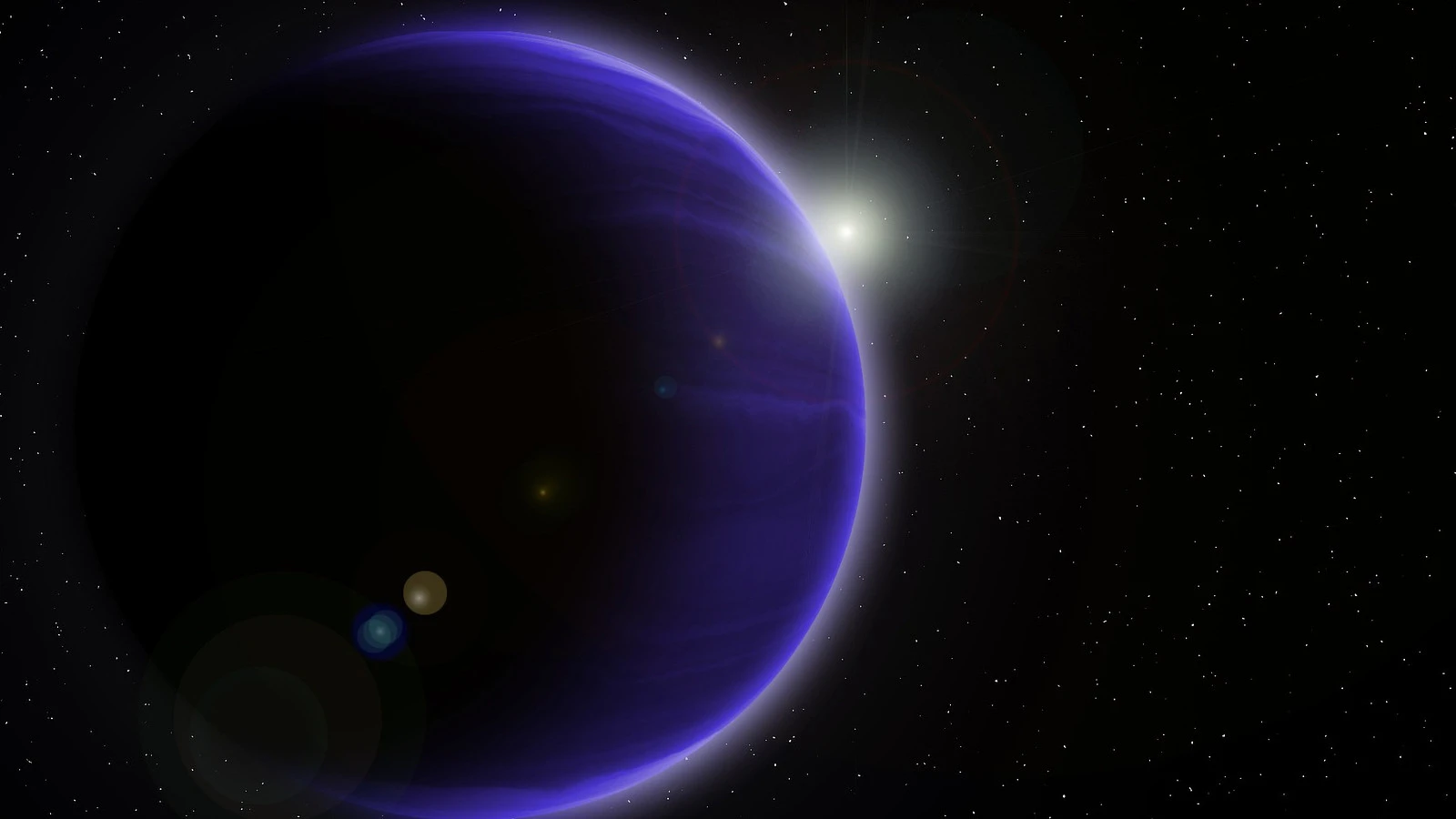
Astronomers believe they have discovered a new planet unlike anything seen before and formed from fragments of a dying star. Experts state that this is the first time that such a “second generation” planet, consisting of pieces of the dead star it orbits, has been observed.
Jamie Williams, a PhD student at the University of Warwick who led the research, said: “Second-generation planets are worlds formed from material expelled by a star as it dies. These are extremely rare and finding such a planet around a white dwarf was completely unexpected. It’s like finding a planet reborn from the ashes of the star it once orbited.” he said.
SEEN FOR THE FIRST TIME AROUND THE WHITE Dwarf
Astronomers have previously identified possible examples of such “reborn” worlds around dense stars known as pulsars. However, this is the first time such a planet has been seen around a white dwarf. Given that dead stars are much more common in the universe, this discovery suggests there may be more reborn planets in space than previously thought.
White dwarfs are known as collapsed cores left behind when a star runs out of fuel. These stars attract nearby matter and leave a chemical signature that astronomers can use to understand the planets they orbit.
NASA’S TELESCOPE SUPPORTS THE FINDINGS
In the new research, scientists examined a white dwarf called HS 0209+0832. During the investigation, an unusual chemical signature was detected that contained large amounts of a substance called niobium, which is released as the star dies but has never before been found in a white dwarf.
Astronomers think that this signal appears because the white dwarf is fed by a newly formed giant planet nearby. Experts state that the giant planet in question is formed from the pieces left behind when the star died and turned into a white dwarf.
According to the news of The Guardian; This finding was further strengthened after researchers used data from the US Aeronautics and Space Agency’s (NASA) TESS telescope. The data showed a weak signal coming from the planet that repeated every 4.4 days.
This is explained by the presence of a Jupiter-sized planet orbiting very close to the white dwarf. Researchers suggest that because it is very close to the star, the matter in the planet’s outer atmosphere boils away due to radiation from the dead star. When this escaping material hits the white dwarf’s surface, it produces an unusual chemical signature.
A NEW OPPORTUNITY IN THE SEARCH FOR A HABITABLE PLANET
If confirmed, this celestial object would not only be the first of its kind to be seen, but would also offer a new method for further discovering such planets by searching for similar chemical signatures in the light of other dead stars.
The discovery also represents a new opportunity in the search for habitable worlds and the alien life that might exist on those worlds. A better understanding of how such planets form helps understand whether planets around white dwarfs are habitable.
The work in question is reported in a new paper published in the journal Nature Astronomy. In another independent study in the same journal, different types of dwarf stars were examined.
Researchers discovered a binary system in which a brown dwarf and a red dwarf orbit each other. Observations and modeling show that matter flows from the brown dwarf to the red dwarf. It is stated that this process has never been observed before.
