
Even under Ali Khamenei, the Revolutionary Guards continuously expanded their influence on politics, the economy and foreign policy. The war did not trigger this development, but it accelerated it considerably. While the new revolutionary leader remained in the background, the military and security apparatus ensured the state’s ability to act. A kind of military dictatorship emerged with the Revolutionary Guards at the top.
There is therefore much to suggest that the character of the Islamic Republic is changing. Religion remains the most important source of legitimacy for leadership. However, the political course is increasingly being shaped by actors whose thinking is determined by deterrence, control and strategic power. Security policy considerations are likely to override economic or diplomatic interests in the future.
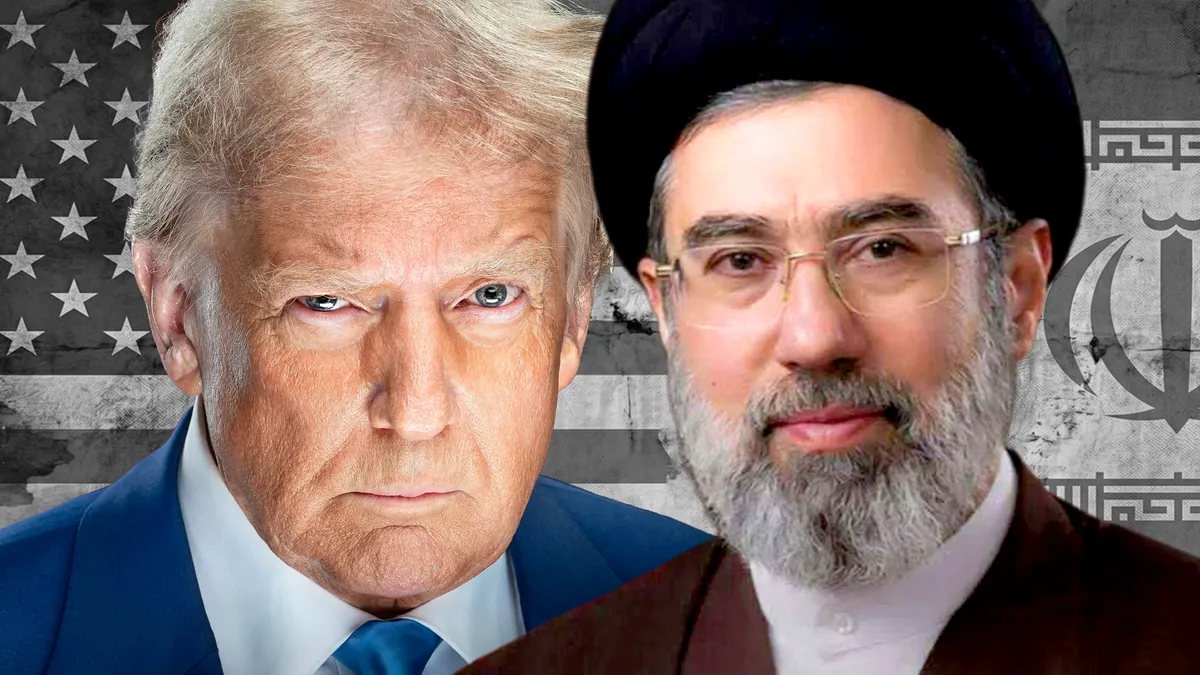
This is precisely the strategic irony of this war. Netanyahu wanted the military threat to Israel permanently shrink. Trump wanted to force Iran to make far-reaching concessions – with a view to Iran’s nuclear program and missile arsenal. Instead, both have strengthened the very forces that have stood for an uncompromising course towards the West for years. From the perspective of the new leadership, the most important lesson of the war is not that the strategy of confrontation with the West has failed. But that the power apparatus itself withstood a massive attack.

More radical and more self-confident
This is particularly evident in the Strait of Hormuz. The war has revealed that Iran’s most effective deterrent today lies less in its missile arsenal than in its ability to severely disrupt world trade at any time. Even the credible prospect of an escalation at this maritime bottleneck is enough to put pressure on energy prices, supply chains and financial markets worldwide.
This also changes Israel’s strategic situation. In the future, the country may not face a weakened opponent, but rather an Iranian power apparatus that is more cautious militarily but more confident politically. Anyone who is convinced that they have survived the worst attack in their history evaluates risks differently than a leadership that feels existentially threatened.
The consequences do not only affect Israel, for whose opponents the deterrence logic has hardened rather than weakened. The Arab Gulf states will also have to rebalance their security strategy.
