
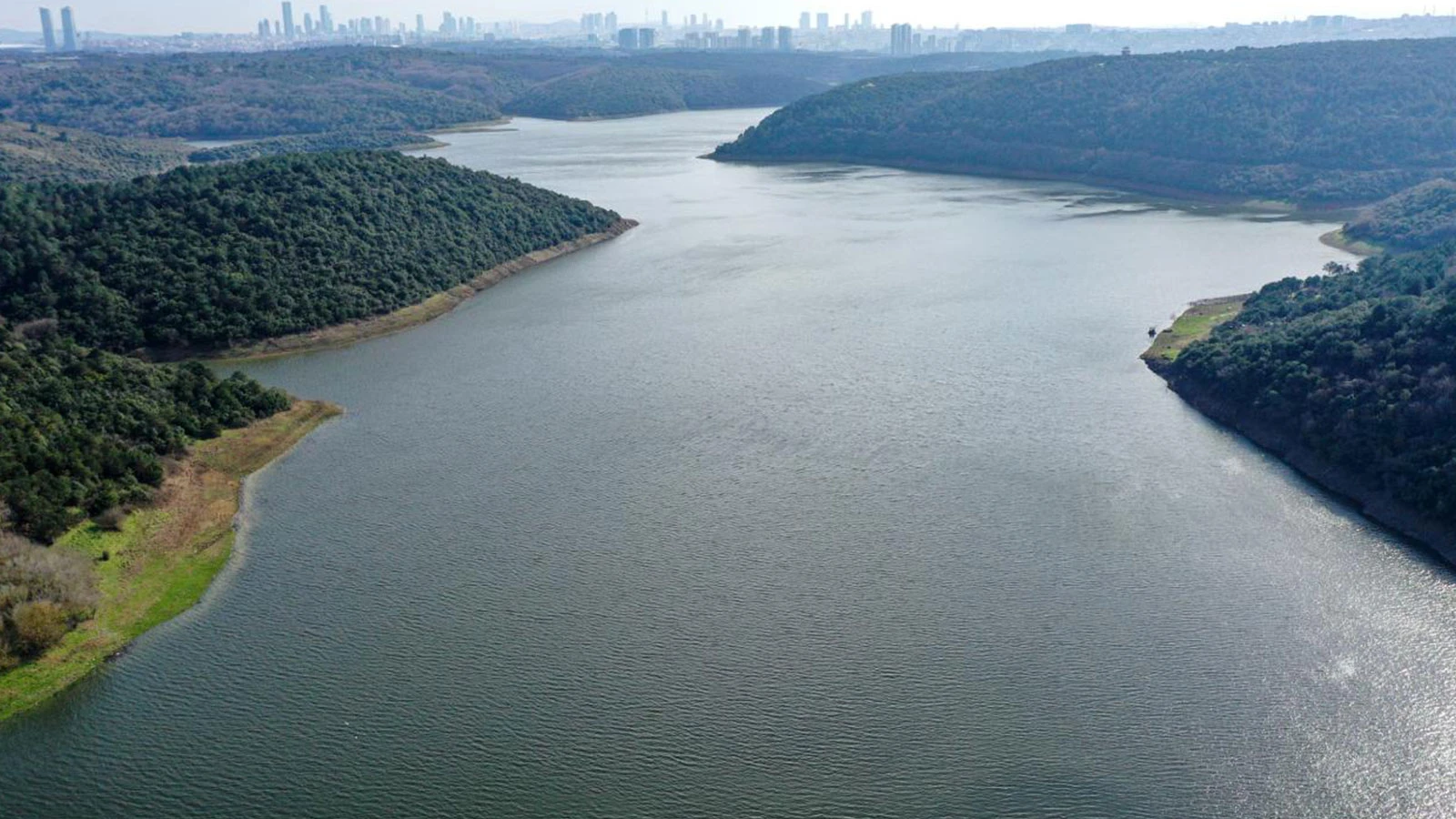
Türkiye, which has been suffering from drought in recent years, experienced a historic period in terms of rainfall in the first 8 months of the 2026 water year. An average of 650.9 millimeters of precipitation was recorded across Türkiye in the period between October 1, 2025 and June 1, 2026. Thus, while precipitation increased by 34 percent compared to normal and 75 percent compared to the same period last year, 8-month water year precipitation throughout Türkiye reached the highest level of the last 66 years. The regional picture was also remarkable. Water year precipitation exceeded both normal and last year in all regions. While the highest increase was experienced in the Southeastern Anatolia Region with 49 percent, the highest 8-month rainfall level of the last 66 years was observed in the Mediterranean and Black Sea regions. The Aegean Region experienced the wettest 8-month period in the last 42 years, Eastern Anatolia in the last 38 years, Central Anatolia in the last 15 years, and Marmara in the last 13 years.
A HAPPY TABLE IN THE MEDITERRANEAN
In the last 8 months, the amount of rainfall in the Mediterranean Region increased to 884 millimeters. The normal rainfall for the region was 609.8 millimeters, and the rainfall in the same period last year was 428.2 millimeters. Accordingly, while precipitation in the Mediterranean increased by 45 percent compared to normal, it increased by more than 100 percent compared to the same period last year. In the Black Sea Region, 632.5 millimeters of rainfall was recorded. Precipitation in the region increased by 24 percent compared to normal and 19 percent compared to last year.
THE ABUNDANCE OF ANATOLIA
While the highest rainfall on a city basis was measured in Rize with 1150.8 millimeters, the least rainfall was recorded in Iğdır with 296 millimeters. The highest water year rainfall of the last 66 years occurred in Adana, Bartın, Bolu, Düzce, Giresun, Hatay, Isparta, İzmir, Kahramanmaraş, Kayseri, Manisa, Niğde, Ordu, Osmaniye, Tokat, Tunceli, Uşak, Yozgat and Zonguldak. The highest level was recorded in Bingöl, Bitlis, Erzincan and Sivas in the last 38 years, in Van in the last 33 years, and in Gaziantep in the last 30 years. Last The number of rainy days in 8 months also increased significantly above the average. There was an average of 99.5 days of precipitation throughout Türkiye in the first 8 months of the 2026 water year.
RAINFALL RECORD IN MAY
May was also the period when the record strengthened. May rainfall across Türkiye was measured as 95.6 millimeters; This value was 81 percent above the May normal of 52.7 millimeters. While May precipitation reached the highest level in the last 33 years across Türkiye, the Mediterranean, Central Anatolia and Black Sea regions received the highest May precipitation in the last 66 years. On the other hand, Water Policies Expert Dursun Yıldız, commenting on the emerging picture, stated that the high rainfall recorded throughout Turkey reveals a positive picture in terms of water resources, but this should not be seen as a permanent relief. According to Yıldız, although the increase in precipitation provides a significant advantage in terms of dams, groundwater reserves and agricultural production, Türkiye’s water problem is a deep and structural issue that cannot be explained only by the amount of rainfall.

ISTANBUL NEEDS MELEN
Yıldız pointed out that water consumption is increasing rapidly, especially in metropolitan cities, and said that Istanbul is one of the most critical cities in this regard. Stating that daily water consumption has reached very high levels in Istanbul, whose population is approaching 16 million, Yıldız stated that the city’s water security cannot be evaluated only by looking at dam occupancy rates. Reminding that Istanbul’s water needs now extend beyond its own basins and that dependence on water from Melen and other external basins is increasing. Yıldız stated that this situation makes the city more sensitive to climate change, drought, energy costs and infrastructure vulnerabilities.
(email protected)
