
According to the news of the Saudi Arabia-based Al-Arabiya channel, the second season of the archaeological surveys carried out by the Heritage Institution in the Mahd region of Medina has been completed.
A total of 1774 archaeological finds were documented as a result of the work carried out in the Süveyrika, Muwayhiye and Haze regions.
While 156 new archaeological sites were recorded during the research; 461 Islamic inscriptions, 34 Thamudi inscriptions, 1259 rock paintings, 11 stone structures, 3 historical palace and building ruins, 2 historical caravan routes and 4 wells were identified.
The Heritage Institution stated that the findings in question shed light on the historical process dating back to the early periods of Islam, especially the period before Hazrat Osman, and contribute to the understanding of the cultural heritage of the Arabian Peninsula.
QURAN VERSES AND INSCRIPTIONS OF HAZRAT OMER WERE REVEALED
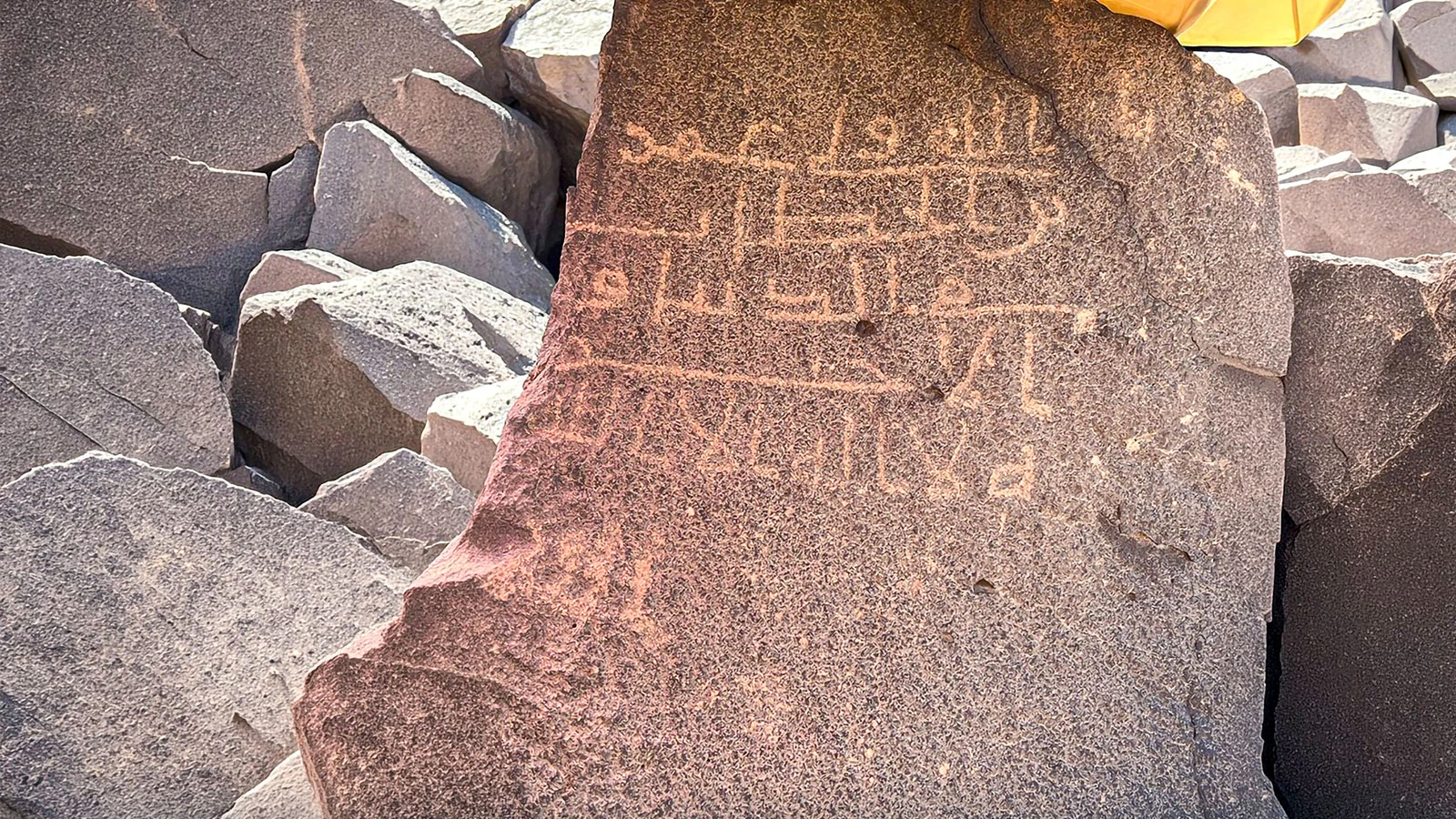
Among the most striking finds unearthed during the research were rock inscriptions containing verses from the Holy Quran and early inscriptions bearing the name of Hazrat Omar.
An inscription among the finds reads: “Allah is the friend of Omar bin Khattab in this world and the afterlife. There is no god but Allah.” It was reported that there were statements.
It was stated that the inscription was written in Hijazi calligraphy and was written by a person named “İbrahim”.
In the images shared by the institution, inscriptions containing the following expressions belonging to the 58th verse of Surah Nisa were also detected:
“Allah commands you to return the trusts to their rightful owners and to judge with justice when you judge between people.”
Experts stated that such inscriptions are important as they show that the verses of the Quran were used in writing in the earliest periods of Islam.
EARLY ISLAMIC INSCRIPTIONS AND ROCK PAINTINGS
The discoveries included early Islamic inscriptions, as well as numerous rock paintings and traces from different periods.
The Heritage Institution emphasized that these finds are important documents that carry the religious, cultural and social memory of the early years of the Islamic state to the present day.
In its statement, the institution said, “Every stone in the Mehd region carries a memory, and each inscription preserves a story from history dating back to the first days of the Islamic state.” statements were included.
The statement also said, “Today, we uncover the secrets of our past and pass them on to future generations.” It was said.
Saudi officials stated that the discoveries make significant contributions to the early Islamic history, Arabic writing tradition and the civilization heritage of the region, and archaeological studies are continuing.
