
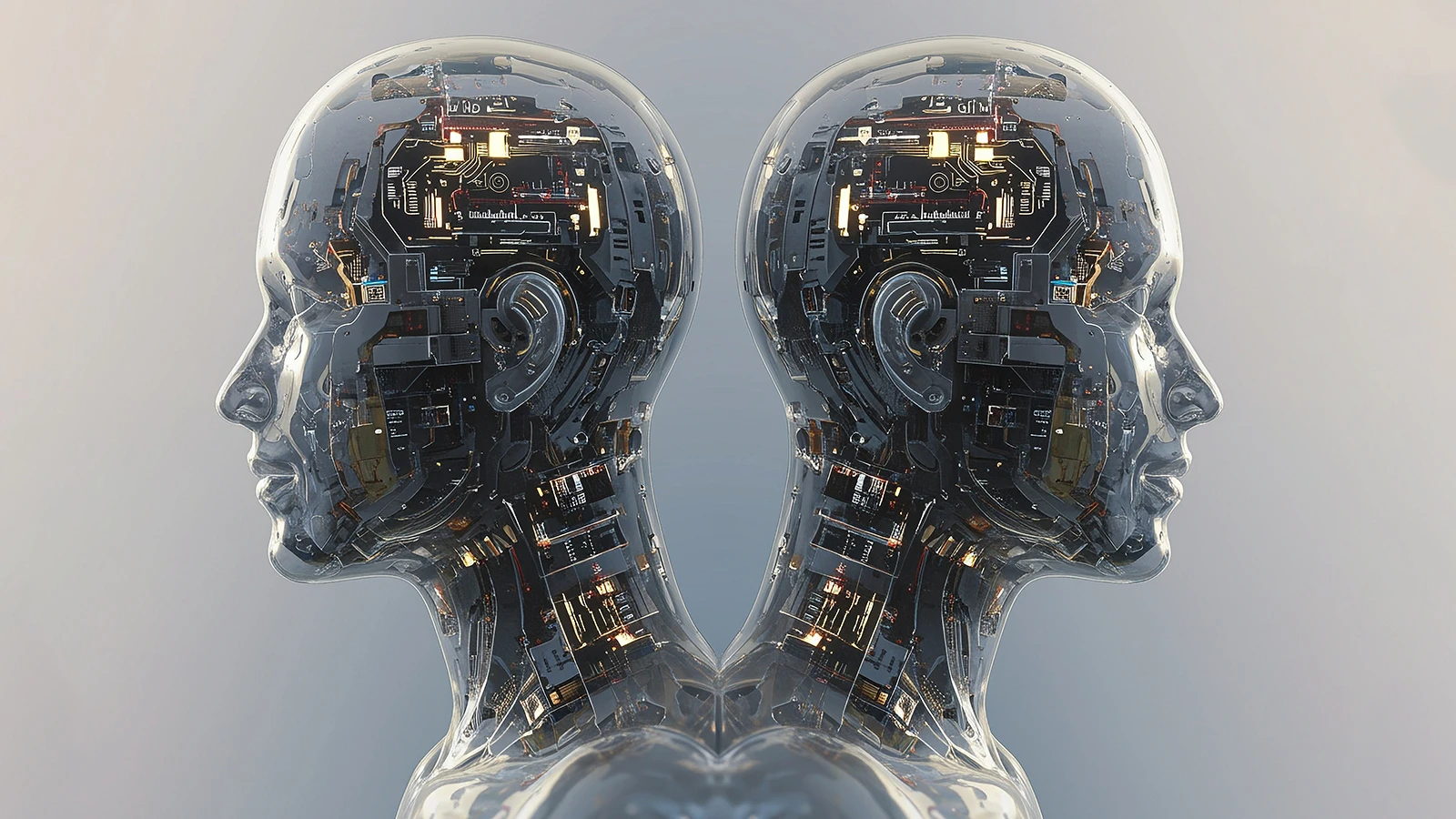
Artificial intelligence tools, which have become widespread in recent years, have accelerated production in many areas, from writing to visual production. However, warnings are increasing in the scientific world that this technology may “narrow the diversity of ideas.” Joint research conducted by institutes working in the field of social sciences emphasizes that artificial intelligence and digital platforms not only make life easier, but also carry the risk of “standardizing” human thought and cultural production. According to the evaluations of Rebecca Winthrop, a researcher at the Brookings Institution, people now put forward “uniform” ideas.
THE BORDER IS BECOMING UNCERTAIN
Another striking finding in the same research is explained as follows: “As people work with artificial intelligence, they adapt more and more to the thought patterns suggested by it over time. This leads to comments that the border between human production and machine production is becoming increasingly blurred.” One of the most striking references noted in the analysis is the Austrian writer Stefan Zweig.. Zweig put forward that with the acceleration of the modern world, people live increasingly similar lives and cities and cultures are moving towards a single pattern. Researchers are now repeating these warnings by following the traces left by Zweig.
THERE ARE OTHER RESEARCH
Recent academic studies also support this discussion. A study published in ArXiv reveals that there is “structural similarity with increased quality” in artificial intelligence-supported writing processes. Another study states that the same artificial intelligence systems “tend to produce similar results” among different users, which may pose a risk of “algorithmic uniformity”.. According to reports, this situation is not limited to text production; It affects a wide range of areas, from decision-making processes to content production.
A COMMON LANGUAGE IS ESTABLISHED
Another striking finding was the trend called “stylistic average attraction (style convergence)”. According to research, in interactions with large language models, users’ initially different writing styles adapt to the model over time and become more standard, more predictable and less distinctive. Experts state that this situation is not limited to text production, but also creates a “centralization” effect in the way ideas are presented.. It is stated that this trend may reduce stylistic diversity and limit creativity in digital content in the long run.
SOCIAL MEDIA IMPACT
In the analysis in question, “Today, a trend is reproduced with the same format around the world within a few hours. Even videos shot in different countries have the same music, the same editing and the same narrative style. This situation is defined by some researchers as cultural homogenization.. “In particular, the algorithms of short video platforms further strengthen this effect by highlighting similar content.”

THERE IS NOT A SINGLE RESULT
In the analysis, it is stated that despite all this picture, the researchers also emphasize that the conclusion that “the world is going completely uniform” may not be certain. Accordingly, some studies show that the same technologies produce different results in different cultures. In other words, global platforms can both increase similarity and produce new local diversities. The basic idea that stands out in the analysis is expressed as follows: “The world is more connected than ever before, but that connection may be making people more similar than ever before.. While artificial intelligence, social media and digital platforms accelerate production, questions such as ‘Is diversity increasing or are we experiencing different versions of the same thing’ come to the fore.
(email protected)
