
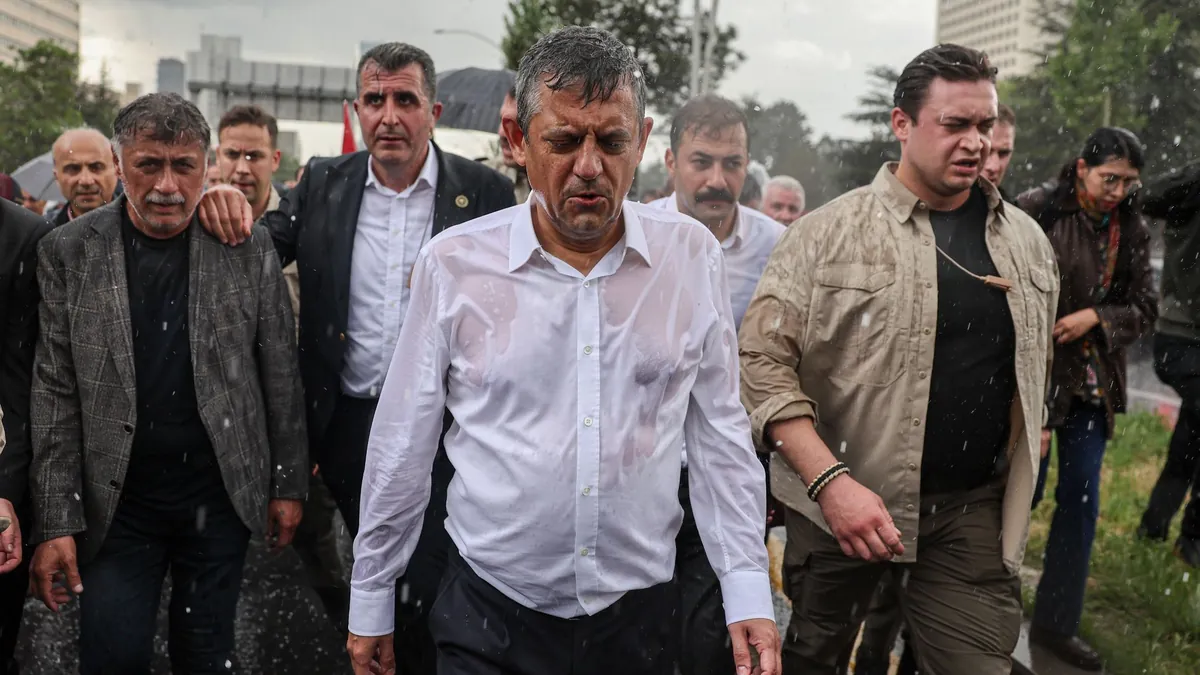
After the CHP chief was removed
Opposition in turmoil – what happens next in Turkey?
Updated on May 25, 2026 – 2:53 p.mReading time: 3 minutes

Tear gas, police and a deposed opposition leader who runs through the streaming rules. The incidents in Turkey are escalating. Why there is more to it than an internal party conflict.
Since the judicial deposition of the head of the largest opposition party CHP, Özgür Özel, in Turkey last week, the protests have not stopped. Former party leader Kemal Kilicdaroglu, who was provisionally reinstated, is insulted as a traitor. Observers see democracy in the country in danger – and President Recep Tayyip Erdogan remains silent. What is behind the conflict?
How did the opposition leader come about?
To understand the background, one must go back to Kilicdaroglu’s defeat by Erdogan in a presidential runoff in May 2023. Kilicdaroglu, now 77, was considered a beacon of hope despite his bland appearance, but did not win an election in his 13 years as opposition leader. Still, he didn’t resign.
Özel, 51, challenged Kilicdaroglu at the party conference in November 2023 and won. He then realigned the party, which paid off in the local elections in March 2024: For the first time, the CHP won more votes nationwide than Erdogan’s Islamic-conservative ruling party AKP.
In December 2024, a former party member and some party delegates filed complaints about alleged irregularities in Özel’s election. Delegates are said to have been bribed. The case was initially dismissed in October last year and was then reopened. On Thursday, a court ordered the cancellation of the party conference three years ago and the removal of Özel. It also reinstated Özel’s predecessor Kilicdaroglu.
The CHP party leadership rejects the allegations and appealed to the Supreme Court. She also argues that the ruling is unconstitutional because the electoral authority and not a court should actually decide whether votes at party conferences were legal.
Why is the verdict important?
Since the CHP’s success in the local elections, the party has been under increasing pressure. Many of its mayors have been arrested on terror and corruption charges. The most prominent example is the former Istanbul mayor and Erdogan rival Ekrem Imamoglu.
Observers believe the cancellation of the CHP party conference was politically motivated. The government rejects any attempt to influence the judiciary and emphasizes that this is an intra-party conflict. Corruption is a widespread problem in Turkey across all parties – so far the main target of investigations has been the CHP.
Political scientist Berk Esen does not see the conflict as an internal party matter. Rather, the electoral authority has been pushed to the sidelines and the conditions for a fair and free election campaign have been virtually eliminated, says Esen on X.
The human rights organization Human Right Watch writes that Erdogan himself first brought irregularities into play at the CHP party conference in a speech in 2024 and that he had a clear political motivation for removing Özel. The judiciary is considered politicized.
