
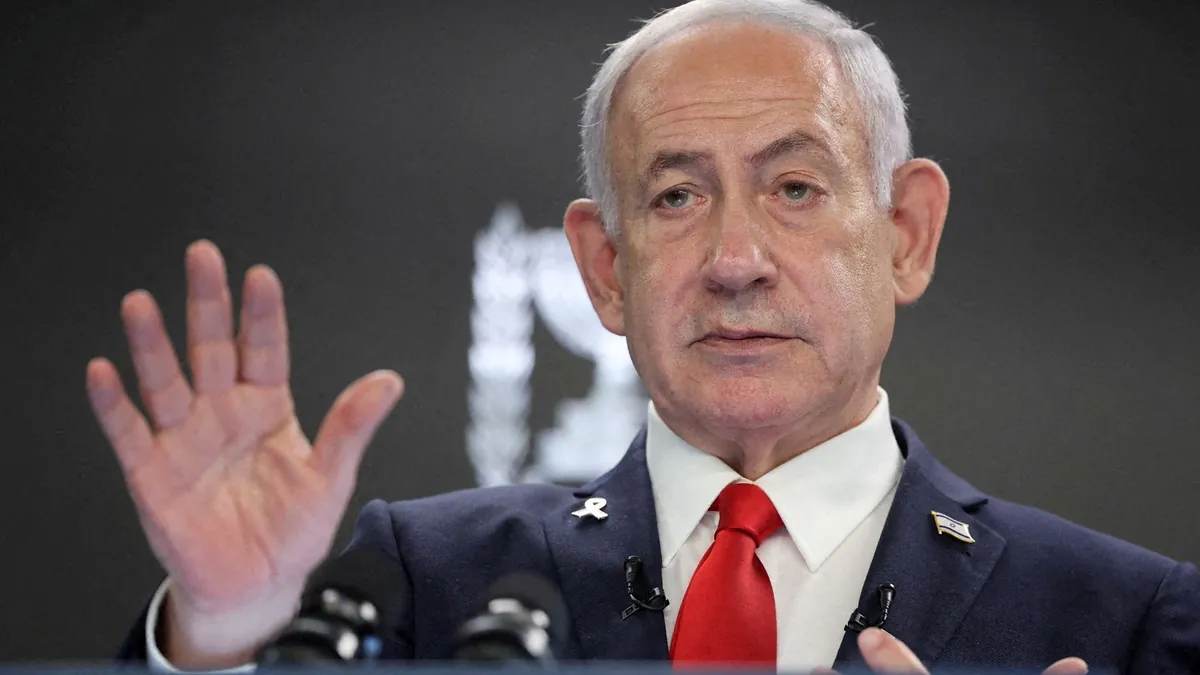
Historian Michael Wolffsohn believes that Benjamin Netanyahu will lose the election in the fall and suggests a federation for Israel and the Palestinians as a way out of the ongoing conflict.
A new parliament, the Knesset, will be elected in Israel in the fall. The current poll numbers are not looking good for the current Israeli Prime Minister Benjamin Netanyahu. The Israeli war in Gaza after the massacre by the terrorist organization Hamas on October 7, 2023 and how it is dealt with could be decisive for the election.
In an interview with t-online, the German-Jewish historian Michael Wolffsohn analyzes Israel’s domestic political situation and also outlines the geopolitical reorganization of the Middle East.
t-online: Mr. Wolffsohn, new elections are coming up in Israel in the fall. Will Benjamin Netanyahu remain prime minister?
Michael Wolffsohn: That’s unlikely. According to polls, his nationalist-religious bloc will only get 51 seats, while the opposition parties can count on 58 and the Arab parties on 11 seats. 58 plus 11 makes 69 out of 120 mandates: That’s an enormous gap by Israeli standards. Nothing works without Arabs; they are absolutely needed as a majority. By the way, this shows how nonsensical the talk of apartheid in Israel is.
The election will be brought forward a few weeks. What is the purpose of the exercise?
It will be brought forward by around four weeks to the end of September. These are tactical games in the dispute over the law that is intended to protect Orthodox men from shirking before military service. Military service is actually compulsory in Israel, for both men and women. However, students from Talmud Torah schools are exempt from this. But the non-religious people who finance such institutions and the people who learn there no longer want to accept that. The Orthodox say: Only our fear of God saves the Jews. The non-religious counter: You study and collect, God does not protect us from Iran, Hamas or Hezbollah, and we are allowed to die in wars for you. No thanks, that’s enough!
Prime Minister Netanyahu would have to go to court if he loses the election. Are the corruption allegations enough to warrant a prison sentence?
The principle of “when in doubt for the accused” also applies in Israel, and the doubts are significant. The accusation is increasingly shaky. Netanyahu is accused, among other things, of having cigars and champagne given to him. Also that he wanted to buy friendly media reports for political and economic benefits. The indictment had little to no impact on the election results in the last election.
The judicial staff makes no secret of their opposition to the Netanyahu camp, nor vice versa. It’s about this crucial question: Who has the last word – the judges, who have so far been appointed to office largely by their own guild, or the democratically elected politicians, even if you don’t like these politicians?
Will the question of how the Hamas massacre on October 7, 2023 happened become the dominant election campaign issue?
