
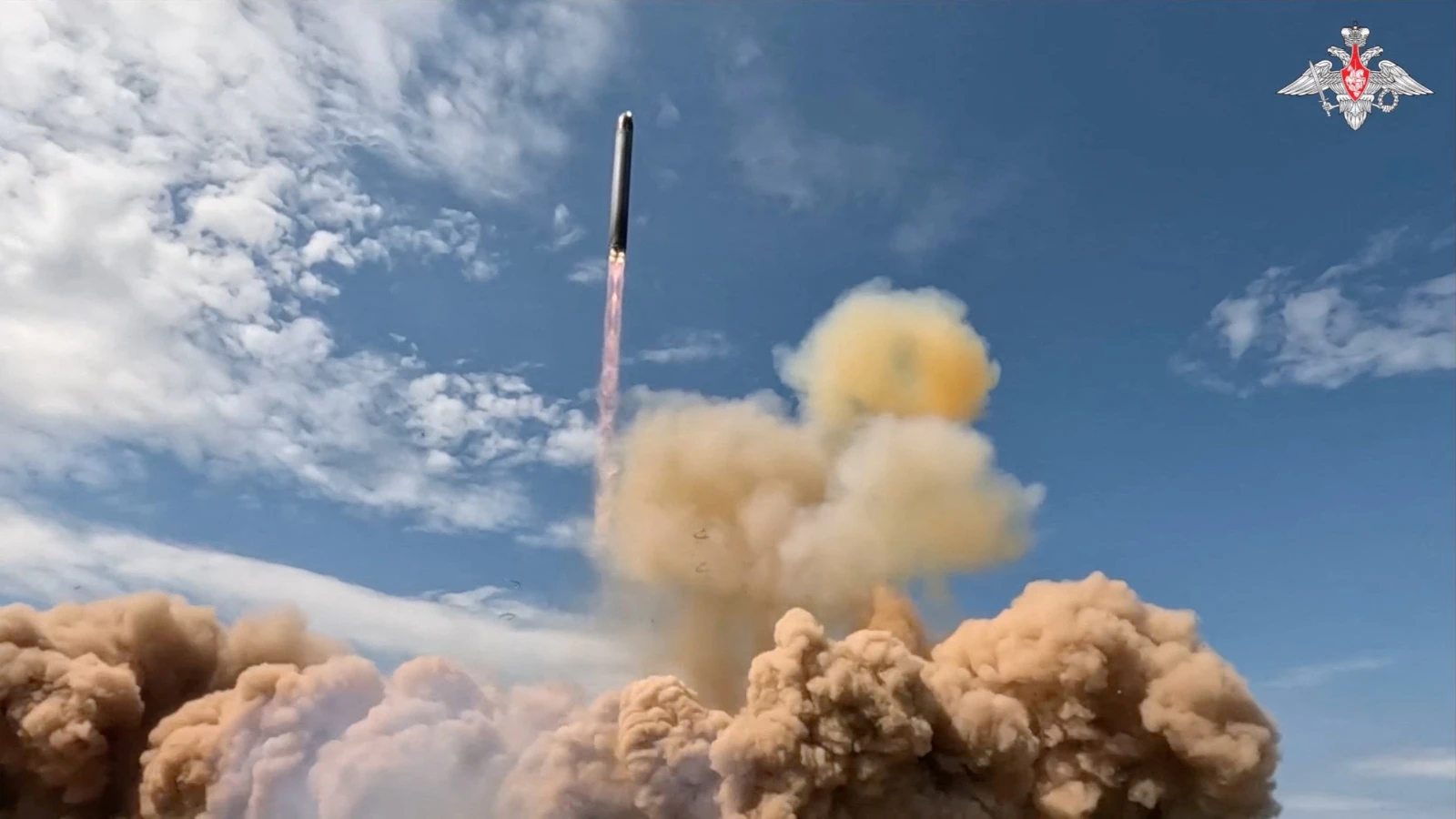
NEWS SUMMARY: Russia announced that the RS-28 Sarmat intercontinental ballistic missile, known as “Satán II” in the Western press, will be deployed operationally by the end of 2026. According to Moscow, the missile was launched from Plesetsk Base and hit its target at the Kura test site in Kamchatka about 30 minutes later. Russian President Vladimir Putin described the test as a “major event” and “unequivocal success.” Sarmat is planned to be first deployed at the Uzhur missile unit in Siberia. It is stated that Sarmat, which weighs approximately 208 tons and is more than 35 meters long, has a range of 18 thousand kilometers and can carry many nuclear warheads or Avangard hypersonic vehicles. It is claimed that the missile is designed to use different routes to bypass defense systems. This development comes after New START, the last major strategic arms control agreement between the United States and Russia, expires in 2026. With the end of the agreement, the two countries left the legal framework limiting their strategic nuclear weapons. According to experts, the deployment of Sarmat raises concerns that a new and more dangerous nuclear arms race has begun in the world.
BROAD NEWS
Russia has set a date for the deployment of the RS-28 Sarmat intercontinental ballistic missile, referred to as “Satán II” in the Western press. According to Moscow’s statement, the missile will begin to be used in operational duty before the end of 2026.
Russia announced that the RS-28 Sarmat missile was launched from Plesetsk Base in the Arkhangelsk region on May 12, 2026, at 11.15 Moscow time. According to the statement, the missile hit the target determined at the Kura test site on the Kamchatka Peninsula approximately 30 minutes later.
It was stated that Russian Strategic Missile Forces Commander Sergey Karakayev reported the test result to Vladimir Putin, and Putin followed the launch via video conference. Putin described the test as a “major event” and “unequivocal success.”
Critical period after New START
The Sarmatian statement coincided with an extremely sensitive period for global nuclear arms control. New START, the last major strategic arms control agreement between the United States and Russia, expired on February 5, 2026.
With the end of this agreement, legal restrictions on strategic nuclear weapons that the two countries could deploy disappeared. For this reason, Sarmat’s commissioning is considered not only a technological development, but also one of the first major moves of the new unregulated nuclear era.
What kind of missile is Sarmat?
The RS-28 Sarmat was developed as the successor to the Soviet-era R-36M missile. The missile, referred to as SS-X-29 or SS-X-30 in NATO classification, is considered one of Russia’s most ambitious strategic weapons projects.
According to the information in the news, Sarmat:
- It weighs approximately 208 tons,
- 35.3 meters long,
- 3 meters in diameter,
- It has a range of approximately 18 thousand kilometers, x
- It is launched from underground silos,
- It uses a three-stage system with liquid fuel.
With its dimensions, the missile is described as being approximately the length of an inverted 10-storey building.
Can carry more than one nuclear warhead
One of Sarmat’s most striking features is its carrying capacity. Allegedly, the missile can carry up to 10 tons of payload. This means multiple independent nuclear warheads or hypersonic vehicles in different configurations.
The news suggests that the missile can carry 10 to 16 independent nuclear warheads, with each head having a power of up to 750 kilotons. It is also stated that Sarmat is designed to carry Avangard hypersonic glide vehicles.
Why is it considered difficult to stop?
What makes Sarmat particularly dangerous is not just the number of warheads it carries. It is stated that the missile is designed to bypass missile defense systems.
According to the news, the system was designed to go beyond classical routes and reach targets via the South Pole. Such a route may fall outside the usual threat directions of early warning systems, especially in North America.
It is also stated that the first thrust phase of the missile is short, which narrows the window in which infrared satellites will detect the launch and initiate the response process. It is also reported that Sarmat can carry fake targets and countermeasures to mislead defense systems.
The testing process was problematic
Sarmat’s development did not go smoothly. The first goal was for the system to become operational much earlier. However, the program was delayed for years.
It was announced that the first full silo launch was successfully carried out on April 20, 2022. On the other hand, various failed test claims came to the fore in 2023 and 2024. In particular, satellite images and fire data that showed that a silo in Plesetsk was damaged in 2024 attracted attention.
Images spread on social media in 2025, which allegedly showed a missile deviating from its course after takeoff, were also associated with the Sarmat tests by analysts. Moscow did not confirm all of these allegations.
Putin announced the deployment schedule
Despite all these discussions, Putin said that Sarmat would be appointed by the end of 2026. According to the statement, the first Sarmatian regiment will be deployed in the Uzhur missile unit in the Krasnoyarsk region in Siberia.
The system is later planned to replace the old R-36M missiles at the Dombarovsky base in the Orenburg region.
New nuclear race concerns
With the expiration of the New START treaty, Russia will now be able to deploy Sarmat together with its existing intercontinental ballistic missiles without any numerical limitations.
On the US side, the LGM-35A Sentinel program, which is planned to replace the aging Minuteman III missiles, has been on the agenda for years with delays and cost increases. This situation strengthens the comments that a new strategic arms race has begun between the two countries.
It is debatable to what extent Sarmat is actually operational and how much of Moscow’s statements are propaganda. But one thing is certain: At a time when arms control agreements are in effect, each new test makes the nuclear competition between Washington and Moscow even more visible.
