
Iran war
Unclear situation in negotiations regarding the Iran conflict
Updated April 25, 2026 – 2:21 amReading time: 3 minutes

Confusion over talks between Iran and the USA: While Washington speaks of negotiations, Tehran denies direct meetings. Chancellor Merz wants to make the Iranians an enticing offer.
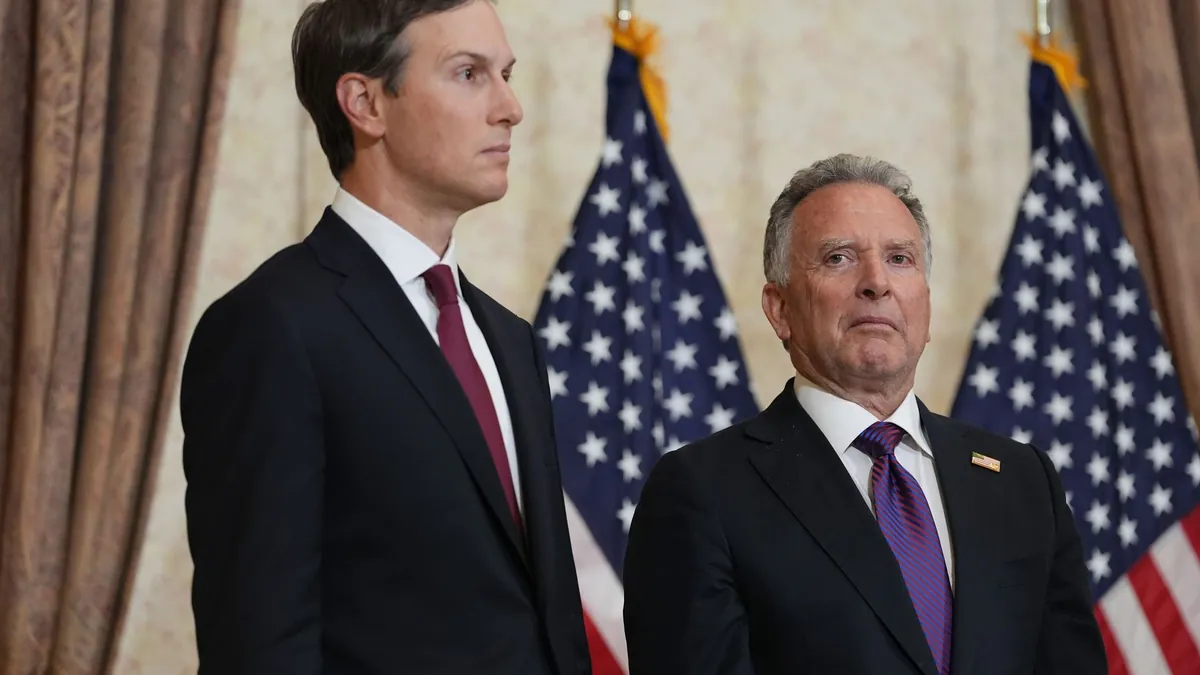
In the struggle to end the Iran war, difficult diplomatic talks are looming in Pakistan. The White House announced that US special envoys Steve Witkoff and Jared Kushner would travel to Islamabad for negotiations. Iranian Foreign Minister Abbas Araghchi arrived in the Pakistani capital on Friday. However, the Tasnim news agency, which is close to the Revolutionary Guards, Iran’s elite military force, immediately rejected reports of negotiations.
Tasnim also described an alleged request from Iran for a personal meeting, which US government spokeswoman Karoline Leavitt spoke of, as false. It remains unclear whether the parties to the conflict are negotiating directly or simply exchanging messages through Pakistani mediators.
Different signals from Tehran
Foreign Minister Araghchi emphasized on Platform X that he only wanted to coordinate with his Pakistani partners. Pakistani security sources said that Iran’s chief diplomat was planning to discuss a counter-proposal for negotiations with the United States. According to Tasnim, the Foreign Minister wants to present Iran’s positions for an end to the war.
However, experts suspect that the minister does not have the necessary scope for action. It is believed that the influential Revolutionary Guards are largely determining the line of negotiations in Tehran. According to many Iran experts, you are currently in charge in Tehran.
Blocked sea routes and nuclear dispute
The central points of contention in the ongoing conflict remain the Iranian nuclear program and the closure of the Strait of Hormuz.
- Nuclear program: The USA demands a guarantee that Iran will not develop nuclear weapons. However, Tehran is sticking to uranium enrichment. The West is particularly critical of the stockpile of around 440 kilograms of uranium, which has been enriched to 60 percent and, if further processed, could be used to build several nuclear weapons.
- Strait of Hormuz: Due to Iranian attacks and a US naval blockade, shipping traffic in the strategically important strait is almost completely at a standstill. The USA demands free passage without tariffs; Iran maintains control over the body of water, which serves as a transport route for much of the world’s oil and gas trade.
- Finance: Tehran demands the release of frozen assets abroad as a precondition.
Leavitt: Vance remains in the USA, but could travel there
According to CNN, US Vice President JD Vance is not traveling to Pakistan because Iranian Parliament Speaker Mohammed Bagher Ghalibaf is not taking part in the talks. Ghalibaf is seen in the White House as the head of the Iranian delegation and thus as Vance’s counterpart, it said.
As far as she knows, Vance is prepared to travel to Pakistan if the United States decides that it is not a waste of time for him, Leavitt said. Just like President Donald Trump and Secretary of State Marco Rubio, he will wait in the USA for new information from the US delegation.
On Tuesday, Trump unilaterally extended the ceasefire with Iran without a clear end. Shortly before, Iran had refused to take part in further negotiations in Pakistan. Iran’s neighboring country is mediating in the conflict. Negotiators from the conflicting parties met in Islamabad for a first round of talks, which ended without results.
Pistorius has minesweepers relocated to the Mediterranean
In preparation for a possible operation in the Strait of Hormuz, Defense Minister Boris Pistorius announced that German naval units would be mobilized. “We will move a minesweeper to the Mediterranean and provide it with a command and supply ship,” said the SPD politician to the “Rheinische Post”. He didn’t say exactly when they should leave.
