
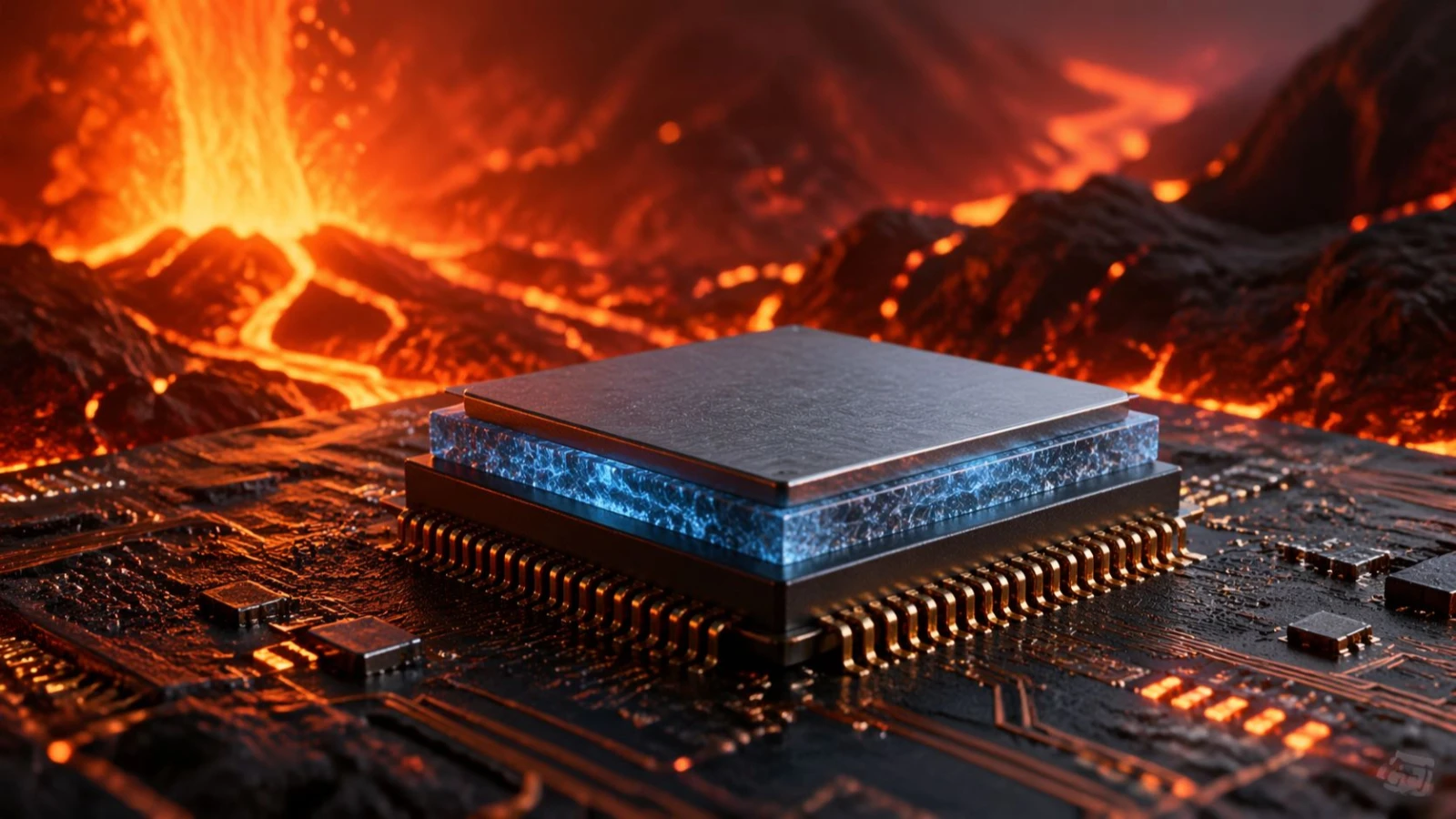
Scientist Joshua Yang, who leads the California-based research team, announced that the nanoscale memory unit they developed can operate smoothly at up to 700 degrees. This value represents a remarkable jump considering that traditional electronic components generally lose performance around 200 degrees.
The technology developed in the research is based on a new generation electronic component known as “memristor”. Unlike classical chips, memristors store data through resistance change instead of electrical charge. In this way, it can preserve information even if the power is cut off. According to experts, this feature has the potential to significantly increase energy efficiency, especially in artificial intelligence systems.
The prototype used in the study consists of a three-layer structure: tungsten, hafnium oxide and graphene. Researchers state that graphene prevents deterioration that may occur at high temperatures and ensures stable operation of the device.
The data obtained is also remarkable. The chip can store data for more than 50 hours at 700 degrees, withstand more than 1 billion processing cycles, and offers nanosecond response time. Moreover, according to scientists, since 700 degrees is the limit of testing equipment, the actual endurance level may be even higher.
Experts emphasize that this technology can make a big difference, especially in extremely hot environments. It has potential for use in many areas, from space missions to planets with high temperatures such as Venus, to geothermal energy drilling and nuclear facilities. It is also stated that it can contribute to the development of more durable electronic systems in the automotive industry.
The teams contributing to the research include the CONCRETE Center led by USC (University of Southern California) in the USA, the US Air Force Research Laboratory and Kumamoto University in Japan. The results of the study are interpreted as opening the door to a new design approach in the development of electronics resistant to high temperatures.
However, experts point out that the developed chip is still in the laboratory stage. System integration and mass production processes need to be completed before it can be used in the real world.
According to the scientific world, this development is not just a new chip production; It is also an important step that can change the future of artificial intelligence hardware.
