
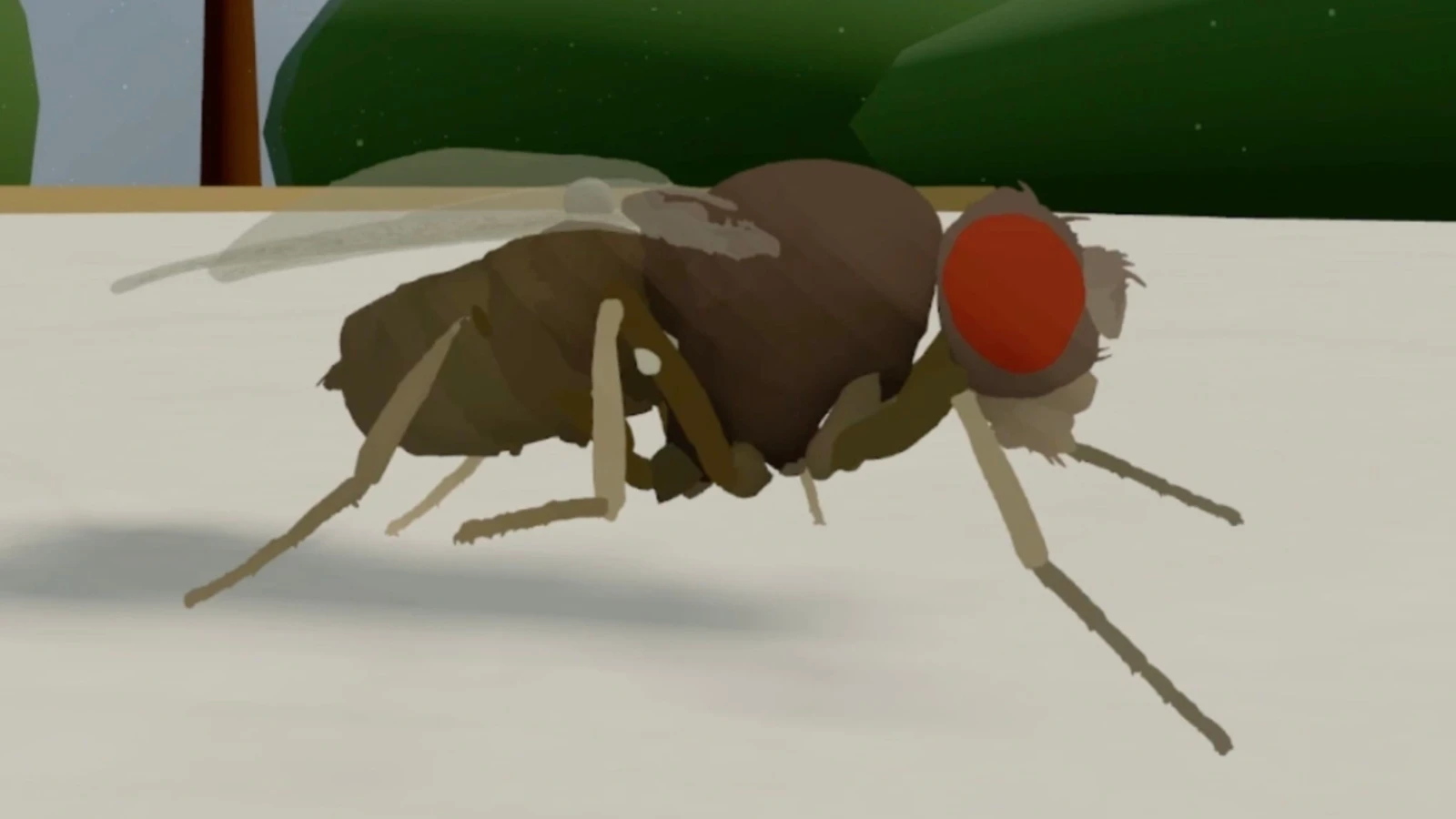
In the video, which quickly spread on social media, a fly is seen moving in a three-dimensional environment. But this fly is not real. This being, a computer-generated model, is controlled by a digital copy of a real fly’s brain.
“First whole brain emulation” claim
One of the names behind the project is Dr. Alex Wissner-Gross described the work as “the first whole-brain emulation that can produce multiple behaviors.”
Unlike classical artificial intelligence, this technology does not imitate a living creature; By copying the structure of his brain at the level of neurons and synapses, it enables behavior to emerge spontaneously.
Digital brain with 125 thousand neurons
The basis of the study is based on an academic model published in 2024. Approximately 125 thousand neurons and 50 million synaptic connections were simulated in this model.
The system, which was initially just a “brain without a body”, was integrated with a virtual body in the final stage. Thus, the digital fly can walk, react to stimuli, clean and feed. Moreover, these behaviors were not pre-programmed; emerged directly from the brain structure.
Scientists are cautious
Although the development creates great excitement, there are serious question marks in the scientific world.
Experts point out that the study has not yet gone through the peer-reviewed scientific publication process. It is also stated that the model has important shortcomings, such as not including neurochemical processes, lacking the ability to learn, and being only a “fixed copy” of the brain.
For this reason, many researchers emphasize that the current system is not a “digital living thing” in the truest sense, but rather an experimental platform.
A different approach from artificial intelligence
This study also brought up the difference between artificial intelligence and brain emulation.
Artificial intelligence is trained with data, imitating behavior. Brain emulation, on the other hand, copies the real structure and the behavior occurs spontaneously. According to experts, this difference may radically change discussions about technology and consciousness in the future.
Mouse and human brains are next
Eon Systems announced that the next target is the mouse brain. In the long term, it is planned to digitally copy the human brain.
This possibility also brings with it big ethical questions. Can a digital brain have consciousness? Does this copy count as the “same person”? Does shutting down the system mean ending a life?
Is it the beginning of a new era?
For now, there is only one “digital fly”. However, according to experts, this development may herald much greater transformations in the world of science and technology.
Although the research is still in its early stages, advances in this field are expected to lead to intense discussions, both scientific and ethical, in the coming years.
