
According to Rosario Cerra, President of the Center for Digital Economy, the example of Tehran shows that smart cities have now become an integral part of geopolitical competition and national security. In his statement to Adnkronos, Cerra explained why smart cities have turned into a new technological battlefield.
What did the operation that led to Khamenei’s death reveal?
This operation demonstrates what security experts have long known: cities’ digital infrastructures are also strategic surveillance tools.
In the case of Tehran, what was remarkable was not only the precision of the missiles, which could hit very small targets from a distance of more than 1000 kilometers. The real surprise was a development that happened quietly years ago: Almost all traffic cameras in the Iranian capital were allegedly hacked and the images were transferred to external servers in real time.
In this way, a data map called “pattern of life” in the intelligence world was created. How a city moves, how it functions, and how it is organized has been analyzed constantly and in detail.
When you know a city as well as the street you grew up on, any abnormality will be noticed immediately.
The purpose of smart cities was actually different
Smart cities were planned for a more comfortable life, such as smart traffic lights, more effective security systems, energy sensor networks and integrated public service platforms. But according to Cerra, these infrastructures can do much more.
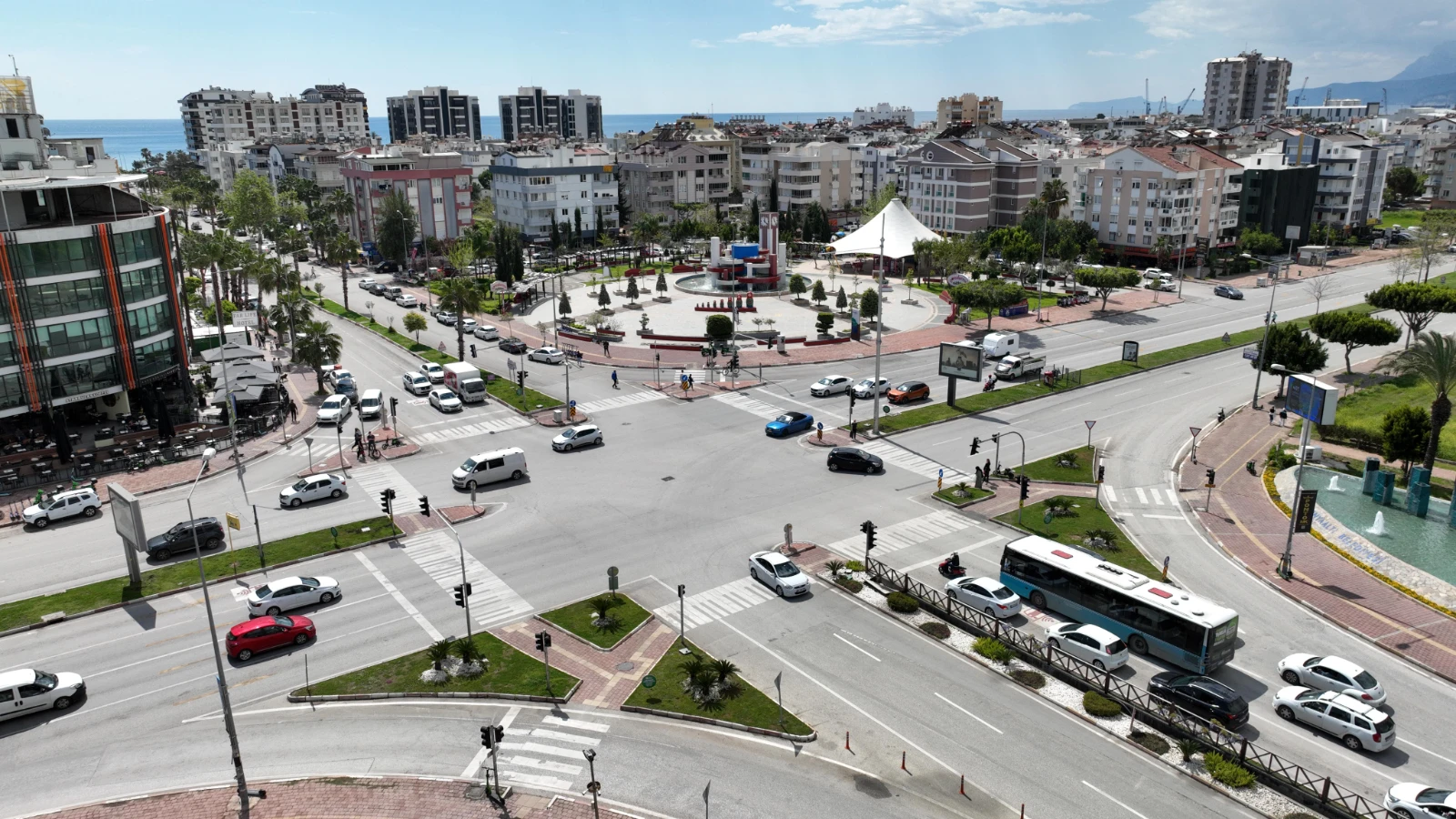
A camera at an intersection doesn’t just see cars. It also detects faces, repetitive behaviors, and unusual movements.
If these cameras are connected with facial recognition and social network analysis systems, they become an intelligence gathering tool.
Multiply this by thousands of devices across the city and the result is a constant surveillance platform covering the entire urban population.
An even more dangerous risk
According to Cerra, there is a risk even more dangerous than the incident in Tehran. Risk is built into the system. It was claimed that the infrastructure in Tehran was hacked from outside. But what happens if the company producing the infrastructure is legally affiliated with a foreign government?
The best-known example is China.
China’s National Intelligence Law, passed in 2017, obliges Chinese companies to cooperate with state intelligence activities. This obligation applies regardless of where in the world the products are installed.
China’s major companies have established city security infrastructures in more than 100 countries. In many places, these systems form the video surveillance backbone of cities and are sometimes managed remotely. Israel also shows that it is on this path with its practice in Tehran.
Technology is now a matter of geopolitical power
According to the High-Tech Economy report prepared by Cerra, technology is no longer just a means of production. Technology is now at the center of national sovereignty and geopolitical power.
Smart cities make this situation concrete.
Smart city systems are the physical node of the high-tech economy. Data collection, algorithms and real-time control come together here.
The data obtained from a smart city is not just municipal data. This data is a dynamic map that shows how a country works, where its weak points are, and how decision-makers act.
Dual-use technology
This situation brings the concept of “dual-use technology” to the agenda. These technologies are developed for civil purposes but can also be used for military or security purposes.
This concept was previously limited to fields such as aviation and cryptography.
Today, these technologies are found in traffic lights, train stations, hospitals and parking lots.
In other words, the borders of national security have now moved into cities.
Are local governments aware of this? Most of the time no.
When a municipality purchases a video surveillance system, it considers it a technical or budgetary decision.
However, in reality, he is making a national security decision.
The problem is that many local governments do not appear to have the knowledge or legal framework to assess the geopolitical risks of such decisions.
Some countries have started banning certain technologies
In recent years, some countries have banned certain technologies. The US has banned Hikvision and Dahua products in federal agencies. Australia removed these cameras from government buildings. The UK has removed a Chinese company from its 5G networks. India has increased checks on imported security cameras. However, most of the time these measures are taken too late. Because the infrastructures are already established.
Smart city paradox
The smarter and more connected a city becomes, the more transparent it becomes, and in a hostile geopolitical environment, transparency can become a weakness.
In Tehran, cameras became not only for city security but also the eyes of others.
The same thing can happen in any other city in the world. And without even needing a cyber attack. Because the door may have already been left open from the inside.
