
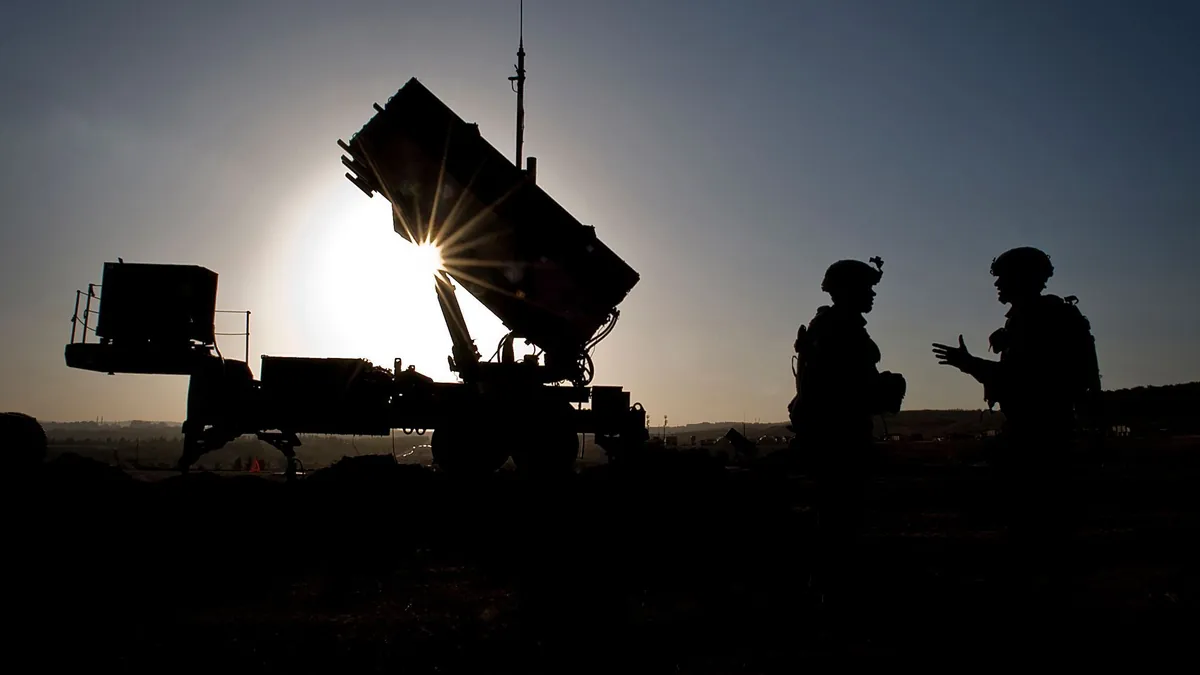
But Iran also attacks with drones. When it comes to defense, the Gulf states in particular have to hope that they do not run out of defense missiles. Of the hundreds of missiles and drones that were aimed at the United Arab Emirates and Qatar, some got through – even if the majority were apparently shot down. If Iran continues the attacks for a longer period of time, countries may have to decide which ones to repel – for example those on inhabited and other civilian areas or on important oil and gas facilities.
Details about air defense, such as the number of Patriot missiles that can be used, are also a well-kept secret in the Gulf. But there are indications that Arab countries may soon need support. The British Ministry of Defense announced that British fighter jets helped with anti-aircraft defense in Jordan, Iraq and Qatar.
Of course, there are no exact figures for Israel, which is currently fighting on several fronts again – after two years of war in the Gaza Strip. After the start of the war, the Defense Ministry ordered the country’s major defense companies to accelerate the production of offensive and defensive weapons systems.
Iran expert Danny Citrinowicz believes the question of who will run out of ammunition first is the “key question” of the conflict. However, he emphasizes that from Israel’s perspective, the launch pads in Iran are much more important than the number of rockets. Because without them no rockets can be fired. “It’s clear that they suffered significant damage in that area,” explains Citrinowicz, who researches at the Institute for National Security Studies (INSS) think tank in Tel Aviv. “But I don’t think we can reduce the number to zero.”
Citrinowicz believes it is possible that the Iranians are preparing for a “second phase” in which, in addition to the Lebanese Hezbollah, the Yemeni Houthi militia could also take part. The Iranians could rely on “the number of our interceptor missiles being so dramatically low that every missile they fire will have an effect,” says the expert. He assumes that the Iranian leadership may be saving missiles so that it can later overwhelm Israel’s defense systems with the Houthis.
