
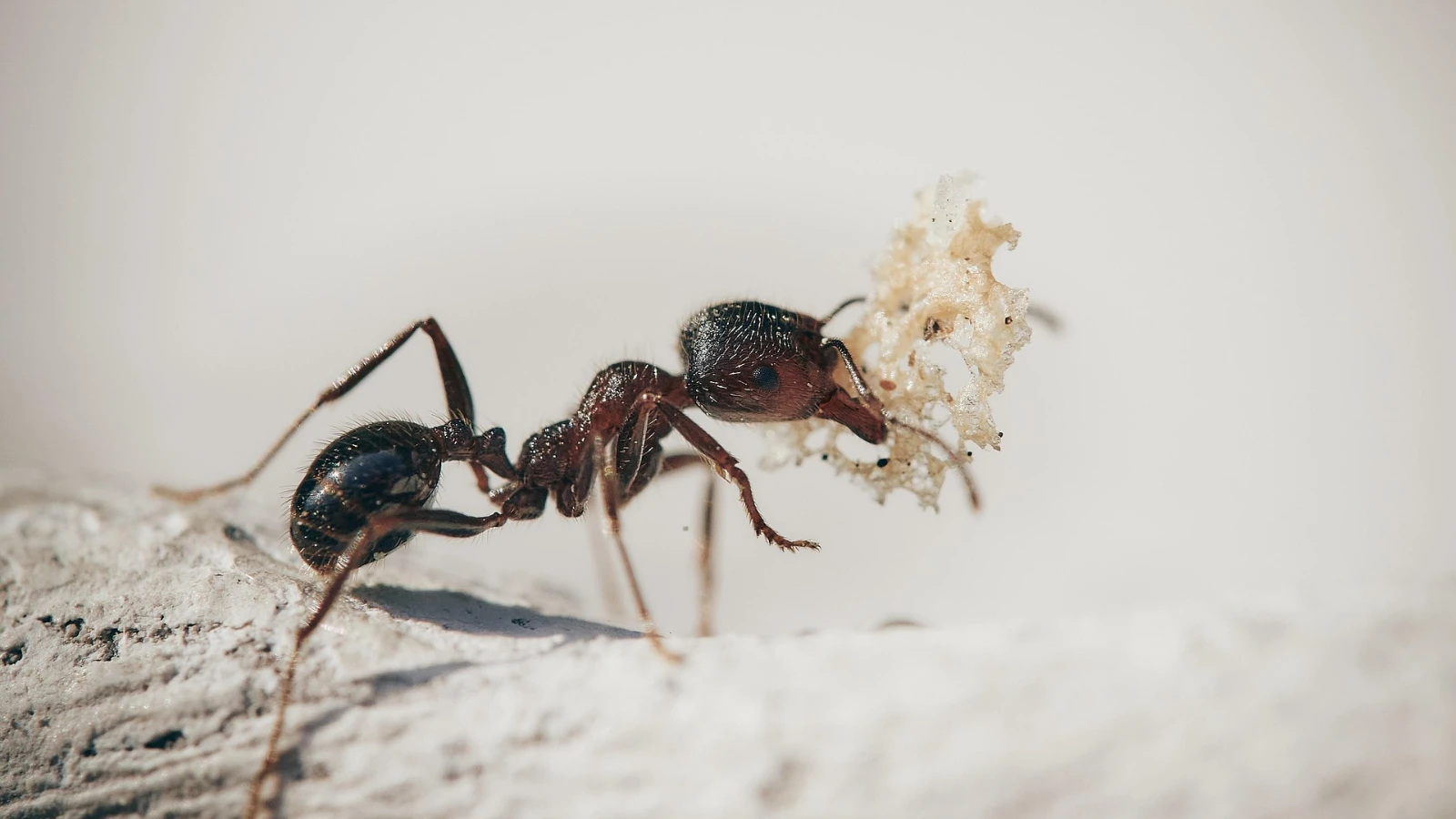
It has been known for years that this species depends on another species, Messor structor, to keep its colonies alive. Messor ibericus queens mated with Messor structor males and produced sterile hybrid workers that maintained the social structure. So, without this “common” species, the colony could not function.
The Miracle of Self-Cloning
But the new findings go much further. Scientists found samples of Messor structor in Messor ibericus colonies hundreds of kilometers away from their natural habitats. The question of how these ants got there led to an answer that surprised even researchers:
The Messor ibericus queen not only uses the genetic material of another species, but can also clone that species. The queen produces genetic copies of both individuals of her own species and the Messor structor. In this way, it guarantees the biological resources necessary to keep its hybrid colonies alive.
Genetics “Domestication”
This mechanism creates an extremely complex and compulsive reproductive addiction. In practice, Messor ibericus genetically “domesticates” the other species; It spreads it by re-copying it wherever it establishes new colonies.
Researchers describe this situation as “forced interspecies cloning.” This discovery overturns one of the classic principles of biology: The rule that a species can only produce offspring from its own descendants no longer holds. Here, a single queen can produce members of two different species.
According to experts, this is a never-before-seen evolutionary strategy rather than a traditional territorial invasion. This discovery, which questions our understanding of animal reproduction and the boundaries between species, literally rewrites the “handbook of evolution.”
