
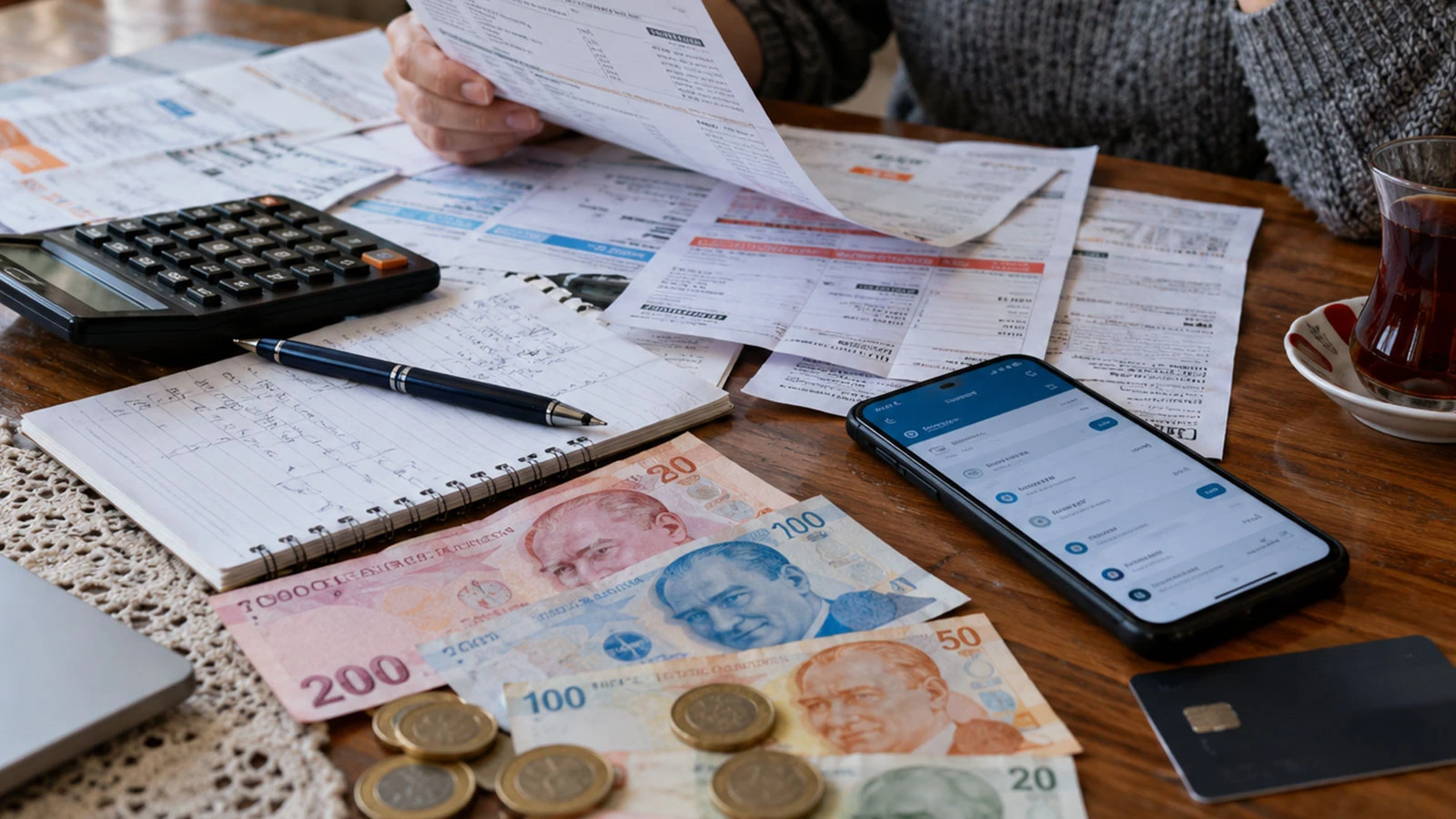
In Türkiye, financial difficulties are driving more and more households into debt. While research evaluations draw attention that 70 percent of the society is in debt, according to official data, 56.4 percent of the population has debt or installment payments. While credit card debts exceeded 3.5 trillion liras, the total of credit card and consumer loan receivables that fell into legal proceedings because they could not be paid reached 376 billion liras. Figures show that borrowing is used not only for major expenses but also to sustain daily life.
7 TRILLION TL DEBT LOAD
Banking data reveals the size of individual borrowing. According to BRSA’s September 11, 2026 data, individual credit card debts increased to 3 trillion 497 billion liras, and consumer loans increased to 3 trillion 475 billion liras. Thus, the total of citizens’ credit card and consumer loan debts to banks reached approximately 6 trillion 973 billion lira. Consumer loans ranked first in consumer loans with 2.6 trillion liras, while housing loans reached 834 billion liras and vehicle loans reached approximately 42 billion liras.
THEY CLOSE THE DEBT WITH DEBT
One of the most striking aspects of borrowing is that a significant portion of the newly used money is used to meet existing obligations. Research on indebtedness shows that some of the participants are considering borrowing again to pay off the previous month’s debt, while others are considering borrowing again to cover the current month’s expenses. In the research conducted by OWL Intelligence, the rate of those who tried to pay off their credit card debt by paying only the minimum amount was 38.4 percent, and the rate of those who could not pay their debt at all was measured as 6.6 percent.
376 BILLION LIRA IS UNFOLLOWED
The impact of payment difficulties on the banking system is also growing. According to the compilation of BRSA data, individual credit card debts, which were approximately 2.79 trillion lira at the beginning of 2026, increased to 3.53 trillion lira as of October 2. In the same period, credit card receivables that were followed up because they could not be paid increased by 59.51 percent and reached 199.8 billion liras. Non-performing receivables in consumer loans also increased from 116 billion lira to 176.7 billion lira. Thus, the total of debts under legal follow-up in these two items alone approached 376.5 billion lira.
DEBT IS IMPOSED TO THE GROCERY
Borrowing is not limited to banks only. According to OWL Intelligence research, 12.4 percent of participants borrow from family or friends, and 7.1 percent borrow from tradesmen and grocery stores. These ratios show that debt relations that are not visible in banking records also have an important place in household budgets. In the research, the rate of those who research prices before shopping reaches 80.4 percent, and the rate of those who postpone their spending reaches 78.2 percent.
EXPENSES CANNOT BE COVERED
TÜİK’s living conditions data also reveals the impact of the economic squeeze on consumption. While 35.1 percent of the population reports that they cannot afford a meal containing meat, chicken or fish every two days, 25.1 percent state that they do not have the financial strength to make an unexpected expense. The rate of those who cannot renew the old furniture in their homes reaches 58 percent, and the rate of those who cannot afford a week’s holiday costs reaches 50.5 percent. 19.6 percent of the population states that they cannot afford the necessary expenses for adequate heating of their home.
