
NEWS SUMMARY: A 59,000-year-old Neanderthal tooth found in Chagyrskaya Cave in Russia showed that prehistoric humans may have intervened in tooth decay. Scientists detected a deep hole in the crown of the tooth, extending to the area where the nerves are located, and tool marks around this hole. Scans and experiments conducted with modern human teeth revealed that the decay area may have been pierced with a pointed stone tool. According to researchers, this process shows that Neanderthals recognized the source of pain and consciously tried to treat it. Traces of wear on the tooth also revealed that the individual continued to use the tooth after the procedure. Experts state that this discovery may be one of the oldest known tooth decay interventions in human history. The findings add to the evidence showing that Neanderthals had more advanced social and cognitive skills than thought.
BROAD NEWS
A 59,000-year-old Neanderthal tooth found in a cave in Russia offered remarkable clues about the medical intervention skills of prehistoric humans. According to scientists, the tooth in question shows that Neanderthals may have used a stone tool consciously to alleviate a painful cavity.
Researchers found the tooth in Chagyrskaya Cave, located in the Altai Mountains in Russia’s southwestern Siberia region. It is thought that Neanderthal communities lived in this cave approximately 49 thousand to 70 thousand years ago.
The molar tooth examined was different from the other teeth found in the cave. There was a deep, irregular hole in the crown of the tooth. This hole extended all the way to the pulp chamber, where the nerves and vessels were located. According to the researchers, this indicated that there was a very painful cavity in the tooth.
Scratches on teeth surprised researchers
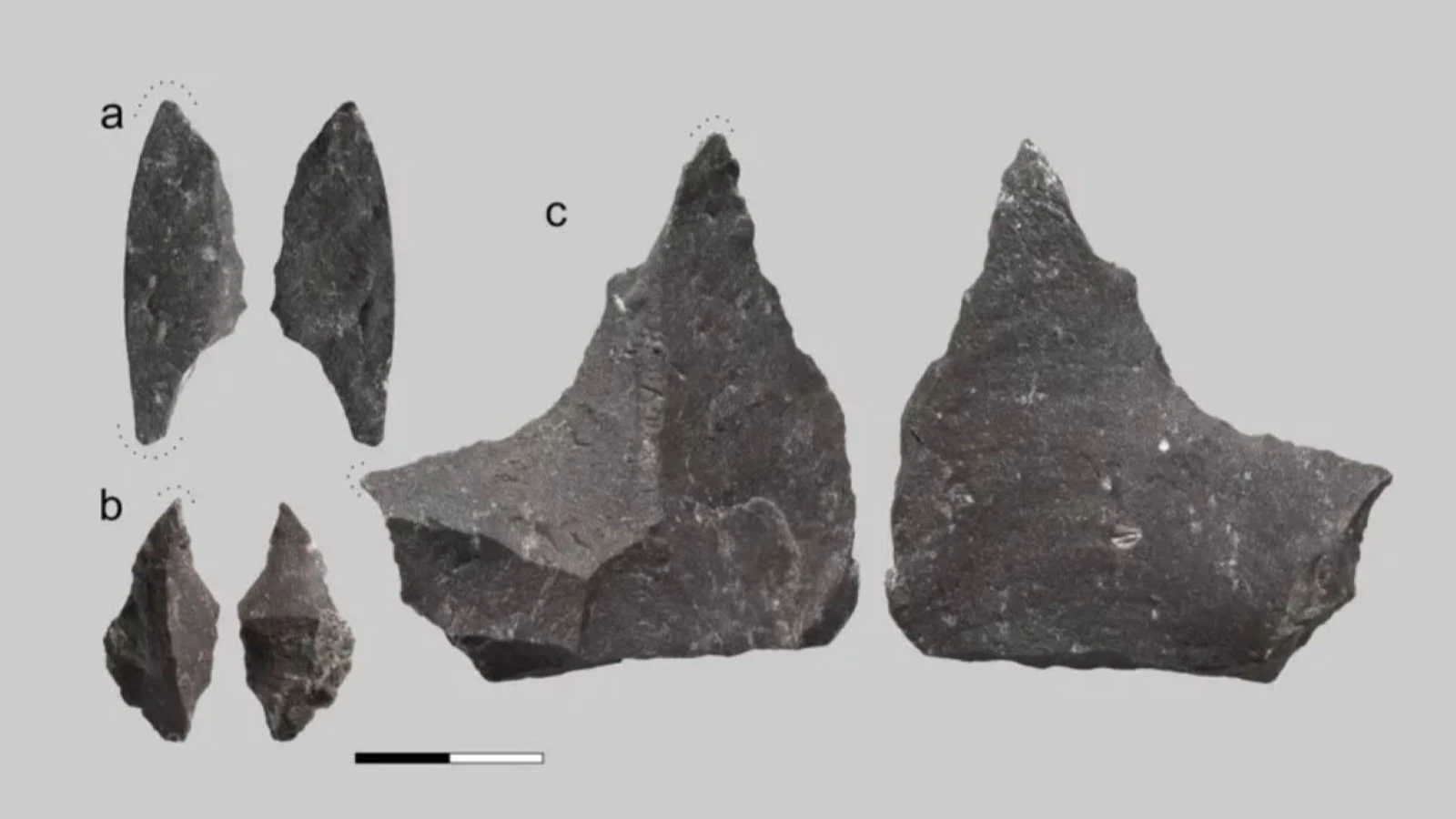
What really surprised the scientists were the scratches around the hole. These marks suggested that the tooth may have been deliberately tampered with or gouged with some type of tool. The fine-tipped stone tools found in the cave also strengthened this possibility.
Multiple scans of the tooth and experiments with modern human teeth revealed that the area of decay was punctured by a small, sharp stone tool. Researchers say this may be the earliest known dental caries intervention in human evolutionary history.
According to the study, this finding shows that Neanderthals not only recognized the source of pain, but also were able to choose the appropriate tool and method to reduce this pain.
“He must have understood the source of the pain.”
Alisa Zubova, lead author of the study, said that what surprised her most about the finding was that the owner of the tooth seemed to understand where the pain was coming from. According to Zubova, the Neanderthal individual sensed that the source of pain could be eliminated.
Traces of wear on the tooth also show that the individual continued to use this tooth after the procedure. This means the intervention may have worked, at least for a while.
Prehistoric dental treatment with stone tools
Researchers conducted experiments on modern human teeth to understand how this process might have been done. Drilling and rotating movements were tried on the teeth with pointed tools produced from local jasper stone.
In experiments, it was seen that structures similar to tooth decay could be removed in less than an hour. Researchers think Neanderthals may have used a similar method.
However, the process must have been extremely difficult. Because in the real situation the tooth was in the mouth; Inflammation, swelling, and pain would have made the process much more complicated. Despite this, it was found remarkable that the Neanderthal individual withstood such an intervention with a stone tool and without anesthesia.
Neanderthals may have been more advanced than thought
This discovery strengthens the evidence that Neanderthals were not the crude and simple creatures that were long thought. Recent research shows that Neanderthals were closer to modern humans than thought in terms of social care, tool use, symbolic thought and adaptation to the environment.
According to researchers, this tooth shows that Neanderthals did not only act instinctively; Demonstrates ability to perform conscious, planned and purposeful medical interventions.
Possibility of family or community help
Scientists do not know for sure whether the process was done by the Neanderthal individual himself or by someone else. However, it is emphasized that it is very difficult to perform such a sensitive intervention in the mouth.
According to the researchers, if this was done by someone else, this would indicate strong social bonds and care behavior among Neanderthals. One person may have needed to hold the other’s head still, perform the painful procedure, and select the appropriate instrument.
This suggests that the origins of medical care may extend not only to modern humans but also to older human species.
May take back the history of medicine
According to experts, this tooth, called Chagyrskaya 64, may be one of the oldest known evidence of dental treatment in human history. Caries interventions dating back 14 thousand years to Homo sapiens individuals were previously examined. But this new finding suggests that a similar intervention may have been made by Neanderthals tens of thousands of years ago.
Therefore, the discovery is of great importance not only in terms of anthropology but also in the history of dentistry and medicine.
Neanderthals’ ability to recognize pain, plan intervention, select stone tools, and perform or withstand a painful procedure indicate that conscious behaviors aimed at human health have very ancient roots, researchers say.
