
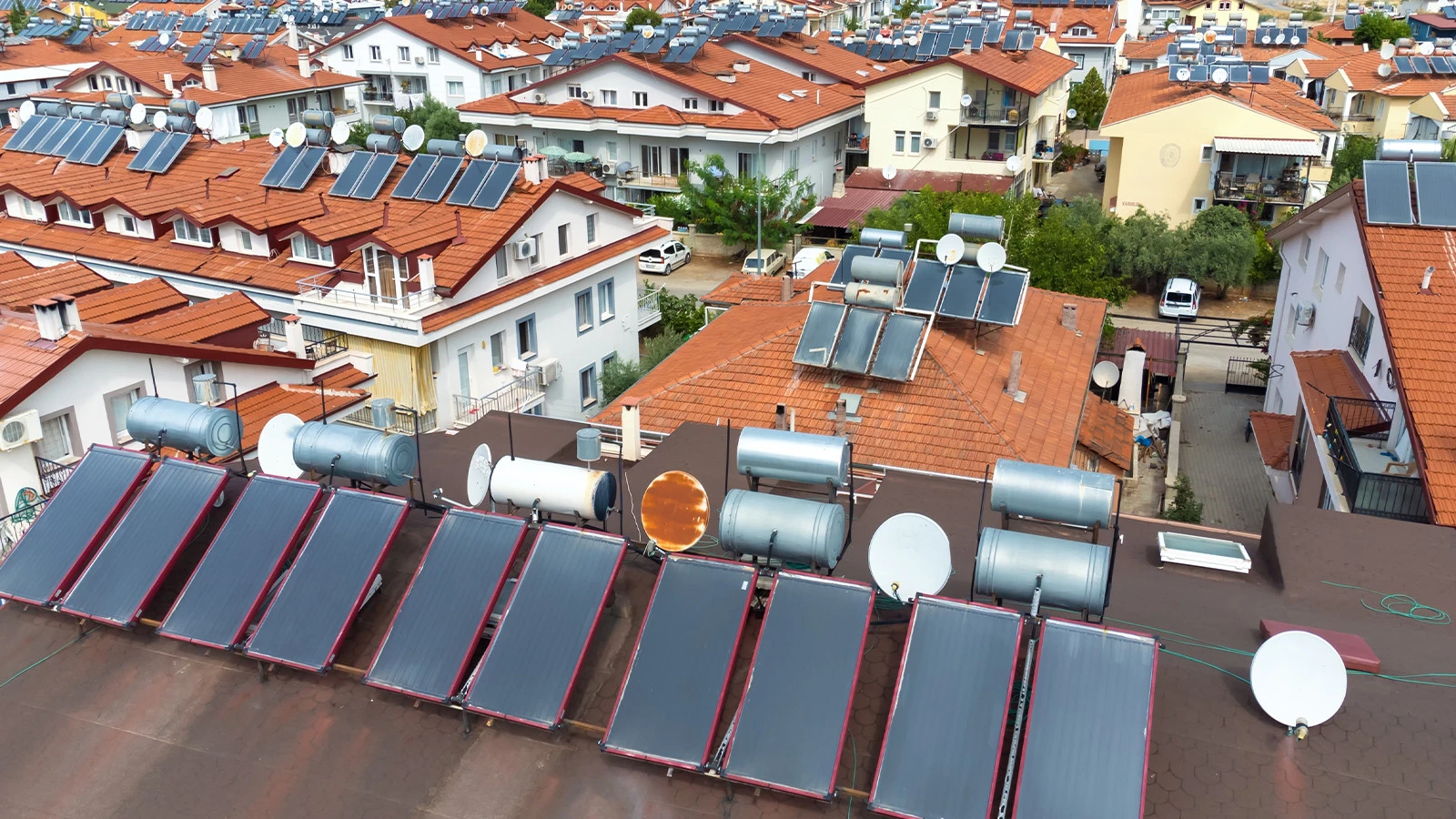
One of the ways to reduce electricity bills is to generate some of the needed electricity on the roof of the house. Solar panels can reduce the energy the house receives from the grid by producing electricity during the daytime. Thus, the consumer’s dependence on the electricity grid decreases. Schneider Electric’s research also examines the economic contribution that using solar panels and batteries together can make to the electrical system. In the research prepared by Schneider Electric Research Institute, electricity consumption of residences, service buildings and industrial facilities were examined separately. 40,500 scenarios were created by combining different variables such as solar panel size, battery capacity, increase in electricity demand and installation costs.
MAY DECREASE BY 10 PERCENT
According to the results of the research, based on current world average installation costs outside the USA, the unit cost of the electricity system can decrease by approximately 10 percent in the lowest cost scenario. In the calculation made with the assumption that solar panel and battery installation costs will decrease for the 2030s, this rate reaches approximately 40 percent.. However, another striking result of the research is the US example. Using current US installation costs, even the lowest-cost scenario with solar and battery investments turns out to be approximately 20 percent more expensive than the initial system.
WHAT WILL CITIZENS GAIN?
One of the major obstacles to greater use of solar energy is battery costs. Because even though the solar panel produces electricity, a storage system is needed to transport this electricity to the hours it is needed.. Schneider Electric’s calculations for the coming years predict a significant decrease in battery costs. The research assumes that the installed cost of batteries used in residences will decrease from $700 to $150 per kilowatt-hour, and the cost of batteries in service and industrial buildings will decrease from $350 to $100 per kilowatt-hour.
IT MAY ALSO BE EFFECTIVE ON HEATING EXPENSES
Another aspect of the research that concerns citizens is that electricity use will increase in the coming years. The widespread use of electric cars, the use of electricity-powered heating systems instead of natural gas, and the increase in the number of electrical devices in homes increase the demand for energy.. In order to meet this increase, investments need to be made in transmission lines, distribution networks and transformers, as well as new electricity production facilities.
INCREASING EVERY YEAR IN Türkiye
The cost advantage revealed in Schneider Electric’s research is also important for Türkiye, where solar energy investments are growing rapidly. While the share of solar energy in electricity production is increasing in Türkiye, storing the electricity produced during the day and using it when needed is becoming one of the new agendas of the energy sector.. According to the sector report based on data from the Ministry of Energy and Natural Resources, Türkiye’s solar energy installed power reached 24 thousand 792 megawatts by the end of 2025. This figure was at 20 thousand 101 megawatts at the end of 2024. Thus, approximately 4 thousand 700 megawatts of new solar energy capacity came into operation in one year.
