
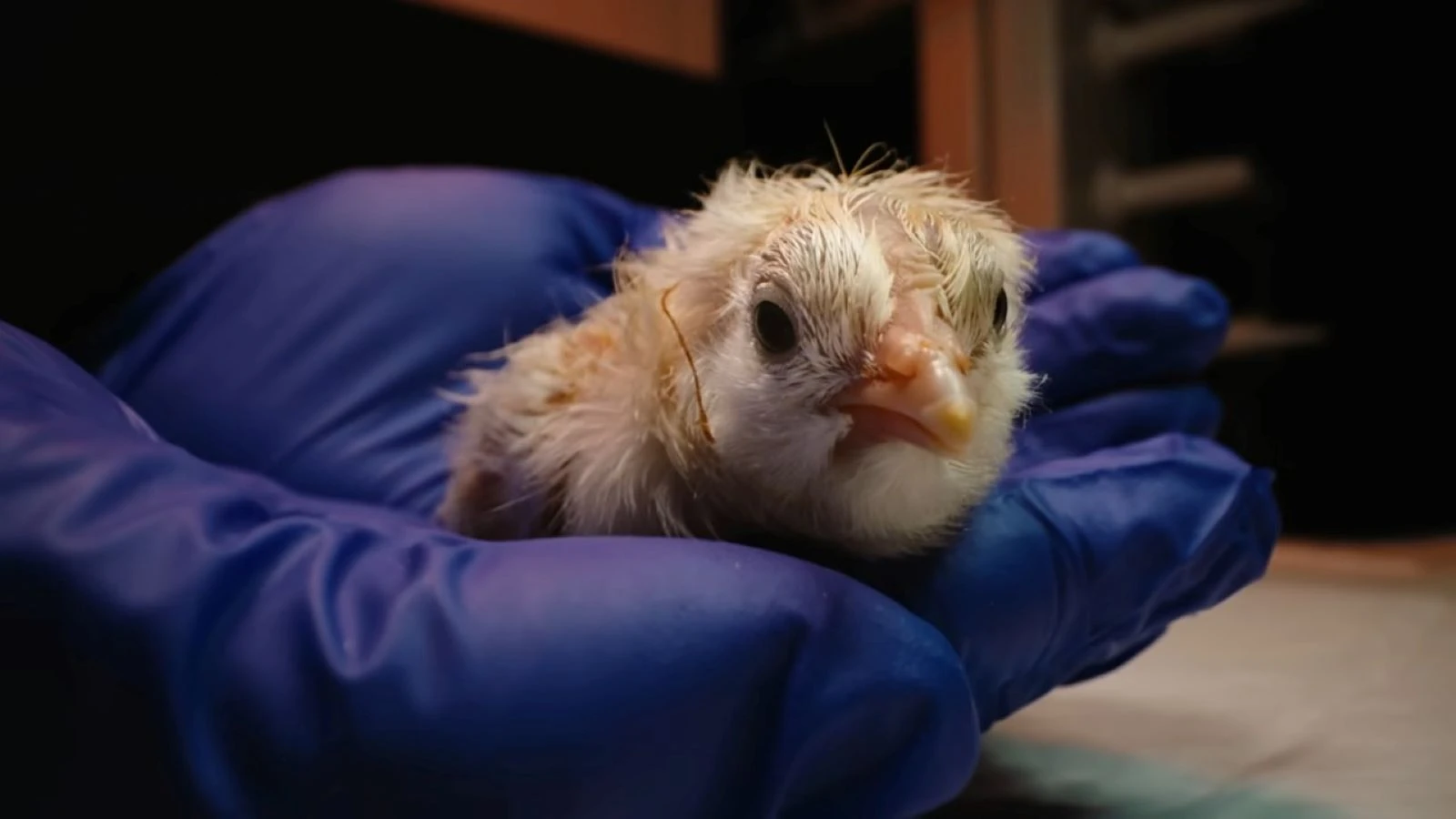
Science writer Jorge Alcalde described the details of the experiment in the “Science with Jorge Alcalde” episode of the program “Herrera en COPE” hosted by Alberto Herrera. According to Alcalde, the chicks hatched from fertilized eggs with an artificial and transparent shell made of silicone material. After completing their development, the animals “broke this artificial shell with their beaks, just like a normal chick would, and came out safely.”
Alcalde stated that since there was no genetic intervention, these chicks should be genetically identical to the chicks of a normal chicken. However, he also emphasized that the fact that the research has not yet been published in a scientific journal creates “many question marks.” He said that the company only released a press release and video, and that scientific details about how long these chicks develop are unknown.
The most important innovation of this artificial shell is that it allows gas exchange, unlike previous attempts. According to Alcalde, there are approximately 100 thousand micropores in a natural egg shell. These pores allow oxygen to slowly enter and carbon dioxide to exit.
The artificial shell developed by the company also allows oxygen to reach the embryo. Thus, the embryo can develop as if it were in a normal egg. But, as the Alcalde puts it, this is not actually a normal egg; “a silicone egg.”
Goal: Bring back extinct species
This experiment is seen as part of Colossal Biosciences’ larger goal of “bringing back extinct species.” The company has been on the agenda for this purpose before.
According to Alcalde, the company wants to “use artificial fertilization processes on animal species to recreate a species that no longer exists.” The plan is to modify the genes of birds living today to resemble extinct species and develop these embryos in artificial eggs.
The first aim of these studies is to understand whether animals can be improved artificially. Alcalde said such technologies could also be important for human health research. He stated that it can be used especially in drug studies such as vaccines, in examining embryonic development and in research on cancer treatments.
Scientific and ethical debate
The idea of bringing back extinct species creates controversy in the scientific world. According to Jorge Alcalde, many scientists think that this is not very meaningful and is more of a “show”. Alcalde reminded that the “Jurassic Park” movies depicted the consequences of tampering with nature.
However, he acknowledged that in some cases such studies could be useful. He said that the idea of restoring especially recently extinct species to repair damaged ecosystems could be meaningful. As an example, he gave the extinct bucardo species that lived in the Iberian Peninsula.
Alcalde stated that the rate of extinction of species today is “very drastic” and said that it may be important to at least protect the genetic material of these species. Thus, it may be theoretically possible to one day bring back species that have completely disappeared.
However, Alcalde particularly emphasized that there is a difference between scientific conservation studies and “the dream of seeing dinosaurs in zoos again.” According to him, bringing dinosaurs back is not only technically very difficult, but also does not make much sense from a scientific perspective.
