
The depths of the oceans are still a largely unexplored world for scientists. However, recent research shows that these dark and harsh environments host a much richer life than thought.
The Ocean Census initiative, which aims to map marine life around the world, announced that 1121 “previously unknown” species were detected in the oceans in the last year. This study is carried out with the contribution of more than 1000 researchers from 85 countries.
The worm living in the “glass castle”
One of the most interesting species among the discoveries was found approximately 790 meters below the ocean surface off the coast of Japan. Scientists have discovered a new species of bristle worm living in a glass sponge described as a “glass castle”.
Glass sponge attracts attention with its translucent and web-like structure, whose skeleton consists of silica. While the worm is protected within this structure, it in turn cleans harmful waste from the surface of the sponge. In other words, there is a mutually beneficial living relationship between two living things.
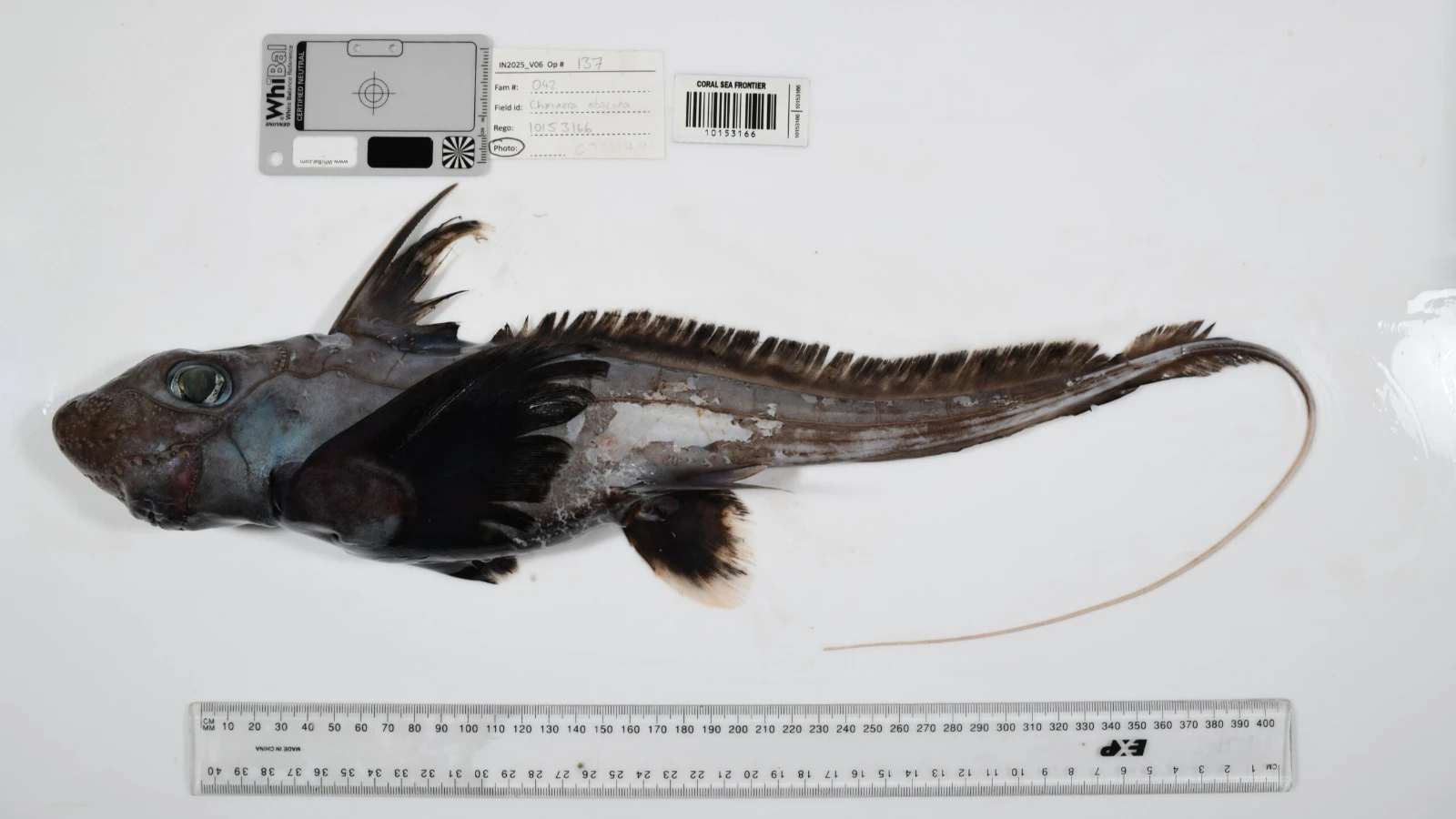
“Ghost shark” found in Australia
A new chimera species was discovered off the coast of Australia at a depth of approximately 820 meters. Chimeras are popularly known as “ghost sharks”.
These creatures are distantly related to sharks and rays. According to scientists, the evolutionary separation of these species dates back to approximately 400 million years ago.
Carnivorous sponge hunted like a “death ball”
One of the most remarkable discoveries was made in the deep-sea trench near the South Sandwich Islands in the South Atlantic. Scientists found a carnivorous sponge species here at a depth of approximately 3600 meters.
This sponge, described as a “death ball”, catches small crustaceans caught in the current with microscopic hooks on its surface. Then it wraps its prey and digests it.
Bright orange defense in East Timor
A tapeworm with bright orange stripes discovered in East Timor also attracted the attention of researchers. It is stated that this coloration indicates the creature’s strong chemical defense mechanism.
Some toxins produced by tape worms are being studied for their potential use in research on treating diseases such as Alzheimer’s and schizophrenia.
Scientists are racing against time
According to Ocean Census experts, documenting ocean life is no longer just a matter of scientific curiosity. Climate change, marine pollution, industrial activities and deep-sea mining put as yet undescribed species at risk of extinction.
Ocean Census Science Director Michelle Taylor stated that many species are at risk of disappearing without being documented, and emphasized that it is a race against time to understand and protect ocean life.
It can take years for a species to be officially recognized
The discovery of a new species does not immediately mean that it has been officially identified in the scientific world. According to the Ocean Census, an average of 13.5 years can pass between the discovery of a species and its official description in the scientific literature.
To speed up this process, Ocean Census adds “discovered” status to the database as a scientific category. Thus, species confirmed by experts can be seen by scientists and policy makers even before the official identification process is completed.
“We are still far from discovering our own planet”
Recalling that humanity has spent billions to search for life on Mars and go to the dark side of the Moon, Ocean Census Director Oliver Steeds said that it is possible to discover most of the ocean life on Earth at a much smaller cost.
According to experts, these discoveries show that more investment is needed to protect the oceans. Because unnamed and undescribed species often remain invisible in conservation policies.
